























How Maine and Alaska Voters Stand to Be Remade by the Save America Act

The immediate fallout lands hardest on state-level voters and election systems: the save america act would standardize ID and registration requirements that currently vary by state, changing how college students, rural residents and tribal communities prove eligibility. For people in Maine and Alaska, two different lines in the bill translate into tangible new barriers to register and cast a ballot.
Save America Act consequences for students, rural residents and state officials
Here’s the part that matters: the proposal would require specific documentation to register and a photo ID to vote, and it would centralize voter-roll checks with a federal database run by the Department of Homeland Security that would flag names for removal. That combination of stricter proof and centralized removal is presented as an integrity measure, but it also means elected officials and election administrators in states with unique logistical challenges would have to change long-standing practices.
How the shift reached a Senate threshold and what it signals
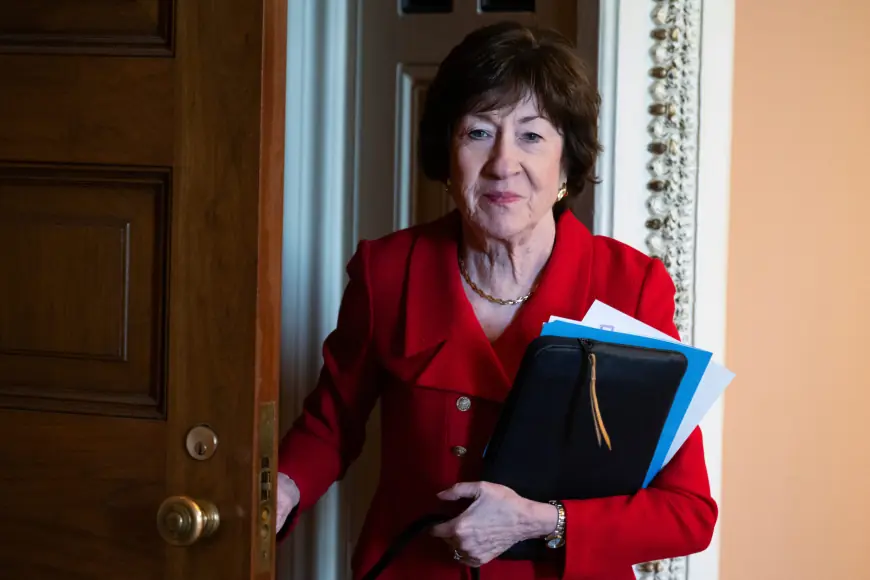
Sen. Susan Collins added her name as the 50th Senate supporter of the SAVE America Act, which puts the measure at a point where the vice president is positioned to cast a tie-breaking vote if it reaches the floor. Conservative backers celebrated that numeric threshold and hoped it would signal moderation in the bill’s approach. Collins’ recent alignment with the measure follows a voting record cited as closely aligned with the former president, and her prior votes against national voting-rights bills are positioned by critics as consistent with this latest endorsement.
The bill would ban the use of college and university IDs for voting, directly clashing with recent state changes under certain governors that expanded student access by allowing college IDs in registration. In Alaska, the bill’s ID list would exclude state REAL IDs that do not explicitly state citizenship, effectively requiring passports or certified birth certificates for many residents. It would also require in-person presentation of that documentation, a provision with immediate logistical impact in states where most communities are off the road system and regional election offices are few and far between.
What’s easy to miss is the practical ripple: a federal mandate on documents and in-person proof does not operate the same in every state. For Alaska, the text would make remote and mail-based registration and voting far harder for many residents; for Maine, an explicit ban on college IDs would reverse recent state-level steps to widen student participation. The real test will be how states — and individual voters — adapt to a uniform federal rule that ignores those differences.
Timeline snapshot: in prior years, Collins voted against earlier voting-rights proposals, including a shorter version once in 2014 and later bills in 2021 that she opposed citing states’ rights; most recently she became the 50th Senate backer of the SAVE America Act.
- The SAVE America Act would prescribe the documents required to register and mandate specific photo ID at the polling place.
- It would require states to submit voter rolls to a federal database maintained by the Department of Homeland Security for removal guidance.
- In states with limited road access and sparse regional offices, in-person proof requirements could force long, costly travel to register or confirm identity.
Key takeaways you should keep in mind:
- State-level practices that allowed college IDs, mail registration or broader ID acceptance would face direct conflict with the bill’s uniform rules.
- Students, Alaska Native voters relying on tribal IDs, and residents without passports or certified birth certificates are named as groups that would need additional documents under the bill’s requirements.
- Centralized voter-roll checks and federal-directed removals shift administrative authority toward a single federal system for a process traditionally managed by states.
- A practical signal to follow: whether states announce plans to change registration or mail-voting operations to comply or to challenge the new mandates.
The real question now is whether the bill’s nationwide template will withstand pushback from states that have tailored election rules to their geography and communities, and whether voters in affected states will see immediate changes to how they register and vote.