























Amd Stock Faces Dilution Debate After Meta Deal — What Changes for Shareholders and AI Roadmaps

The Meta tie-up could change how investors value amd stock almost immediately: performance warrants and multigeneration chip commitments shift both near-term revenue visibility and the long-term potential for equity dilution. What changes because of it are concrete—warrant timelines, shipping schedules and the mechanics of future dealmaking all matter to shareholders first.
amd stock: immediate consequences for shareholders and strategy
Here’s the part that matters: AMD’s new arrangement with Meta bundles GPU volume, server hardware and an equity option, which creates a direct line between infrastructure deployments and ownership stakes. That linkage increases the chance of future chip sales while simultaneously adding a scenario where equity dilution could change investor returns if warrants are exercised.
Deal details embedded in a single package
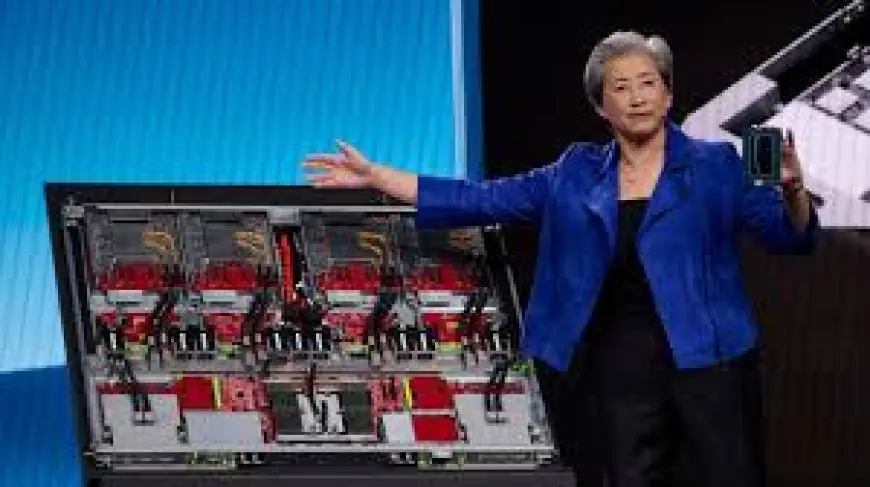
On Tuesday AMD announced a multiyear, multigeneration agreement with Meta that could be worth as much as $100 billion. Under the arrangement, Meta will deploy six gigawatts of custom AMD Instinct MI450 GPUs as part of a major data center build-out. The announcement expands the companies’ existing partnership and, in AMD’s words, aligns roadmaps across silicon, systems, and software to deliver AI platforms purpose-built for Meta’s workloads. The MI450 chips and Helios rack-scale servers are scheduled to begin shipping later this year.
The company also issued Meta a performance-based warrant that would allow Meta to buy up to 160 million shares of AMD common stock; if exercised, Meta could own up to 10% of AMD’s outstanding stock. Late last year AMD struck a similar six-gigawatt deal with OpenAI that included an option for OpenAI to purchase up to 160 million shares at $0. 01 per share, which gave OpenAI a 10% stake under that arrangement.
What’s easy to miss is that the MI450 commitment and the hardware shipment schedule are tied to longer-term performance terms—so commercial adoption and timing will determine whether equity options are exercised.
Warrants, dilution math and timelines
Warrants issued in the Meta agreement are valid until 2031, meaning they will not dilute existing shareholders until exercised. If both Meta and OpenAI exercise their respective warrants, existing shareholders would face a combined dilution of about 20%. The structure has drawn attention as one of the circular deal types that AI investors are scrutinizing closely.
- Warrants allow Meta to buy up to 160 million shares (could equal up to 10% ownership if exercised).
- OpenAI’s prior option mirrored this scale: up to 160 million shares at $0. 01 per share, representing a 10% stake under its terms.
- Warrants remain exercisable through 2031, so dilution is conditional on future action.
Where this sits in Meta’s broader AI build-out
The AMD agreement is not exclusive. It comes just after a separate multiyear, multigenerational partnership announced last week between Meta and AMD’s larger competitor, which covers a large-scale deployment of CPUs and millions of GPUs named Blackwell and Rubin, plus integration of Spectrum-X Ethernet switches. That larger partnership shows Meta is building hyperscale data centers optimized for both AI training and inference while sourcing technology from multiple vendors.
The real question now is whether AMD’s equity-for-hardware approach becomes a repeatable play or a one-off push to secure early customers. On one hand, aligning Meta’s interest with AMD raises the odds of continued chip purchases; on the other hand, issuing large warrants raises reasonable concerns about incremental dilution.
Signals investors should track
- Shipping start: MI450 chips and Helios servers are scheduled to begin shipping later this year—shipment milestones will reveal adoption speed.
- Warrant exercise triggers: exercises would create immediate dilution; timing depends on performance targets and broader market outcomes.
- Repeat deals: whether AMD completes similar equity-linked deals going forward will indicate if this is a sustained strategy.
Key takeaways:
- The agreement pairs six gigawatts of MI450 capacity with a performance warrant that could deliver up to 10% ownership to Meta if exercised.
- OpenAI previously received an option for an equivalent stake a similar six-gigawatt deal last year.
- Warrants run through 2031; any dilution depends on future exercises and therefore remains conditional.
- The deal sits alongside a separate, large-scale multiyear Meta partnership with AMD’s larger rival that includes millions of GPUs and networking integration, making the Meta–AMD arrangement non-exclusive.
There is also a promotional element attached to some coverage: an analyst team invited readers to join a paid investment-advisory service that highlighted ten stock picks for investors. Another advisory note urged readers to consider certain analyst recommendations before buying Advanced Micro Devices stock.
It’s easy to overlook, but the bigger signal here is how AMD is choosing to trade equity optionality for scale—an approach that can accelerate sales but complicate shareholder math. Only time will tell whether this strategy proves shrewd or costly for amd stock holders.