

























Travel Ban Massachusetts: travel ban massachusetts issued for parts of the state after bomb cyclone

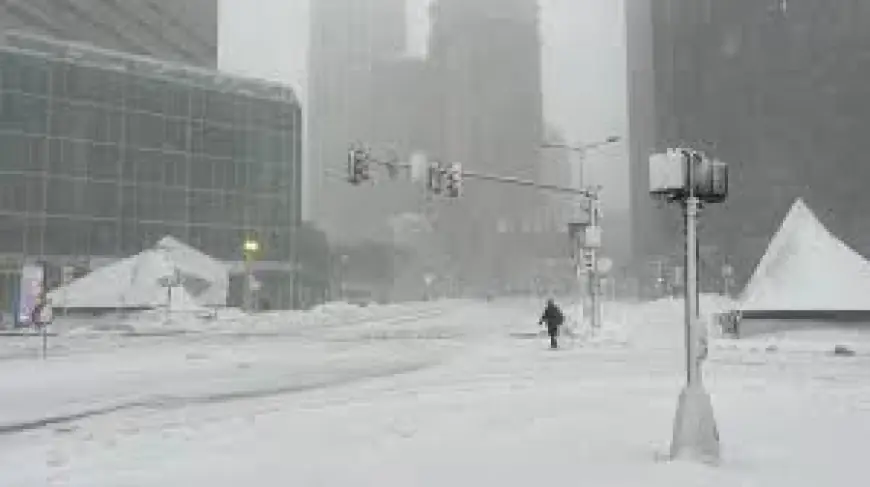
Governor Maura Healey issued a travel ban in Barnstable, Bristol, Dukes and Plymouth counties after a historic bomb cyclone dumped more than two feet of snow on parts of southern New England and knocked out power to more than a quarter-million residents. The travel ban massachusetts order is the state’s first in over a decade and came as communities worked to dig out and restore services.
Storm upgraded to bomb cyclone after rapid pressure drop and heavy winds
The nor’easter accelerated on Sunday night into a bomb cyclone, undergoing bombogenesis when its central pressure dropped 24 millibars or greater within 24 hours. The blizzard — the first to hit New England since 2022 — brought heavy snow for hours while high winds whipped through the region, and even produced thundersnow, particularly on Cape Cod and the South Coast.
Snowfall records and local totals stretched across Massachusetts
Whitman recorded 33. 7 inches, setting a record for a 24-hour snowfall total, surpassing the prior 24-hour mark of 29 inches in Natick during the April Fools’ Day storm in 1997. Logan Airport in Boston recorded 16. 9 inches, and some city neighborhoods received higher amounts,. Dighton, New Bedford, Swansea and Taunton all reported totals of more than two feet.
Travel Ban Massachusetts: counties under ban, non-essential travel restriction and fines
Healey issued the travel ban in the four hardest-hit counties — Barnstable, Bristol, Dukes and Plymouth — restricting non-essential vehicle travel in a large section of Southeastern Massachusetts because of dangerous road conditions. Those caught violating the travel ban could face a $500 fine,.
Power outages, multiday restoration and obstacles for utility crews
As of late Monday night, there were still more than 269, 534 power outages in Massachusetts, and officials warned that residents could be facing a “multiday power restoration. ” The main issue for getting power back will be access for utility crews: winds need to abate in some parts of New England for crews in bucket trucks to safely reach downed lines, and roads have to be cleared for crews to reach problem areas.
In Scituate, residents were told to brace for multiple days without power. “Things are a mess, ” said Town Administrator James Boudreau.
Transportation disruptions, school closures and emergency response complications
The MBTA will continue to operate Tuesday with reduced service,, even as the storm paralyzed road travel and grounded hundreds of local flights. Dozens of school districts across the state will be closed Tuesday for a second straight day while communities start to dig out.
Downed power lines, felled trees, and abandoned and stuck cars complicated the state’s response. State Police reported responding to more than 400 disabled vehicles on the state’s roadways through Monday afternoon.
Coastal damage, extreme gusts and impacts beyond Massachusetts
The storm lashed coastal areas: some towns on Cape Cod and the Islands recorded winds topping 70 miles per hour, and Nantucket saw a 78-mph wind gust — the strength of a Category 1 hurricane — shortly after 10: 30 a. m. The storm also hit Rhode Island hard, breaking records set by the Blizzard of ’78; by 8 p. m., T. F. Green Airport had reached 37. 9 inches.
Local reaction and on-the-ground reporting
“Thirty inches of snow is no joke, that’s for sure, ” said Jonathan Darling, a spokesperson for the city of New Bedford. Healey called the event in an afternoon press conference: “This storm has been a doozy. ”
The National Guard.