





















Dirty Business — dirty business review that should incite righteous anger over our filthy water

Joseph Bullman’s drama-documentary Dirty Business dramatizes a true story of amateur sleuths appalled at sewage dumping and the wider English and Welsh water pollution shame. The programme stages a case that many will find hard to ignore: a fist in the face, a blast of controlled fury that mounts an unanswerable case for the prosecution, and it leaves viewers with little room for complacency about rivers and beaches tainted by untreated sewage.
Dirty Business: how it lands
The drama stars David Thewlis and is based on real-life events. It follows two neighbours in the Cotswolds in 2016 who are recently retired and hungry for a project; they notice brown murk in the previously beautiful River Windrush and begin to investigate a curious dumping of sewage. The narrative draws parallels with an earlier television drama that shifted public feeling about a scandal, and it asks whether Dirty Business can likewise move the needle on public disgust and official attitudes.
The Cotswolds investigation, 2016
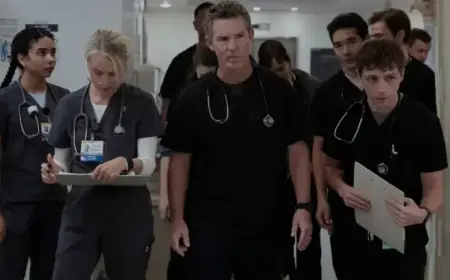
Ashley Smith, played by David Thewlis, was a real-life "Line of Duty" cop who had investigated corrupt officers. His neighbour Peter Hammond, played by Jason Watkins, was an Oxford maths professor. When the explanation offered by a privatised local water company did not add up, the two men dug in. Ash’s infallible nose for dishonesty combined with Peter’s algorithm for finding patterns in confusing data to build a picture of water infrastructure destroyed by three decades of underinvestment and environmental calamity on a staggering scale across the country, with thousands of instances of rivers and seas tainted by untreated sewage. Real footage shot by campaigners to show the extent of the damage is woven into the drama.
A family's tragedy in 1999
A second timeline opens in 1999, when Mark and Julie Preen, played by Tom McKay and Posy Sterling, take their two daughters on holiday to Dawlish in Devon; Julie has chosen the seaside because it has Blue Flag status, indicating a clean beach. They find what seems to be effluent pumping out of a pipe on the shore. Eight-year-old Heather steps in the dirty water and, within two weeks, she has died from E coli O157 poisoning. Ultimately the cause of the outbreak was not identified and a jury returned a verdict of misadventure. The coroner’s recommendations included the tertiary treatment of all sewage in the area to make it pathogen-free and a summertime ban on dogs on the beach. The Preens’ true story ends with a further tragedy that the drama draws with devastating starkness.
Regulator and the 2008 strand
As the two men investigate, they come to realise the problem is as much with the regulator, the Environment Agency, as it is with the water companies. A third strand of the story begins in the Environment Agency offices in 2008 and the dark absurdity of the situation intensifies. A change was announced towards the end of the Labour administration; those effects were to be greatly worsened by David Cameron’s drive to cut spending and slash regulation in the 2010s. The shift described in the drama is summed up by the phrase "operational self-monitoring", which moves the burden of identifying potential breaches of environmental law from the Environment Agency.
Tone: comedy, fury and horror
Bullman navigates what could have been an awkward tonal clash by using comedy as a weapon. Scenes set in 2016 capture a lovely faux-mocking banter between garrulous Ash and nervy Peter that is often as funny as it is disquieting, while the events from 1999 onwards are rendered as pure horror for the Preens. Corporate statements that Ash and Peter receive are presented as supercilious evasions and are read by the actors playing executives direct to camera. The mix of fury, humour and documentary footage aims to make the case that systemic failure cannot be ignored.
Dirty Business confronts viewers with a timeline of institutional decisions and human cost: from the River Windrush in the Cotswolds in 2016, through Dawlish in Devon in 1999, to Environment Agency offices in 2008, it links living memory with policy changes and tragic outcomes. It presents those facts plainly and asks what should follow next.