







Jonte Richardson and the BAFTAs: outrage, calls for understanding and editing questions

jonte richardson The BAFTA Film Awards on Sunday were overshadowed when Scottish campaigner John Davidson, who has Tourette syndrome, made several vocal outbursts during the live broadcast, including shouting the N-word as Delroy Lindo and Michael B Jordan presented a prize; the incident has provoked sharp reactions, a apology for failing to edit the clip and renewed calls for more public education about Tourette syndrome.
John Davidson’s outburst on stage
During the Sunday ceremony, John Davidson made several outbursts; one included the N-word while Delroy Lindo and Michael B Jordan were presenting. The moment was carried in the broadcast and prompted immediate public reaction. The film I Swear, inspired by Davidson’s experience of Tourette syndrome, won multiple awards that night.
Voices of upset and defence
Actors and commentators responded. Jamie Foxx wrote under an Instagram post that Davidson’s use of the N-word was “Unacceptable, ” adding: “Nah he meant that shit. ” Wendell Pierce posted on X: “It’s infuriating that the first reaction wasn’t complete and full throatted [sic] apologies to Delroy Lindo and Michael B Jordan. The insult to them takes priority. It doesn’t matter the reasoning for the racist slur. ” Journalist Jemele Hill wrote on X: “Black people are just supposed to be ok with being disrespected and dehumanised so that other people don’t feel bad. ”
People with Tourette syndrome weigh in
David Whitlam, 66, who has Tourette syndrome with coprolalia, said Davidson’s outbursts were not deliberate and warned against branding him a racist. Whitlam noted the film “pulled no punches” and that in an environment where Ricky Gervais “can be as rude as he likes, ” a person whose movie is winning a Bafta should not feel labelled because of an involuntary blurt. Whitlam said: “I just hope he isn’t cowering at home, crying. ”
Whitlam described coprolalia as involuntary and criticised use of the word “slur” for Davidson’s outburst, saying: “A slur would be deliberately and specifically targeted by the individual towards a person or persons. ” He added that the phrase “involuntary slur” was oxymoronic and that that is the core problem for people with the condition.
Personal experiences and coping strategies
Whitlam said he had experienced the same vocal tic in 1982 while visiting Texas, recounting that he had “never before used the N-word” but that the word “battered my skull and out it popped, until my girlfriend rapidly shut the window of the car, ” a memory he said he remembers clearly. He described coping mechanisms: avoiding highly neuro-stimulating situations, attending rock gigs, singing in a chamber choir, playing in a rock band, avoiding Tourette’s clubs to prevent picking up sounds, and choosing single seats without a window when travelling by train. Whitlam said his late wife had recognised his condition but that it was unclear in the provided context whether the couple had pursued a formal diagnosis.
Casting director and the film’s awards
Camarthenshire-born casting director Lauren Evans, who won a BAFTA for best casting for I Swear, said she was in “complete shock” at winning for her work on the film about John Davidson’s life and that the evening had been “overshadowed” by discussion of the slur, which she described as an involuntary tic. Evans said casting I Swear was “unique” after work on projects such as Sex Education and Paddington 2: casting required assessing commitment, work ethic and tenacity, especially for a low-budget film. She said she was only wearing one shoe and chewing gum during the ceremony and had not expected to win against the casting teams of Marty Supreme, starring Timothée Chalamet, and Michael B Jordan’s Sinners. The film’s lead, Yorkshire actor Robert Aramayo, won Best Actor and congratulated Evans.
edits, an apology and a separate cut to a winner’s speech
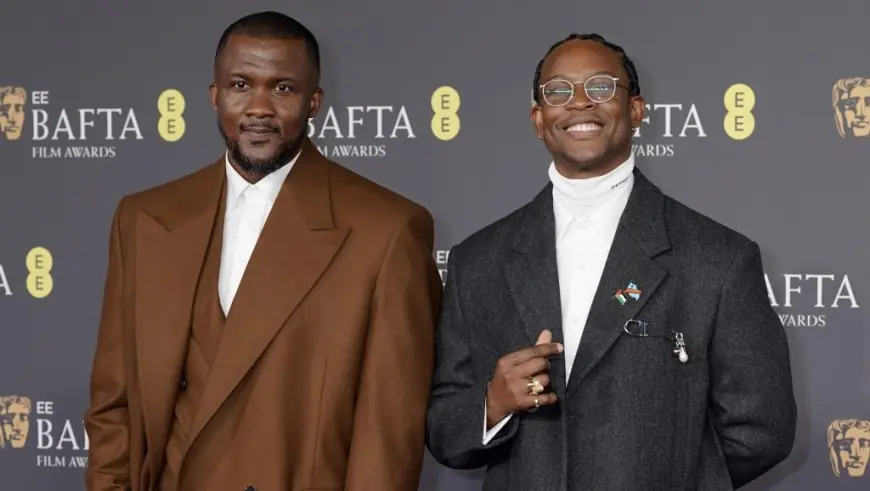
The apologised for not editing the incident from the broadcast; chief content officer Kate Phillips told staff that a second slur had been edited from coverage. Separately, My Father’s Shadow filmmakers Wale Davies and Akinola Davies Jr. won the BAFTA for outstanding British debut on Sunday. Akinola Davies Jr. closed his speech with a dedication that included a list of migrants and the line “free Palestine, ” which the removed from the on-air broadcast and replaced with footage of Davies Jr. thanking his family and his brother Wale for “nurturing this spark. ”
A spokesperson said the live event runs three hours and must be reduced to two for its on-air slot, that other speeches were similarly edited to deliver the programme to time, and that all winners’ speeches will be available to watch Bafta’s YouTube channel. Deadline had reported that the made preparations for politically charged speeches after last year’s controversy when Bob Vylan chanted “death to the IDF” during a streamed festival performance.
jonte richardson
The availability of full winners’ speeches online is the immediate next step confirmed following the broadcast edits; the has said all winners’ speeches will be uploaded to Bafta’s YouTube channel for viewers to watch in full.