




















What Time Is The State Of The Union Address Tonight — How Tonight Could Recalibrate Trump’s Standing

What Time Is The State Of The Union Address Tonight matters because the speech is being framed as a potential turning point: it could either arrest slipping support or deepen fractures that already trouble the president. Polling shows major vulnerabilities on attention to priorities and economic management, and a misstep in tone or substance would have near-term consequences for party unity and public opinion.
Consequences for a president on shakier ground
For a leader who was once described as triumphant when he last addressed Congress, the stakes are now more immediate. If the address successfully re-centers his economic message and soothes concerns about enforcement excesses, it could blunt a downward trend in approval and internal pushback. If it misfires, those fractures are likely to deepen—and the political payoff from the night could be the opposite of a reset.
What's easy to miss is that personal narratives from earlier in his term—victory framing, claims of productivity—make today’s risks more visible: expectations are higher, and the contrast between past momentum and current doubts will shape how audiences read every line of the speech.
What Time Is The State Of The Union Address Tonight
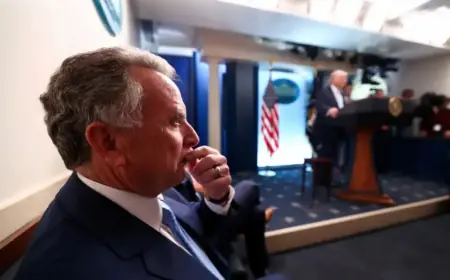
This conversation about the address centers on whether the president can use the speech to change perceptions. The exchange between interviewer Will Gottsegen and staff writer Jonathan Lemire presents the address as a moment that could achieve turnaround if the president avoids self-inflicted detours. Lemire’s assessment frames the night as an opportunity contingent on disciplined messaging.
Economic messaging and recent shocks
Advisers want the president to stick to economic themes: claims of job growth and a cooling of inflation are central to that strategy, and recent market milestones—specifically the Dow reaching 50, 000 in recent days—are likely to be cited. But a recent judicial reversal on sweeping tariff policy, overturned by the Supreme Court a few days ago, complicates the argument. The president has shown visible anger about that outcome, and critics see this as an opening to question his economic stewardship.
Immigration enforcement, Minnesota and public backlash
Immigration remains the other fault line. A recent backtracking on an enforcement crackdown in Minnesota indicates sensitivity to negative reactions, including within his own party. The mass deportation approach tied to that enforcement has become broadly unpopular following two killings in Minneapolis and public scenes of federal agents that some observers described as terrorizing residents. Voters appear to separate approval for border closure from approval for expanded, aggressive domestic operations that affect long-standing community members.
How Lemire frames best- and worst-case outcomes
Jonathan Lemire’s read: the best-case scenario would see the president stay on message, even project some bipartisan tone, and lay out a case of accomplishments while acknowledging unfinished business. He suggested the speech could convey that mix in a way that persuades skeptical viewers. His comment about what the president "needs to acknowledge" is cut off in the provided context and is unclear in the provided context.
The real question now is whether tonight will be disciplined enough to produce that outcome, or whether rhetoric and reaction will undo the intended reset.
Quick Q&A (brief, practical takeaways)
Can the address change public opinion quickly? Lemire suggests it could, but only if the president stays on message and appears willing to recognize outstanding problems.
What immediate hurdles will the speech confront? The judicial reversal on tariffs, the public fallout from enforcement actions tied to Minnesota, and broad skepticism about handling affordability are the primary headwinds mentioned.
Is the night’s impact predetermined? No—the outcome depends heavily on tone and discipline; several elements of what would make the address persuasive are unclear in the provided context.
Key signals that will confirm whether the address made progress include shifts in polling on attention to priorities and economic approval in the days after the speech, and any sustained internal party pressure tied to enforcement tactics. If you’re wondering why this keeps coming up: the speech is being cast not just as performance but as one of the few near-term chances to alter momentum.
The bigger signal here is how voters reconcile economic headlines with the lived experience of affordability and community-level enforcement—success or failure tonight will be judged against that tension.