

























Womb Transplant Baby Born: 'Miracle' Hugo Powell Arrives After Deceased-Donor Surgery

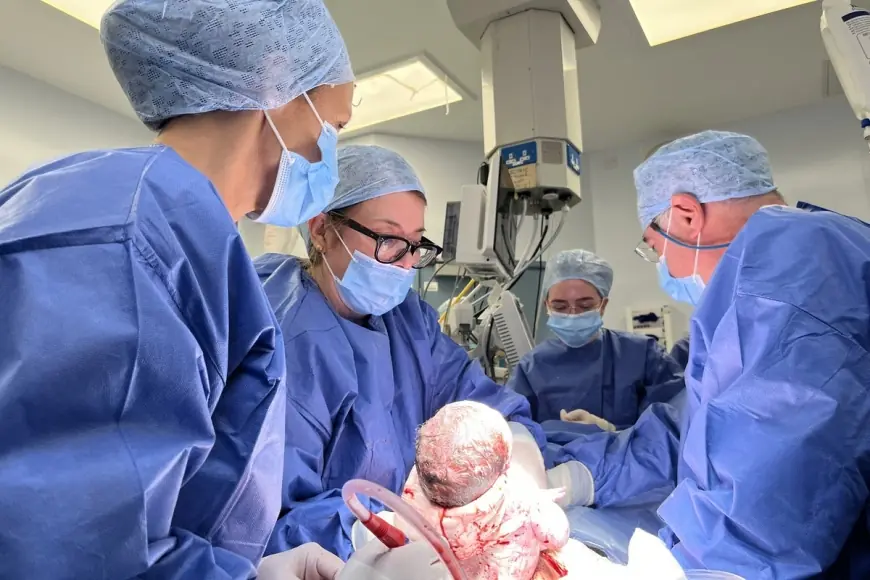
Womb Transplant Baby Born marks a medical milestone in the UK: Grace Bell, in her 30s, has given birth to a baby boy, Hugo Powell, after receiving a womb transplanted from a deceased donor. The birth has been described by the family and medical teams as a "miracle" and a ground-breaking moment that could offer hope to other women with the same diagnosis.
Womb Transplant Baby Born: The Basic Facts
Grace Bell was born without a viable womb and does not have periods, but she does have normal ovaries; this condition is called MRKH syndrome, which affects one in every 5, 000 women in the UK. Bell and her partner, identified as Steve Powell (also noted as Steven Powell), from Kent, welcomed their son Hugo—now named Hugo Powell—after a clinical pathway that involved a deceased-donor womb transplant, fertility treatment and specialist maternity care. Hugo was born just before Christmas 2025 at Queen Charlotte's and Chelsea Hospital in west London. He weighed nearly 7lbs and was recorded at 6lb 13oz (3. 1kg). At the time of one report, Hugo was 10 weeks old.
Mother and Family Response
Bell described the experience as one where "words can't explain" the arrival of her child and called Hugo "simply a miracle. " She recounted waking up and seeing his face with his dummy in, feeling as though she needed to wake from a dream. The couple paid tribute to the "kindness and selflessness" of the donor and her family for their "incredible gift, " and expressed gratitude toward medical teams in Oxford and London who supported them. Bell said she thinks of the donor and her family every day and prays they find some peace in knowing their daughter gave what she described as the biggest gift: the gift of life. When told a womb had been donated and a transplant was possible, Bell remembers feeling in complete shock and really excited.
Surgery, IVF and Clinical Timeline
- The womb transplant operation lasted 10 hours and took place at The Churchill Hospital in Oxford in June 2024.
- The couple received IVF treatment some months after the transplant, followed by embryo transfer at The Lister Fertility Clinic in London.
- Pregnancy proceeded to a successful delivery at Queen Charlotte's and Chelsea Hospital in west London.
Clinical Trial Context and Numbers
Bell's successful womb transplant from a deceased donor is one of 10 such transplants taking place as part of a UK clinical research trial. Three transplants have already been carried out within the trial, and this birth is the first baby born from those procedures. Clinicians described the birth as a ground-breaking moment that could provide hope to other women with a similar diagnosis.
Care Pathway, Staff and Clinical Challenges
Women who undergo womb transplants must undergo additional appointments, extra scans to monitor fetal growth, and regular blood tests. More than 30 expert staff are involved in looking after each womb transplant patient. Bryony Jones, a consultant obstetrician at Imperial College Healthcare NHS Trust, has delivered both babies in the UK born after womb transplants and expressed immense joy at this delivery. Clinicians who contribute their time through charitable arrangements noted that while experience worldwide is limited, skills from caring for other organ-transplant patients are transferable to these complex pregnancies.
Isabel Quiroga, consultant surgeon and clinical lead for organ retrieval at the Oxford Transplant Centre, part of Oxford University Hospitals, has carried out both womb transplants performed in the UK. She explained there is a precious amount of time when an organ can be used from a donor who has died; the team estimates that usable time period to be about 12 hours. She also noted that, technically, there have been more early failures internationally after transplants from deceased donors than from living donors.
What This Means and What Comes Next
Surgeons described the birth as a ground-breaking moment and suggested it could give hope to many more women with MRKH syndrome or similar diagnoses. The trial continues, with nine other planned transplants in the programme, and clinicians emphasize ongoing research and careful monitoring as the pathway develops. Details about longer-term outcomes for mother and child remain under observation as the clinical research trial progresses.