

























Usman Tariq: The 6ft 4in mystery spinner baffling batsmen and clearing throwing tests

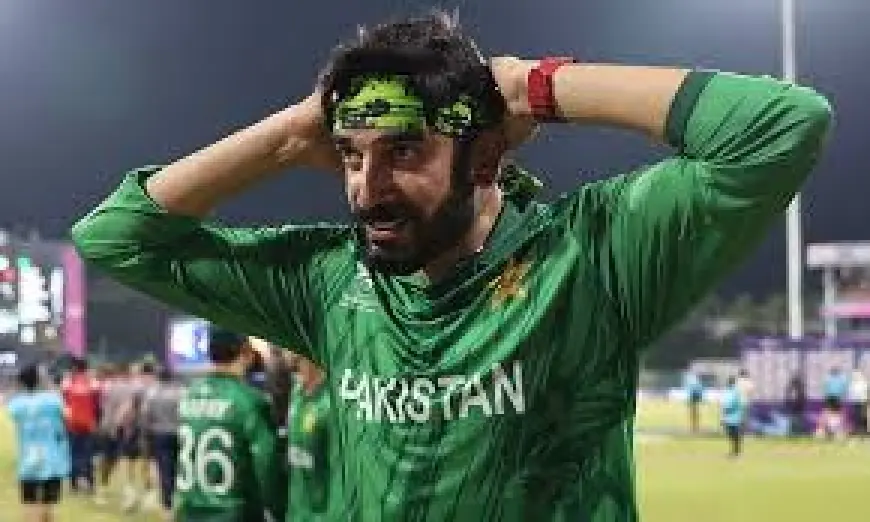
usman tariq has emerged as an unexpected and controversial bowling force, combining an unorthodox round-arm action with a deliberate two-second pause before release that has unsettled international batsmen. His rise matters now because in a few months and just seven T20 outings he has produced match-defining results while undergoing formal scrutiny of his action.
Usman Tariq's unusual delivery stride and physical profile
Standing 6ft 4in tall and wearing a hachimaki that pushes back his mop of hair, the 30-year-old former Dubai office worker operates as a mystery spinner who bowls from a bent, round-arm position. What sets him apart is a two-second delay in the delivery stride before release, a tactic that denies batsmen time to set their feet and read the ball. His lack of pace exacerbates the effect: deliveries in this tournament have dropped to as low as 45mph while his quickest has registered 65mph.
National Cricket Academy in Lahore clearance after two reports
Concerns over the legality of his action have followed him into the spotlight. He has been reported twice and cleared twice. First, during the 2024 PSL, tests at the National Cricket Academy in Lahore found that although he bowls with a kink in his arm the arm remains kinked throughout the full sweep of his action. He was reported again during last year’s PSL; that second assessment showed straightening of the arm was under the 15 degree limit. The formal findings explain why he has been allowed to continue at the highest level despite visible unease among some opponents.
Hat-trick against Zimbabwe and rapid statistical impact
Tariq debuted against South Africa last October and in only his second international appearance — against a Zimbabwe side that surprised many in this Twenty20 World Cup — he took a hat-trick. The numbers compiled so far are striking: 16 wickets at under eight runs apiece at the highest level, a strike that is twice as effective as his broader professional record of 75 wickets at 15. 41. In this tournament his economy rate of 5. 82 is the best of any spinner to have appeared at least four times.
Pakistan's tactical use at Pallekele and impact in practice
Pakistan have increasingly deployed him later in innings, holding him back until the second half when the ball is softer and more difficult to hit — a deliberate tactic intended to amplify his effectiveness. At Pakistan’s practice in Pallekele he was observed bamboozling team-mates, luring them into a succession of mishits that plugged all over the outfield, evidence that the team views his oddities as an asset rather than a liability.
Harry Brook's net work and external reactions from players
England’s exposure to him has been limited: Tariq is only four months and seven Twenty20 appearances into his international career. Still, his unquestionable impact prompted Harry Brook to try to replicate the unorthodox style in net practice ahead of a Tuesday night World Cup Super Eight encounter. Not all reactions have been restrained: Australia’s Cameron Green drew attention during a warm-up match by mimicking a side sling technique after his dismissal and later apologised, while England’s Tom Banton signalled to on-field officials during the Pakistan Super League that Tariq’s action looked like throwing.
What makes this notable is how rapidly the combination of a peculiar physical profile, a deliberate two-second delay and very low pace has translated into both measurable success — a tournament-best economy and a dramatic hat-trick — and sustained scrutiny from peers and match officials. The dual outcomes have forced cricket authorities to test and quantify his action, and the assessments at the National Cricket Academy in Lahore have so far kept him eligible to bowl at international level.
Tariq’s story is also colored by origin details: a latecomer to professional cricket who once worked in an office in Dubai, he took inspiration from Mahendra Singh Dhoni’s rise from a ticket inspector to international captain. Early in his career he picked up his first PSL wicket in just his third professional game, an early indicator of quick adaptation to the professional arena. Critics point to parallels with other unconventional bowlers, including Sri Lanka’s Muttiah Muralitharan and Lasith Malinga, which helps explain why his action has provoked such attention beyond his on-field success.
The timing matters because Tariq’s effectiveness has arrived during a global event, concentrating scrutiny and prompting opponents to practice specific responses; the broader implication is that governing bodies will continue measuring unorthodoxy against established biomechanical thresholds while teams shape in-game tactics to neutralise or exploit it.