
























Milk Prices Rise to Offset Fuel and Fertilizer Cost Surge

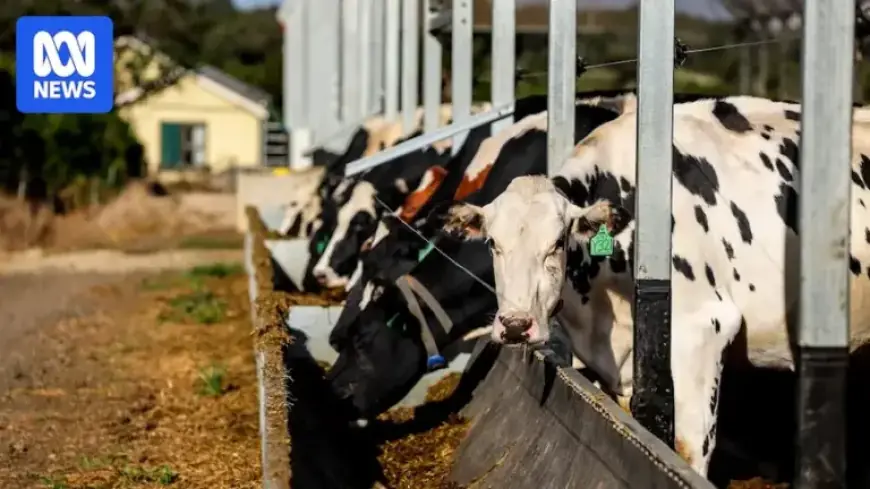
The Australian dairy sector is facing a challenging landscape, prompting industry leaders to advocate for increased supermarket milk prices. This push comes as dairy farmers grapple with significant hikes in fuel and fertilizer costs, which threaten both production and supply.
Rising Costs Driving Demand for Price Increase
The advocacy group, eastAUSmilk, representing farmers in Queensland and New South Wales, is urging retailers to raise milk prices. They argue that without an increase, production may decline further, exacerbating supply issues.
- Current milk price increase request: 30 cents per litre
- Notable rise in input costs for fuel and fertilizer
Tim Bale, president of eastAUSmilk, states that while the availability of fertilizer and fuel has been stable, the cost has dramatically increased, with some prices more than doubling. Many farmers are already scaling back their operations as a response.
Impending Milk Shortages
Bale warns that limiting production could lead to a milk shortage. Farmers are expressing concern about the viability of their operations. Some are considering reducing their cattle numbers or laying off staff to cope with financial pressures.
The current pricing model for milk, which resets annually, limits farmers’ ability to offset rising costs throughout the year. Bale believes consumers would still purchase milk even at higher prices, as long as farmers benefited from the increase.
Industry Impact and Dairy Production Trends
The South Australian Dairyfarmers’ Association, represented by Rob Brokenshire, highlighted that declining production could strain the industry. Over the past year, South Australian dairy production has decreased by approximately 6% due to drought conditions.
Australia’s total milk production has been on a downward trend, currently estimated at 8 billion liters. This figure pales in comparison to New Zealand’s 21 billion liters.
- Current Australian dairy production: 8 billion liters
- New Zealand dairy production: 21 billion liters
Support from Dairy Processors
The Australian Dairy Products Federation (ADPF) is actively engaging with government and retailers to seek potential relief for the dairy sector. Janine Waller, executive director of ADPF, emphasized the critical need for every drop of milk and the importance of consumer support.
She encouraged buying local dairy products to sustain the industry, which is still recovering from past environmental challenges.
Farmers’ Voices on Ongoing Challenges
Farmers like Andrew Cavill, who has over 50 years of experience, express deep concern over the ongoing crises impacting dairy and agriculture at large. He notes the rising expenses for essential supplies like fuel and fertilizers, predicting that sustained high costs could severely affect long-term production capabilities.
- All agricultural sectors are feeling the pressure
- Total farming costs for various supplies are increasing
Mandy Pacitti, another dairy farmer, shares her challenges in managing rising operational costs while remaining unable to pass these expenses on to consumers. She highlights how labor-intensive farm management can become more expensive due to fuel costs.
Retail chains such as Woolworths and ALDI are working to balance farmer concerns with consumer prices. They aim to keep prices fair while supporting suppliers during these tumultuous times.
The Australian dairy industry stands at a critical juncture, with calls for urgent action to address rising operational costs and ensure a stable supply of locally produced milk.