

























Tropical Cyclone Horacio becomes Earth’s first Category 5 tropical cyclone of 2026

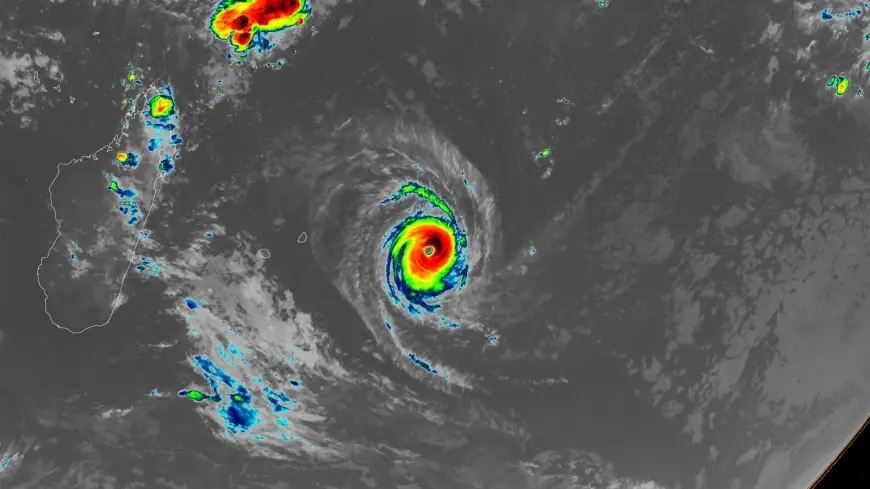
Tropical cyclone horacio reached Category 5 strength on Monday afternoon, February 23, topping out with 160 mph (260 km/h) winds over the remote South Indian Ocean. Its rapid intensification and status as the first Cat 5 of 2026 matter now because they reflect ocean and atmospheric conditions that favored strengthening.
Peak intensity: 160 mph winds over the South Indian Ocean on February 23
The storm topped out with 160 mph (260 km/h) winds while located over the warm, remote waters of the South Indian Ocean on Monday afternoon, February 23. Those peak winds mark Tropical Cyclone Horacio as the world’s first Category 5 tropical cyclone of 2026.
Tropical Cyclone Horacio fueled by 27–28°C seas and moderate wind shear
Horacio took advantage of favorable conditions for intensification: sea surface temperatures of 27–28 degrees Celsius (81–82°F) and moderate wind shear. Those environmental factors allowed the storm to reach Category 5 strength before moving into less favorable conditions.
Joint Typhoon Warning Center forecast: peak passed, steady weakening expected
The Joint Typhoon Warning Center is predicting that Horacio has peaked in intensity and will steadily weaken as it moves southward over cooler waters and into a region with higher wind shear. The storm is far from any land areas and is described as only a threat to marine interests as it continues its southward motion.
Historical context: first Southern Hemisphere Cat 5 since Cyclone Errol in April 2025
Horacio is the first Category 5 in the Southern Hemisphere since Cyclone Errol achieved that status off the coast of northwestern Australia on April 16, 2025. The broader recent record shows that the 1990–2025 average yearly number of Category 5 storms globally was 5. 3, and there were five Category 5 storms in 2025: Hurricanes Melissa, Erin, and Humberto in the Atlantic; Typhoon Ragasa in the Northwest Pacific; and Cyclone Errol in the South Indian.
Climate note and implications for extreme storms
The article notes that climate change is expected to increase the proportion of tropical cyclones that reach Category 4 and 5 strength. The example of Tropical Cyclone Horacio, powered by 27–28°C sea surface temperatures and moderate shear, is cited in that context.
Author, date and reuse rights
By Jeff Masters, February 23, 2026. Jeff Masters, Ph. D., worked as a hurricane scientist with the NOAA Hurricane Hunters from 1986–1990. After a near-fatal flight into category 5 Hurricane Hugo, he left the Hurricane Hunters to pursue unclear in the provided context.
The work is licensed under a Creative Commons Attribution-NonCommercial-NoDerivatives 4. 0 International License. The article notes that republishing is permitted for free, online or in print, and that most content — other than images — is available to republish under the CC BY-NC-ND 4. 0 license.