




















Robert Carradine Dies at 71; Family Says Bipolar Disorder Led to Suicide

robert carradine has died at age 71, his family announced, and they have made public the cause of death to highlight his long struggle with mental illness. The disclosure matters because the family has asked that his experience living with bipolar disorder for nearly two decades help reduce stigma.
Family Statement on Robert Carradine's Struggle
The family described their loss as "profound sadness, " saying the actor was a "beloved father, grandfather, uncle, and brother" and "a beacon of light to everyone around him. " They acknowledged a "valiant struggle against his nearly two‑decade battle with bipolar disorder" and said they hope his journey can "shine a light and encourage addressing the stigma that attaches to mental illness. " The statement closed with a request for privacy as the family grieves.
Keith Carradine, Robert's older brother, reiterated that message and urged people to view the illness without shame. He said it was "an illness that got the best of him, " while also asking that Robert be celebrated for his gifts, humor and tolerance.
Bipolar Disorder and the Cause of Death
The family disclosed that Robert took his own life after a prolonged fight with bipolar disorder. His brother Keith, who also acted as his manager in statements released about the death, described the struggle as nearly 20 years long and said Robert had "succumbed to bipolar disorder after fighting it for almost 20 years. " That timeline — spanning close to two decades — is cited by the family as a central factor in his death and the reason they chose to name the illness publicly.
Lizzie McGuire Co‑stars and Family Pay Tribute
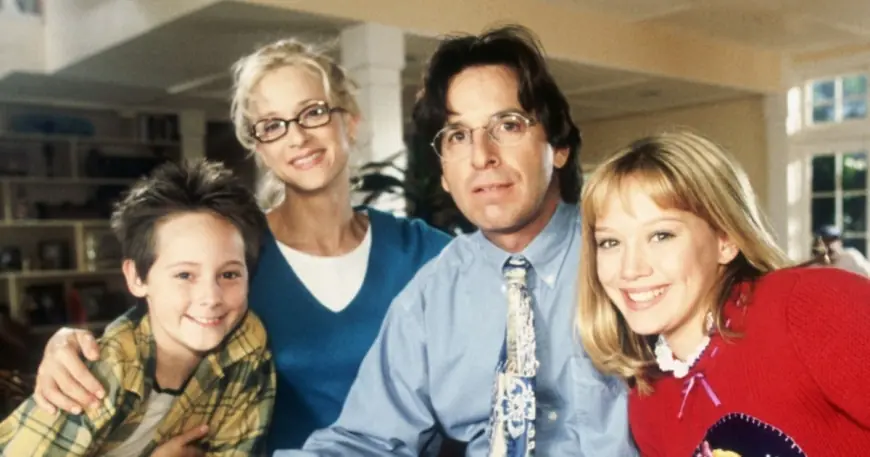
Tributes came quickly from colleagues and relatives. Hilary Duff, who played his on‑screen daughter in the Disney Channel series Lizzie McGuire, wrote that the news "really hurts" and that she felt "so cared for by my on‑screen parents, " adding that she was "deeply sad to learn Bobby was suffering. " Jake Thomas, another cast member from the show, said his "heart hurts" and recalled knowing Robert for much of his life.
Robert's daughter, Ever Carradine, confirmed his death on her Instagram account and reflected on small, personal memories — noting that he never missed driving her to the airport and often praised her homemade salad dressing. His niece, Martha Plimpton, remembered him as the best of the family and described being comforted by him as a child.
Career Highlights: From The Cowboys to Revenge of the Nerds
Born on March 24, 1954, in Hollywood, Robert Carradine was the youngest son of actor John Carradine and built a decades‑long acting career that included more than 150 credits. His first screen role came in 1972 in The Cowboys opposite John Wayne; his brother David encouraged him to audition.
He followed with Martin Scorsese's Mean Streets in 1973 and a noted performance in the Oscar‑winning Coming Home alongside Jane Fonda and Jon Voight. In 1980 he had two films at the Cannes Film Festival: Samuel Fuller's The Big Red One, with Mark Hamill and Lee Marvin, and Walter Hill's The Long Riders, in which he appeared with his brothers Keith and David. The Long Riders employed real brothers to portray outlaw brothers — casting James and Stacy Keach, Randy and Dennis Quaid, and Christopher and Nicholas Guest in matching sibling pairs.
His most widely remembered role came in 1984 as Lewis Skolnick in Revenge of the Nerds, co‑starring with Anthony Edwards, and he later played the father on the early‑2000s Disney Channel series Lizzie McGuire. His credits extended into the 2010s, including a role in Django Unchained.
During The Long Riders production, David Carradine purchased a movie horse named Z‑Tan; the horse later lived on Robert's Hollywood Hills property, where Ever Carradine could be seen riding between their home and Runyon Canyon.
Survivors and Request for Privacy
The family said Robert is survived by his children, grandchildren, brothers, nieces and nephews. Specific survivors named include Ian Carradine and Marica Reed Carradine. He is identified in family accounts as a brother to David, Keith and Christopher Carradine; other descriptions have listed him as a half‑brother to David Carradine and to Bruce and Michael Bowen, an apparent reflection of complex family relationships.
What makes this notable is the family's explicit choice to attach a cause of death to a public statement — a move intended not only to explain the circumstances of his passing but to prompt conversation about mental‑health stigma. For now, the family has asked for quiet as they grieve one of their own.