























Eurostar could massively cut boarding times at St Pancras — who feels the change first and why it matters

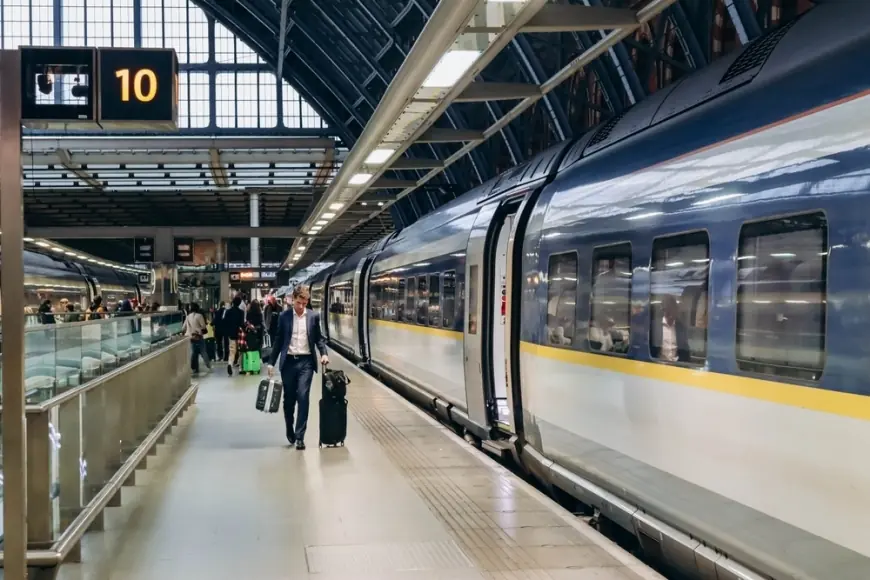
Eurostar is set to reshape the St Pancras boarding experience in a way that matters first to travellers and station operations: passengers could arrive much closer to departure, with boarding times cut by up to 30 minutes. The proposed change aims to move waiting from a cramped departure lounge onto platforms or directly onto trains after security, shifting crowd patterns and operational pressure at London St Pancras.
Immediate impact on passengers and station flow
Here’s the part that matters: the move would allow many passengers to go straight to trains after security rather than congregate in the departure hall. Present guidance has passengers arriving between 45 and 75 minutes before departure; under the plan, half of travellers could be processed and board with as little as 30 minutes' lead time. That would reduce time spent in the departure lounge and spread arrival flows closer to departure times.
How the proposed Eurostar boarding changes would work
Under the new approach, passengers would pass through security and be allowed to wait on platforms or remain on trains at the platform instead of being held in a departure lounge until boarding. Check-in rules that currently advise arrival up to 60 minutes ahead would be reduced to around 30 minutes for many travellers. The change would apply only at London St Pancras and would not extend to Paris Gare du Nord or other mainland stops.
Operational details, crowding causes and shared platforms
Station management sees recent security and border processing expansions — including more kiosks for the EU's Entry/Exit System — as having reduced lounge space and seating, making the terminal feel more like an airport. The plan includes preparations for a remodel of the station worth £100 million and anticipates shared use of the five international platforms so different operators can run services through the Channel Tunnel. Passengers would be expected to direct themselves to the correct service after security, similar to how some continental stations operate.
Capacity targets, development context and competition
Part of the thinking behind the boarding change is to support a planned boost in throughput: station management aims to increase passenger handling from 2, 000 per hour to nearly 5, 000 per hour by the end of 2028. The remodel and revised boarding are presented as ways to ease pressure ahead of new cross-Channel services arriving toward the end of the decade and an overall increase in available rail capacity on the route.
Overcrowding has been aggravated by enlarged border controls and the installation of more kiosks, which reduced lounge space and seating. Station leadership has said that security and border processing have progressively taken up more space, leaving little room for passengers once they pass through checks.
Operational limits, rollout and remaining uncertainty
The proposals have not been officially confirmed and details remain unclear in the provided context; rollout is expected to happen alongside station updates designed for additional operators. Changes would be limited to St Pancras and would not automatically change procedures at other international terminals. It is unclear in the provided context when or how staged implementation would begin.
- Thanks for subscribing! Look out for your first newsletter in your inbox soon!
- The best of London straight to your inbox was one of the subscription prompts included in the material.
- There was an invitation to sign up for email to enjoy London without spending a thing (and options for when you’re feeling flush).
- Another line flagged that the system may detect duplicate emails with a prompt reading: Déjà vu! We already have this email. Try another?
- By entering your email address you agree to our Terms of Use and Privacy Policy and consent to receive emails about news, events, offers and partner promotions.
What's easy to miss is that changing where people wait — from a lounge to platforms — is as much about space allocation and processing choreography as it is about shaving minutes off a timetable. The real test will be whether reduced lounge time actually eases crowding during peak periods.
Mini timeline for context embedded in the provided material:
- Current practice: passengers advised to arrive between 45 and 75 minutes before departure.
- Planned capacity uplift: target to increase handling from 2, 000 per hour to nearly 5, 000 per hour by the end of 2028.
- Broader change window: additional cross-Channel services anticipated toward the end of the decade, with station updates tied to that growth.
Key practical points to keep in mind:
- Not all travellers will be able to turn up later; some will still need earlier arrival to complete checks.
- The boarding change applies only at London St Pancras and would not affect Paris Gare du Nord or other mainland stops.
- Shared use of five international platforms is part of the plan, and passengers would be expected to find their correct service after security.
- The £100 million remodel is tied to creating more usable space and expanding queuing zones to cope with EU Entry/Exit System demands; the lounge had been downsized by added border kiosks, sometimes leaving passengers without seats.
A separate item in the provided material carried the title "Verifying Device" with no additional text included in the context.
If you’re wondering why this keeps coming up: it’s presented as a response to crowding, new border checks, planned station investment and rising rail competition — all of which are cited as drivers for a different boarding model at St Pancras.