

























Rob Reiner’s Son in Isolation as Family Declines Jail Visits Ahead of Trial

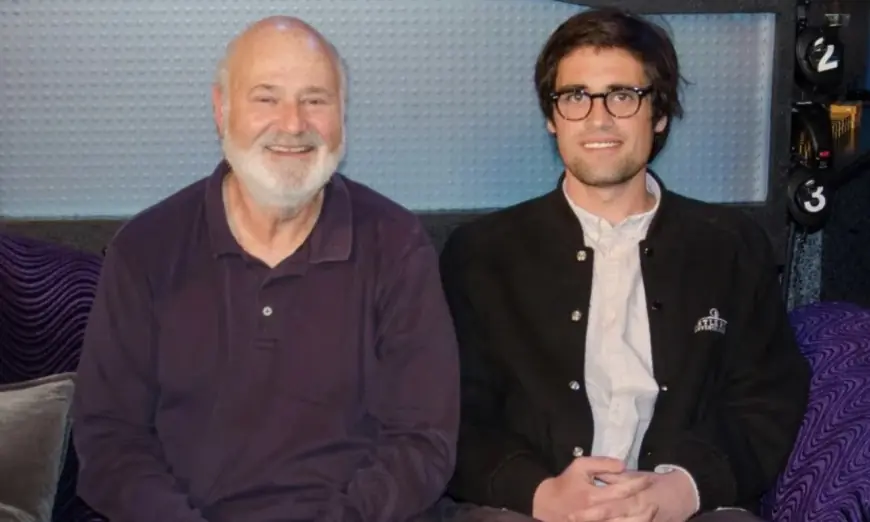
Nick Reiner, the man accused in the killings of filmmaker Rob Reiner and Michele Singer Reiner, is being held in isolation at Twin Towers Correctional Facility while legal and prison procedures move forward — and no family members have visited. The absence of contact highlights a family struggling with grief and the procedural steps that will shape a case that could carry the harshest penalties under California law.
Conditions at Twin Towers: mental-health unit, high observation and no in-person family contact
The visiting room at Twin Towers Correctional Facility is designed for contact, but for Nick Reiner it has been effectively unused. He has been housed for weeks in a mental-health unit in downtown Los Angeles and, after an initial placement on suicide watch, remains in high-observation housing. Prison staff confine him alone in a cell, monitor him every 15 minutes, escort him when he moves within the facility and watch him on camera whenever he leaves the unit.
Law-enforcement sources have said he eats alone, sleeps alone and is allowed contact only with legal counsel and jail staff. On paper he can receive family visitors; in reality, no relatives have walked through the door.
Arrest and the scene in Brentwood: sharp-force injuries and the charges he faces
Nick Reiner, 32, was arrested in mid-December after Rob Reiner, 78, and Michele Singer Reiner, 70, were found with multiple sharp-force injuries at their Brentwood home. Brentwood is described in the context as an affluent enclave on Los Angeles’s west side better known for celebrity real estate than police tape.
Prosecutors have charged him with two counts of first-degree murder and have alleged a special-circumstance allegation of multiple murders. Prosecutors say the attack occurred in the early hours of December 14, 2025, on South Chadbourne Avenue, and that the suspect fled and was arrested later that evening in Exposition Park. Those special-circumstance allegations place the case at the serious end of California’s sentencing framework, where jurors may eventually be asked to weigh whether a defendant should live or die; the charged counts carry a maximum sentence of life without parole or the death penalty.
Court appearances, counsel changes and pleas
The procedural timeline has included abrupt lawyer changes and delayed hearings. A high-profile attorney, Alan Jackson, abruptly withdrew from the case last month, saying he stepped aside because of "circumstances beyond my control, " and later said he still believed his former client was not guilty under California law. A public defender then took over the case.
There are multiple entries in the record about pleas and hearings. At one point he had yet to enter a plea and a court date was set for February 23 after the withdrawal; later, a deputy public defender, Kimberly Greene, entered a not guilty plea on his behalf at a packed Los Angeles courtroom while he stood behind glass in an enclosed custody area. During that courtroom appearance he answered yes when a judge asked if he waived his right for next steps of the case to proceed speedily.
It was noted in court that he was not wearing the suicide-prevention smock he had worn at an earlier December appearance. At the April hearing he appeared with a shaved head, light facial hair and brown jail clothes; he spoke briefly with his lawyer through the glass and at one point a low door in the enclosure was opened so they could crouch and speak face-to-face. The judge later ordered him to return on April 29 for scheduling of a preliminary hearing, where prosecutors will present evidence and a judge will decide whether the case should proceed to trial. The matter will now be assigned to long-time Los Angeles Superior Court Judge Sam Ohta, who has handled many prominent murder, manslaughter and public corruption cases.
Rob Reiner’s family response: silence, shock and disputed sibling counts
Relatives of the late filmmaker Rob Reiner and his wife, photographer-producer Michele Singer Reiner, have kept their distance and have not visited the jail. Those close to the family are described as torn between grief and disbelief as they process the accusation against a family member. One insider told columnist Rob Shuter bluntly: "He killed their parents. That changes everything. " Another insider described the family’s feeling as "grief layered on top of horror, " and a separate insider said the silence is not about cruelty but "about boundaries" and survival.
The context identifies named siblings, but it is inconsistent about how many children Rob and Michele had. One description calls Nick the eldest of three children and names siblings Max and Robbie; another describes him as the third of four children. That detail is unclear in the provided context. The family’s chosen public posture so far has been to make no new statements beyond early expressions of shock and to have no apparent contact with their brother in custody.
Pretrial work ahead and the district attorney’s stance on penalty
Behind the public view, the case is moving toward the routine but consequential steps of an American murder prosecution: discovery exchanges, pretrial motions, psychological evaluations and legal arguments over what a jury will be allowed to hear. Prosecutors have alleged special circumstances that could raise sentencing stakes dramatically if there is a conviction.
District Attorney Nathan Hochman said outside court that his office has not yet decided whether it will seek the death penalty. He said the death-penalty decision "goes through a very rigorous process. We will be looking at all aggravating and mitigating circumstances. "