

















Mexico violence escalates after El Mencho killing as troops, travel and World Cup plans are disrupted

Mexico has seen a wave of coordinated attacks and large-scale security deployments after the capture and death of Nemesio Oseguera Cervantes, known as "El Mencho, " a development that has left parts of the country under siege and raised immediate concerns about travel and major events this summer.
Troop deployments and immediate security response
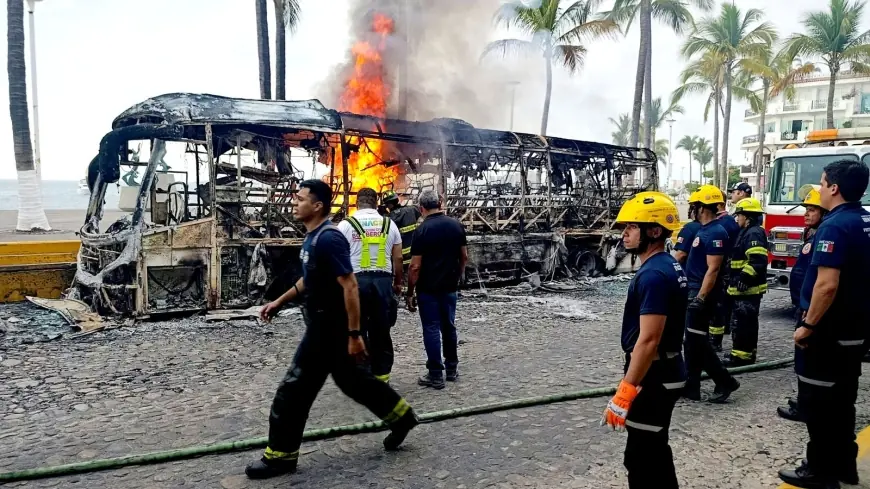
Defence Secretary Ricardo Trevilla said an extra 2, 500 soldiers were sent to western Mexico on Monday, bringing the total deployed since Sunday to about 9, 500 troops as the government moves to bolster security. Images from Jalisco show a member of the National Guard standing near the charred wreckage of a bus that appears to have been set on fire by organised crime groups.
A code red security situation has been declared in parts of Jalisco as forces and local authorities attempt to clear widespread roadblocks and burning vehicles placed across towns and highways.
How El Mencho was captured and how he died
Nemesio Oseguera Cervantes, the leader of the Jalisco New Generation Cartel and widely known as "El Mencho, " was captured by Mexican special forces in Jalisco after operatives tracked down a romantic partner he was meeting, Defence Secretary Ricardo Trevilla said. He was seriously injured in a firefight between his bodyguards and the military commandos deployed to capture him and died while being transported from the town of Tapalpa to the capital, Mexico City.
At least six of El Mencho's security guards were killed during the operation, and three members of the Mexican military were injured in the clash.
Scale and tactics of the CJNG's retaliation
Members of the Jalisco New Generation Cartel launched attacks in many towns and cities where the group is active, engaging in gun shootouts with the military, blockading roads and burning vehicles. In some places cartel members threw spikes and nails onto tarmac to block roads; in others they commandeered buses and other vehicles and torched them in the middle of the road. Smoke was seen billowing over cities and vehicles were set ablaze in Puerto Vallarta.
Dozens of banks and local businesses have been damaged after being set alight, and in many towns residents were warned to stay indoors as the unrest spread.
Casualties and official statements
At least 25 members of Mexico's National Guard have died in Jalisco state since the violence erupted. Security Secretary Omar Garcia Harfuch said a prison guard, a member of the state prosecutor's office, and 30 members of El Mencho's criminal organisation had been killed in the unrest since his death.
President Claudia Sheinbaum praised the army's operation that led to El Mencho's death and said her priority is to guarantee peace and security across the country. "There is calm, there is government, there are armed forces, and there is a lot of co-ordination, " she said, adding that many of the road blocks had been cleared by Monday morning.
Wider disruptions: travel, World Cup venues and Mexico's economic concerns
The unrest has raised questions about security for this summer's Fifa World Cup, which Mexico is co-hosting. Guadalajara, the capital of Jalisco and home to more than a million people, is scheduled to host four matches; Mexico City is scheduled to host five matches; and Monterrey four matches. Javier Eskauriatza, assistant professor of criminal law at the University of Nottingham, warned that when authorities push down on cartels they can get violent pushback and that the power vacuum created by El Mencho's death could lead to instability as contenders vie to replace him.
Dr Eskauriatza added that cartels have an economic interest in keeping major events peaceful, noting that they pay off politicians and local police, and also own restaurants and hotels in some communities, so they benefit if foreign visitors spend money. He said the CJNG's response is in part intended to avoid appearing weak and that social media amplifies those actions.
Travel and commercial disruptions have been significant: the US government has advised Americans in Jalisco to shelter indoors until further notice, and the US State Department opened a 24/7 crisis hotline and called on Americans to shelter in places including the tourist hotspots Cancun, Cozumel and Puerto Vallarta. Canada has cancelled flights to the Puerto Vallarta airport, and flight-tracking information showed many aeroplanes returning to their departure destinations around the world.
Airlines have moved to resume services in stages: Aeromexico announced flights to and from Guadalajara, Puerto Vallarta, Manzanillo and Tepic will gradually resume from today, and Lufthansa said it would be operating flights to Mexico from Frankfurt and Munich today. Mexico's president said flights from Puerto Vallarta, where there was significant violence on Sunday, were expected to resume today or tomorrow.
A CJNG member described the attacks as an act of "revenge" for their leader's death, and local scenes reflected the disruption — a newspaper seller in Mexico City displayed morning editions dominated by the story while federal police were photographed guarding the security secretary's building.