
























Ibm Stock plunges 13% as Citrini report and Anthropic post set off AI ‘scare trade’

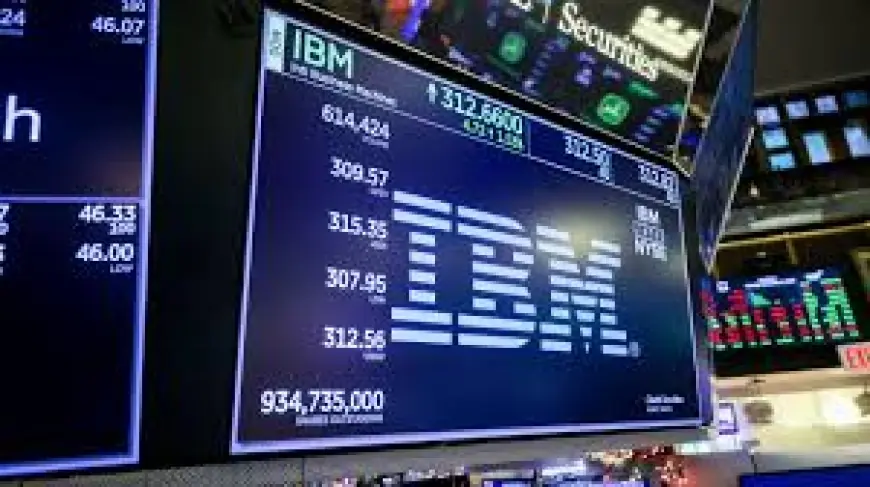
The artificial intelligence “scare trade” erupted again on Monday and sent ibm stock tumbling, with shares closing down 13%, the biggest one-day drop since 2000. The slide came as a bearish weekend report and a Monday post by an AI startup raised concerns about AI’s disruptive reach across delivery, payments and software companies.
Ibm Stock plunges 13% — biggest one-day drop since 2000
IBM shares closed down 13% on Monday, marking the firm’s worst single-day loss in 25 years. The sell-off accompanied broader weakness: DoorDash Inc., American Express Co., KKR & Co Inc. and Blackstone Inc. all slumped by at least 6%, while Uber Technologies Inc., Mastercard Inc., Visa Inc., Capital One Financial Corp. and Apollo Global Management Inc. fell by 4% or more.
Citrini’s weekend scenario and the June 2028 outline
It began after a bearish report published over the weekend by a little-known firm called Citrini Research. The report, released on social media Sunday, outlined potential risks to various segments of the global economy through hypothetical future scenarios and specifically called out food delivery services and credit card companies as ones facing trouble.
Citrini Research, founded by James van Geelen, presented one scenario set in June 2028 in which AI’s disruption had produced mass unemployment for white-collar workers, declining consumer spending, software-backed loan defaults and economic contraction. The report included a clear caveat: “What follows is a scenario, not a prediction. ”
Anthropic’s Claude Code and COBOL mention
On Monday, AI startup Anthropic said in a blog post that its Claude Code tool can help modernize COBOL, a dated programming language that’s mainly run on IBM computers. That specific technical callout helped focus investor attention on IBM’s exposure to legacy systems.
Taleb’s warning and the broader market reaction
Investor caution intensified after Nassim Taleb warned that escalating volatility and even bankruptcies could hit the software sector as the AI rally enters a fragile phase. Taleb argued the markets are underpricing structural risks while overestimating the durability of current AI leaders, a view that amplified selling in software-linked names.
How the Citrini scenarios described delivery and payments upheaval
Citrini’s report sketched outcomes where delivery apps like DoorDash and Uber Eats lose dominance to so-called “vibe-coded” alternatives, and where AI agents seek to save users money by eliminating transaction fees charged by payment processors such as Mastercard and Visa. The report prefaced its exercise by saying, “The sole intent of this piece is modeling a scenario that’s been relatively underexplored. ”
Industry reactions and page sidebar items
DoorDash co-founder Andy Fang responded in an X post, writing, “We definitely believe agentic commerce will be transformative to the industry, ” and adding, “The ground is shifting underneath our feet, and the industry is going to need to adapt to it. ” The same page also carried other headlines touching on topics from private prisons and self-driving car safety to a Shaker revival and White House Ballroom design, plus a note about an Odd Lots newsletter titled “A Radical Change to the Internet. ”
Even as the report warned of severe outcomes, it acknowledged uncertainty: “We are certain some of these scenarios won’t materialize, ” and added, “As investors, we still have time to assess how much of our portfolios are built upon assumptions that won’t survive the decade. ”
What happens next is unclear in the provided context.