











Peter Mandelson arrested on suspicion of misconduct in public office after rapid fall from ambassador role

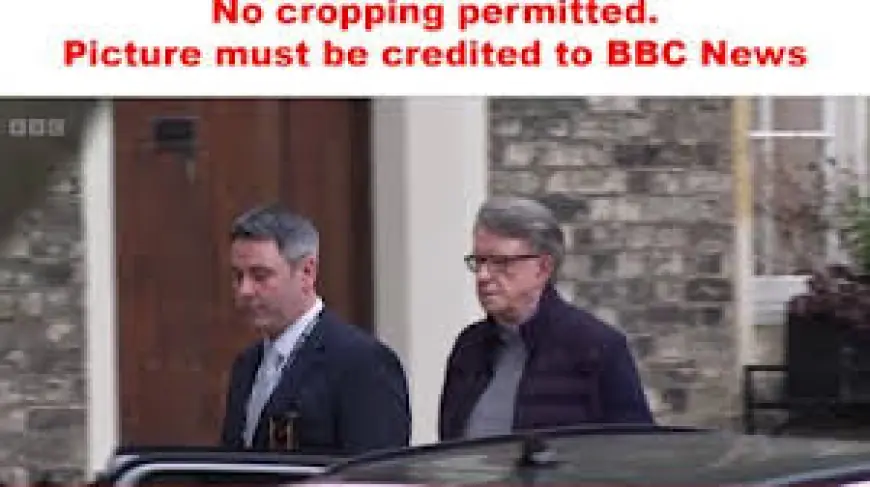
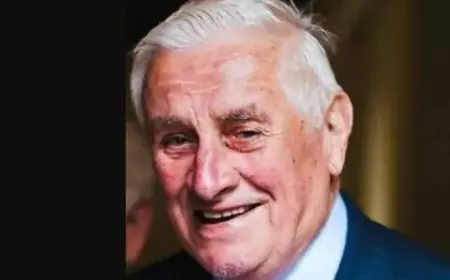
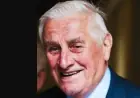
peter mandelson has been arrested on suspicion of misconduct in public office and is being interviewed at a London police station after police officers were seen leading him from his Camden home to an unmarked car. The move follows a sequence of disclosures from the Epstein files that precipitated his rapid removal from the ambassadorial post and prompted national police coordination.
Peter Mandelson led from Camden home and held at London police station
Metropolitan Police officers took Lord Mandelson from his Camden home and placed him in an unmarked car before he was interviewed at a London police station. The arrest was made on Monday, a few days after Thames Valley Police arrested Andrew Mountbatten-Windsor at his home on Thursday; both arrests were made on suspicion of misconduct in public office. It is unclear in the provided context whether any sexual offences are involved: neither the arrest of the former prince nor that of Lord Mandelson were in respect to sexual offences.
Epstein files, released emails and the timeline from 2003 to 2016
The sequence of public disclosures began with US lawmakers releasing Epstein-related emails in September 2025. One 2003 letter showed Mandelson calling Jeffrey Epstein "my best pal" and characterised their closeness; a separate 2008 email had Mandelson offering to "fight for early release" when Epstein faced charges of soliciting sex. Later releases suggested continued contact: emails published in September indicated contact until 2010, and a November release by the US House oversight committee showed he remained in close contact with Epstein until at least 2016.
Financial transfers and the 3m DOJ files
In January this year the US Department of Justice released 3m Epstein files that, among other details, revealed thousands of pounds in bank transfers from Jeffrey Epstein to Mandelson and to his partner and now husband, Reinaldo Avila da Silva. Those transfers were sent in September 2009, about two months after Epstein was released from prison. A June 2023 JP Morgan report was reported to have found evidence Mandelson had stayed in Epstein’s Manhattan townhouse in 2009 while Epstein was in jail.
Political fall: sacking, Starmer, McSweeney and Conservative reaction
Just six months earlier Mandelson had begun serving as His Majesty’s Ambassador to the United States and was, by one account, only a few weeks into the post. The prime minister sent him as a point man to Donald Trump. Keir Starmer initially publicly backed him at Prime Minister’s Questions on 10 September, saying he had full confidence; the following day the prime minister sacked him after the Epstein messages were published. The Foreign Office explained that the messages showed the "depth and extent of Peter Mandelson’s relationship with Jeffrey Epstein is materially different from that known at the time of his appointment. " Morgan McSweeney, described in the context as Mandelson’s friend and protege and Starmer’s then chief of staff, was named as part of his inner circle. Conservative leader Kemi Badenoch called the arrest "the defining moment of Keir Starmer's premiership, " saying the prime minister looked "weak" and that the image of a man he had appointed to the highest diplomatic post being arrested would linger.
Police coordination, wider inquiries and outstanding operational details
Two police forces have moved decisively in the matters arising from the Epstein files, and at least seven other forces are assessing or requesting information about additional allegations, including the use of UK airports for Epstein-linked flights. There is now a national co-ordination team to assist forces assessing the files. When broadcasters approached forces in October about around 90 Epstein-linked flights it did not prompt action at that time. The Metropolitan Police carried out Mandelson’s arrest at his London address, while Thames Valley Police had arrested Andrew Mountbatten-Windsor a few days earlier.
Mandelson's public stance and immediate legal context
The ex-ambassador has not publicly commented in recent weeks on the Epstein files; his position has consistently been that he has not acted in any way criminally and that he was not motivated by financial gain. In earlier interviews he said he regretted ever meeting Epstein and stated, "I relied on assurances of his innocence that turned out later to be horrendously false. " In a January 2026 interview he initially declined to apologise for the friendship, calling himself "not culpable" and saying he did not know the extent of Epstein's crimes. He also conceded to a national tabloid that additional "embarrassing" messages might emerge.
What makes this notable is how quickly the sequence of email disclosures, financial records and political decisions transformed Mandelson’s standing: from a high-profile ambassadorial role intended to solidify relations in Washington to an arrest less than six months after the initial public releases. The legal allegation—misconduct in public office—centres on allegations that while a government minister he shared market-sensitive government information with Jeffrey Epstein, a detail that has driven both criminal inquiry and political condemnation. Further legal and police processes remain underway, and national coordination of inquiries continues.