

























Nvda Stock Price Stuck Near Lowest P/E in Years Even as Earnings Loom

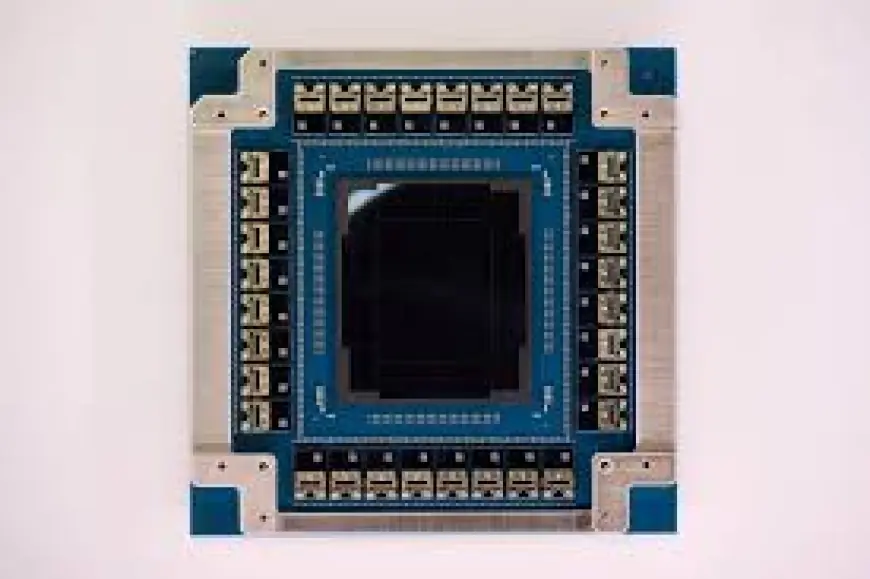
The nvda stock price is trading at markedly compressed multiples ahead of a closely watched earnings report scheduled for Wednesday, leaving investors to weigh strong fundamentals against valuation and structural constraints. That tension matters now because the combination of a major chip transition and index-weight limits is reshaping how gains translate into market value.
Development details: Nvda Stock Price valuation and earnings schedule
The stock is changing hands at less than 24 times estimated forward earnings, a level near its lowest price-to-earnings multiple in five years and well below a five-year average of roughly 38 times. The company is due to release quarterly results on Wednesday, creating a short-term focal point for traders and portfolio managers.
Forecasts compiled in recent analysis show a sharp deceleration in earnings growth: earnings per share for fiscal year 2026 are projected to rise about 57% year over year, versus roughly 145% growth in fiscal 2025. Those projected rates — and the imminent earnings print — are central to why the market is watching valuation indicators so closely heading into the quarter.
Context and escalation
Several concrete forces are compressing the valuation despite robust demand for artificial intelligence hardware. First, investors appear to be repricing the duration of AI spending rather than contesting its scale, which reduces willingness to pay premium, long-duration multiples for the stock. Second, the company is undergoing a technology shift from Hopper HGX systems to a new Blackwell chip architecture; that migration is expected to exert near-term pressure on margins and show up in earnings growth rates.
Evercore analyst Mark Lipacis highlighted an additional structural constraint: the company's weighting in a major market index sits at 7. 4%, a level higher than allowed by the charters of many fund managers. That concentration creates a mechanical headwind — as Nvidia appreciates relative to the market, funds with charter limits face obligations to reduce exposure, which can cap how high the stock’s price-to-earnings ratio will trade.
Immediate impact
The combined effect is tangible. Fund managers constrained by index-charter limits are less able to add shares, diminishing natural buy-side demand even as earnings expectations remain elevated. Margin compression tied to the chip transition flows directly into earnings growth metrics, which investors use to justify P/E multiples; weaker near-term margins therefore translate into lower valuations today.
Market commentary has also flagged downside sensitivity: with lofty expectations built into near-term forecasts, any earnings shortfall on Wednesday could push the nvda stock price lower still. The scale of that risk is amplified by the recent run-up in fundamentals — high growth in 2025 followed by a materially lower projected pace for 2026 makes the stock more vulnerable to disappointments against stretched models.
Forward outlook
The next confirmed milestone is the upcoming earnings report on Wednesday, which will provide fresh, measurable data on revenue, margins and near-term guidance. Investors will be watching the reported margins to gauge the immediate impact of the shift to Blackwell chips and to reconcile that with the projected slowdown in EPS growth from about 145% in fiscal 2025 to roughly 57% in fiscal 2026.
What makes this notable is the structural interplay: strong secular demand for AI hardware coexists with near-term technical and regulatory frictions that blunt valuation expansion. The timing matters because an earnings miss at a moment when fund managers face rebalancing constraints could amplify downward pressure on the stock’s multiple even if fundamentals remain solid over a longer horizon.
For now, the market faces a binary near-term signal — the Wednesday results — while contending with a longer-running adjustment in how investors value the company’s future cash flows amid a major product transition and index-weight limits.