
























New York Faces Near-Impossible Travel and Widespread Disruption as East Coast Blizzard Dumps More Than 22 Inches in Places

Here’s the part that matters: millions of residents are locked down and critical services are strained as a major winter storm slams the north-east. new york is among the hardest-hit, with blizzard warnings and non-essential travel bans putting thousands at immediate risk of being stranded and disrupting flights, transit and power for large populations. Emergency measures are in place while forecasts warn conditions will remain dangerous through the day.
New York frontline: immediate impacts on people and movement
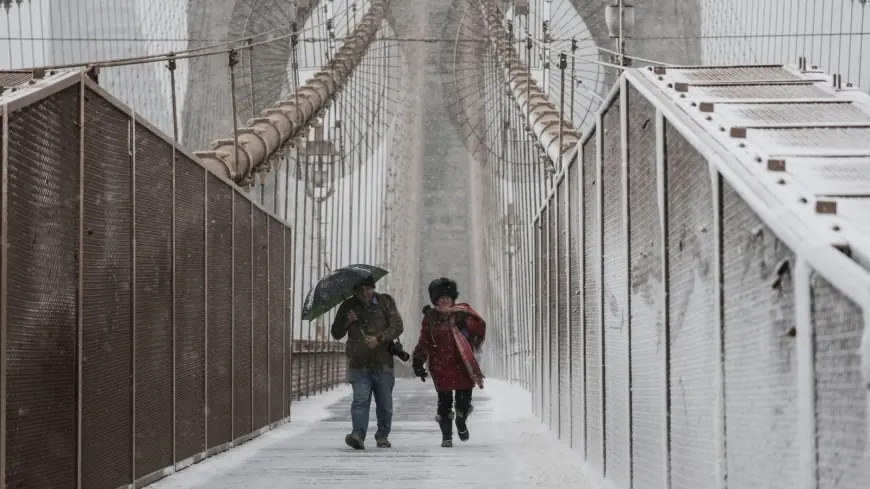
New York City woke to heavy, shin-deep snow in many neighborhoods and a citywide ban on non-essential travel in effect until midday local time (17: 00 GMT). Millions across the metropolitan area and the broader north-eastern corridor have been told to stay off roads; public transit has been suspended in some locations and essential services are operating under emergency conditions. Outreach teams are actively moving homeless New Yorkers into shelters and warming centers.
Storm footprint, snowfall totals and warnings
Parts of the US east coast have received over 22 inches (55. 9 cm) of snow, with more than 15 inches recorded in Central Park and localized reports of up to 2 feet (60 cm) expected in some areas. Long Island’s MacArthur airport totaled 20 inches and Freehold, New Jersey had 19 inches. In the city there were reports of neighborhoods seeing between 8 and 15 inches overnight. Snow fell at an intense pace in places—about 2–3 inches (5–7. 6 cm) per hour early on Monday from New York through Massachusetts—combined with gusts above 30 mph (48 km/h) and very low visibility.
Travel paralysis: flights, roads and services
More than 5, 000 flights into and out of the United States were canceled for Monday, with the largest share of cancellations occurring in New York, New Jersey and Boston. Road travel bans were imposed in multiple jurisdictions; cell phone alerts instructed residents to avoid non-emergency travel through noon. Some delivery services paused overnight operations in the city and a number of cultural institutions and events shut down—Broadway shows were canceled Sunday evening and major landmarks closed Monday.
- Winter storm warnings extend from North Carolina to northern Maine, with warnings also reported for parts of eastern Canada.
- Blizzard warnings stretch from Maryland to Maine; this is the first time in nine years New York City has been under a blizzard warning.
- Snow totals on the ground vary widely by location, from single-digit inches in pockets to more than 20 inches at some sites.
- Officials expect snow to begin tapering off by Monday afternoon, though strong winds and whiteout conditions may persist.
Power outages, schools and emergency declarations
Power failures are widespread: estimates vary, with figures cited in the low hundreds of thousands and others near 300, 000 customers without electricity; one region cited about 115, 000 customers in New Jersey affected and another figure referenced nearly 240, 000. States of emergency were declared in New York, Philadelphia and other cities, while multiple states from Delaware to Massachusetts mobilized readiness efforts. Schools shifted to remote learning in Philadelphia and public school classes were canceled in Boston and New York City for Monday.
Forecast warnings, storm evolution and what might confirm the next phase
Meteorology officials warned that blizzard conditions and crippling impacts would continue through much of the day. One forecaster noted the storm could intensify into a bomb cyclone—a system that deepens by at least 24 millibars in 24 hours—and suggested it may meet that definition as it evolves. Snow is expected to taper off by Monday afternoon, but strong gusts could prolong whiteout conditions and complicate recovery.
Massachusetts' governor urged residents to prepare for power outages by charging devices and assembling flashlights and batteries ahead of prolonged outages. Time-lapse images captured the Empire State Building largely engulfed by overnight snow, underscoring how widespread the disruption has been.
Key takeaways:
- Travel: Non-essential road travel banned in the city through midday local time; public transit suspended in parts of the region.
- Flights: Over 5, 000 cancellations across the country on Monday, concentrated around New York, New Jersey and Boston.
- Snow: Local totals range from roughly 8–15 inches in parts of the city to more than 20 inches at some sites; isolated reports of up to 2 feet expected.
- Power: Outage estimates vary widely; some areas report more than 100, 000 customers affected and regional totals are in the low-to-mid hundreds of thousands.
- Public safety: Emergency declarations, school closures/remote learning, sheltering outreach and cultural-institution shutdowns are already in effect.
It’s easy to overlook, but this is the first blizzard warning for the city in nine years—a reminder that large winter systems can reset expectations quickly. The real question now is how quickly crews can restore power and clear arterial roads once the worst of the snowfall eases and wind-driven whiteouts subside.
If you’re wondering why this keeps coming up: the combination of rapid snowfall rates, sustained high winds and a broad warning footprint—from North Carolina up to northern Maine and into parts of eastern Canada—creates the conditions for an unusually disruptive event across the north-east.