























Power Outage Near Me: Nor’easter to Bring Blizzard Conditions, Coastal Flooding and Local Outage Threats in Maine

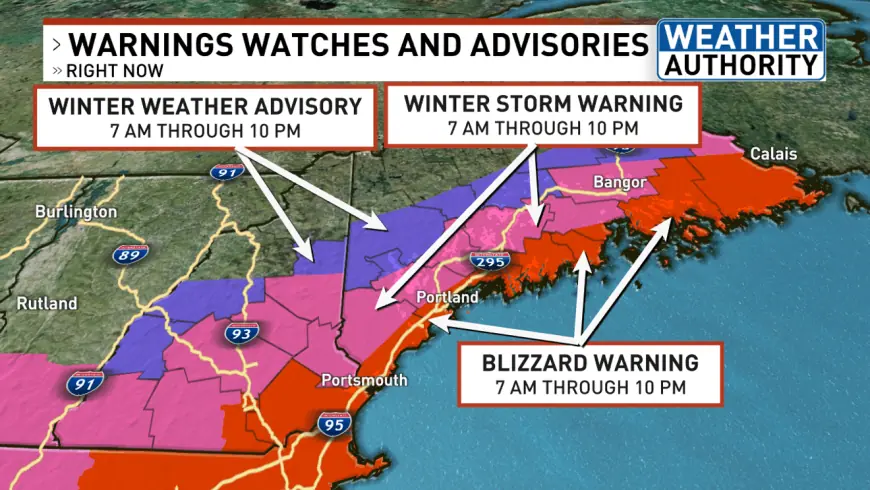
Power Outage Near Me: A powerful nor’easter is expected to impact Maine Monday, bringing heavy snow, blizzard conditions along the coast, strong winds and the potential for coastal flooding — factors that elevate the chance of localized power outages and disruptive travel conditions.
Power Outage Near Me: Why the Nor’easter Raises Outage Risk
The storm will combine heavy snow with strong gusty winds, which increases the potential for power loss in exposed coastal and inland areas. Forecasted wind gusts reach up to around 50 mph in some areas and peak higher on the immediate coast, where gusts are expected in the mid-40s to mid-50s. Those wind speeds, coupled with heavy falling and blowing snow, are cited as elevating outage risk for communities along and near the coastline.
One forecast note describes the snow as drier in character in some locations, which can reduce the likelihood of widespread outages tied to heavy, wet snow on trees. Even so, limited power outages are expected to occur where winds are strongest or where drifting snow and falling limbs affect lines. Residents concerned about immediate impacts should prepare for short-term outages and have a plan for heating, communications and essential needs.
Blizzard Warnings, Coastal Flooding and Travel Restrictions
Blizzard warnings are in effect for the entire Maine coastline for a defined daytime period, with falling and blowing snow expected to create whiteout conditions and visibility reduced to a quarter mile at times. For areas under blizzard warnings, travel is being advised only for emergencies; those who must travel are urged to carry a winter survival kit and to remain with their vehicle if stranded.
A coastal flood warning is in place for parts of coastal York County during an afternoon window, with nearshore swells in the 7–10 foot range that could produce 1–2 feet of inundation in the most flood-prone spots and lead to beach erosion and splashover onto coastal roads. Residents in flood-prone locations are advised to protect property and avoid driving through barricades or water of unknown depth.
State-level office closures have been directed for the day of the storm, reflecting the expectation of difficult travel and the need to give snowfighters and first responders space to work.
Snow Totals, Timing and What to Expect on the Roads
Forecast accumulations vary by location and source, but the general picture is for significant snowfall across much of the state with the heaviest accumulations near the coast and in southern sections. Representative ranges include:
- Majority of Maine: roughly 7–14 inches in many areas
- Coast and Downeast: commonly in the 8–12 inch range, with some coastal pockets likely seeing 6–10 inches or higher where winds redistribute snow
- Inland and Central Maine: lighter totals often between 4–8 inches
- Higher terrain and far northern woods: locally lower accumulations, with pockets of 2–4 inches or under 2 inches in far northern areas
Timing for the start and progression of snow is expected to move from south and coastal zones into inland and northern regions during the daytime, with the heaviest wind and snow intensity peaking late morning into the evening hours. These conditions will create very hazardous travel, especially during peak commute times, and whiteout conditions are possible near the coast when heavy snow and strong winds coincide.
Practical Steps for Residents Expecting a Power Outage Near Me
- Prepare a basic winter emergency kit with warm clothing, flashlights, batteries, nonperishable food and water.
- Confirm a safe plan for heating if power is lost and keep phones charged when possible.
- Avoid unnecessary travel during the blizzard-warning window; if you must travel, bring a winter survival kit and stay with your vehicle if stranded.
- Heed coastal flood warnings and do not drive through flooded or barricaded roadways.
Recent public advisories emphasize taking the storm seriously, limiting travel where possible, and allowing emergency crews room to keep roads clear and communities safe. Conditions are expected to ease after the storm’s primary daytime impact, but localized cleanup and restoration work may continue into the following period.