










Violence erupts in Mexico after El Mencho killed

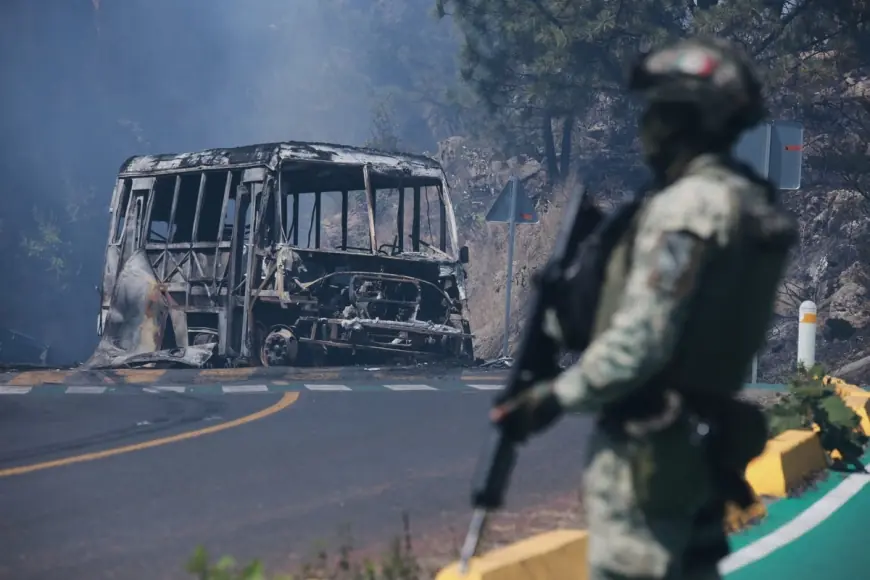
Violence has broken out across mexico after Nemesio Ruben Oseguera Cervantes, known as "El Mencho", was killed following a special forces operation seeking his arrest. The raid in Jalisco set off blockades, burning vehicles and attacks on businesses that spread unrest across large parts of the country.
Violence erupts across Mexico
A wave of unrest followed the operation on Sunday in the town identified as Tapalpa, a location also referenced in some accounts as Talpalpa, in the central-western state of Jalisco. El Mencho, the leader of the Jalisco New Generation Cartel (CJNG), was seriously injured in clashes between his supporters and the army and later died while being transported to Mexico City; other accounts say he died in custody after sustaining injuries during the special forces action on Mexico's Pacific coast in Jalisco state. Four people described as CJNG members were killed during the operation and Mexican troops are said to have killed four people at the site. Three army personnel were also injured.
Operation, injuries and death
Nemesio Oseguera Cervantes is named in some reports with the middle name Ruben; his age is given as 60 in some accounts. The operation was aimed at capturing him. He was injured during the raid and later died while being moved to the capital, with other accounts noting he died in custody after sustaining injuries. CCTV footage appears to show an attack on a Mexican National Guard unit; that footage has been geolocated to San Isidro in the state of Jalisco. A member of the Jalisco New Generation Cartel later said the fires and sporadic gunfire seen in the unrest were revenge for his killing.
Roadblocks, arrests and damage
Retaliation for the drug lord's death saw CJNG members block highways with burning vehicles and set fires to businesses. Some 250 roadblocks were in place across the country during the unrest, with 65 in Jalisco. In a later update the Mexican security cabinet said four blockades remained active in Jalisco. The cabinet said 25 people had been arrested—11 for alleged participation in violent acts and 14 for alleged looting and pillaging. Shops were on fire and about 20 bank branches were attacked, and plumes of smoke were visible over multiple cities, including downtown Guadalajara and along the waterfront in Puerto Vallarta.
Transport, flights and airports
Jalisco's governor, Pablo Lemus Navarro, declared a code red in the state, pausing all public transport and cancelling mass events and in-person classes. Several airlines cancelled flights to Jalisco: Air Canada, United Airlines and American Airlines are listed among carriers that suspended services to the area, and Aeromexico is also named in flight suspensions. Some US carriers cancelled flights to Puerto Vallarta and Guadalajara, while Lufthansa is operating flights to Mexico from Frankfurt and Munich despite the unrest. Visitors and residents have faced airport closures that have left some travellers unsure when they can leave.
Sport in Mexico faces disruption
Sporting events were disrupted: four soccer matches across Mexico were postponed after the surge of violence near Guadalajara. Two top-tier fixtures scheduled for Sunday—Querétaro v Juárez FC in the men’s league and Chivas v América in the women's league—were indefinitely postponed, and two second-division matches slated for the same day were cancelled. Despite the unrest, the Mexico national team remains scheduled to play Iceland in a friendly at the Corregidora Stadium in Querétaro on Wednesday. Organizers of the Mexican Open men's tennis tournament in Acapulco said the event would proceed from Monday under existing security protocols, and the Merida Open women's tournament is also scheduled to commence. Guadalajara is named as one of three Mexican host cities for the forthcoming World Cup, alongside Mexico City and Monterrey; World Cup matches will also be played in 11 US cities and two Canadian cities, Vancouver and Toronto.
Reactions and local accounts
Mexican President Claudia Sheinbaum said there was "absolute co-ordination" between state and federal officials in the response and urged people to stay "calm and informed", adding that "in most parts of the country, activities are proceeding normally". The US warned its citizens to shelter in place in five states: Jalisco, Tamaulipas, areas of Michoacán, Guerrero and Nuevo León. The UK government noted that "serious security incidents" had been reported in Jalisco and advised visitors to "exercise extreme caution" and follow the advice of local authorities.
Tourists in the popular Jalisco beach resort of Puerto Vallarta described dark plumes of smoke rising from around the bay and called parts of the resort a "war zone". A US visitor, Jim Beck, who has travelled to Puerto Vallarta for more than 20 years, described panic on the streets: "Today, everybody was running down the streets in panic and terror as cars were blowing up all over the place. " Beck said he and his partner went out for breakfast and encountered taxis and a bus set alight and blocking the road; they raced back to their hotel and were under lockdown from around 10am. He said they had been aiming to return to the US on Wednesday but were unsure if they would be able to leave because nearby airports had closed.
No civilian fatalities were reported in some accounts of the unrest. The full sequence of events began with the special forces operation in Tapalpa/Talpalpa on Sunday, the injuries and death of El Mencho, the killing of four people at the scene, and the widespread retaliatory actions that followed across multiple states.
All counts, names and actions above are drawn from official updates and eyewitness and local accounts made public during the unrest.