

















Tottenham Vs Arsenal: How Arsenal’s right-side mastery deepened Spurs’ survival headache and forced Igor Tudor’s blunt reset

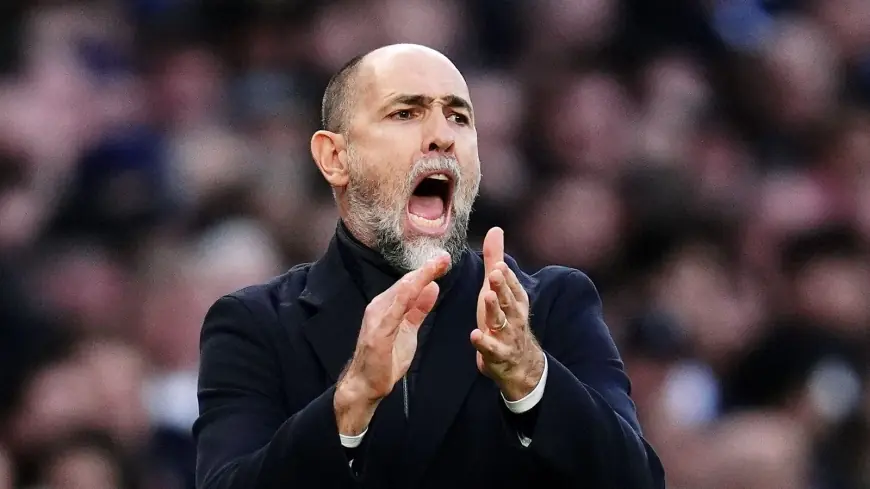
Tottenham Vs Arsenal matters now because the result did more than hand Arsenal a decisive derby win—it widened the gap at the top and immediately widened Tottenham’s survival problems. Arsenal went 4-1 winners, restored a five-point lead at the summit, and left Tottenham four points above the relegation zone; the defeat triggered Igor Tudor’s call for an urgent cultural reset and underlined where Spurs must change first if they are to reverse a troubling run.
Impact on Tottenham’s season and the immediate signals for Igor Tudor
Spurs sit four points above the bottom three and are the only Premier League side to have not won a game in 2026. Tudor, parachuted in to try to save the campaign, used his first game in charge to deliver home truths about the squad he inherited from Thomas Frank. He said the match showed him the full picture — that the team needs to shed bad habits, become more serious and flip a mental switch on both sharpness and physicality. With 11 games remaining to retain their top-flight status, Tudor insists there is time but insists hard work, humility and a new daily standard of duels, second balls and running are non-negotiable.
How Arsenal’s right flank shaped the 4-1 outcome
Arsenal’s superior quality surfaced in a 4-1 north London derby win, but the manner of the victory also highlighted Tottenham’s tactical vulnerabilities. Spurs’ 3-5-2 shape under Tudor, and the decision not to simply sit in, left forward areas exposed on Sunday. When the game was still in the balance in the first half, Arsenal’s clearest attacking edge came down the right, where Bukayo Saka and Jurrien Timber were dominant. Timber, described as an attacking right-back who mixes supporting runs, overlaps and inside movement, often had time on the ball to pick passes; he was left free on the right to set up Viktor Gyokeres for Arsenal’s second goal. Sarr was left to handle Saka from a makeshift left-back position and could not stop the cross that led to Arsenal’s opener.
Tactical friction inside Spurs: who scrambled to cover and why it mattered
Tottenham’s system frequently forced players into unfamiliar defensive duties. Xavi Simons, deployed as a second striker, was sometimes required to run back into a left-back-type position; Pape Matar Sarr had to come across from midfield and Mickey van de Ven provided cover from centre-half. The result was long recovery distances for Simons and Sarr, moments where players not used to defending one-on-one were exposed, and confusion about responsibilities at key moments. That reactivity—helping Djed Spence when Arsenal doubled up down the flank, rather than preventing the overload—gave Arsenal the openings they needed and allowed the Gunners to produce moments of quality when it mattered.
- Immediate implication: Spurs’ defensive shape and personnel choices left space for Arsenal to exploit; Tudor wants habit changes now.
- Affected groups: Tottenham players who were asked to cover unfamiliar roles, coaching staff tasked with rebuilding confidence, and supporters watching a slide toward a relegation battle.
- Next signals to watch: evidence of improved physicality in training, clearer defensive roles in match line-ups, and whether Spurs can end their 2026 winless run.
Tudor’s verdict: blunt, pragmatic and focused on habits
Tudor’s reaction was unsparing. He described seeing the truth of the squad in his first game and said the team must change mental habits and acquire the physicality to compete from the first minute. He called for more running, better defending, more duels won and a greater willingness to take the ball when pressing high; he also acknowledged that Arsenal currently have more power, energy and belief. Tudor emphasised that players showed passion and a desire to execute the plan, but that commitment alone did not translate into the required actions on the pitch. He remains convinced survival is possible and answered affirmatively when asked if there is time to put things right.
Arteta, Arsenal and the bigger picture at the top
Mikel Arteta was notably pleased with his side’s response after a midweek game in which they squandered a 2-0 lead at Wolves on Wednesday. The 4-1 derby win restored a five-point gap over Manchester City at the top of the table, and Arteta suggested the victory could be a turning point. He praised the performance as a return to the levels seen across the season, highlighting the team’s ability to produce decisive moments of skill. Eberechi Eze followed up a hat-trick in the derby at the Emirates with another two goals in this match, and Arteta arrived at a rare first week without a midweek fixture for two months feeling proud of the reaction over the previous 72 hours. The Wolves result also leaves the mathematical note that City would win the title if they were to win all of their remaining 11 games.
Here’s the part that matters: the match was both a statement for Arsenal and a diagnostic for Tottenham. The real question now is whether Tudor’s demands — shedding bad habits and becoming more physical from minute one — translate into tangible changes quickly enough to alter Spurs’ trajectory.
What's easy to miss is that much of Tudor’s task is structural: he is dealing with a 3-5-2 framework and inherited behavioural patterns from the previous regime, and that combination showed up clearly in this derby.