




















Ethan Hawke at Two Peaks: 'The Black Phone' Trending on Netflix as 'Blue Moon' Draws Oscar Nominations

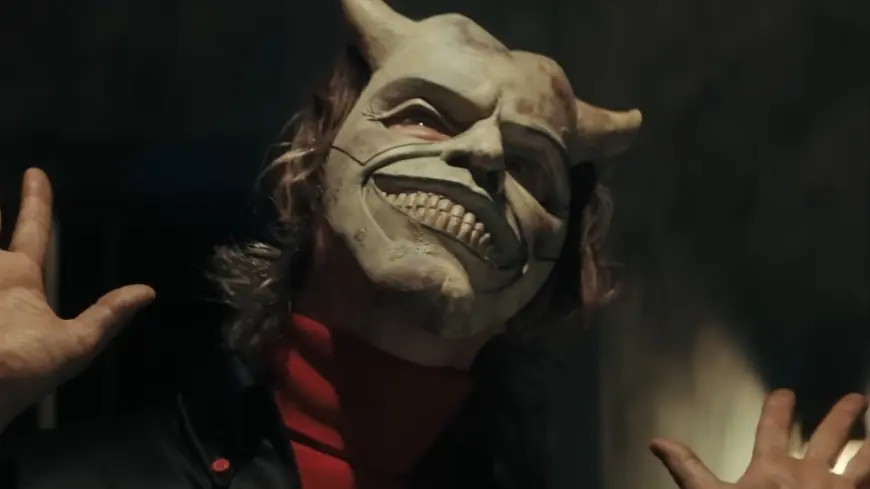
Ethan Hawke is appearing in two very different headlines: The Black Phone is climbing the Netflix charts while Blue Moon — a one-night biopic directed by Richard Linklater — has generated Academy Award nominations for both its writer and Hawke. The twin visibility matters because it highlights both franchise momentum for a horror series and awards recognition for a character study that took more than a decade to shape.
Scott Derrickson and The Black Phone on Netflix
Scott Derrickson, best known for directing Doctor Strange and earlier horror work such as Sinister and The Exorcism of Emily Rose, directed The Black Phone, a 2021 horror film that is currently sitting at number nine on Netflix. Adapted from a Joe Hill short story — the same author who wrote Locke & Key before that property reached Netflix — the film is set in 1978 and centers on Finney Blake, played by Mason Thames, who is the latest captive of a local child-killer known as "The Grabber. " Thames, who previously starred in the live-action How To Train Your Dragon, portrays a boy held in a barren basement with only a mattress, a toilet and a disconnected black phone. That phone begins to ring, and the callers are The Grabber's previous victims offering advice from beyond the grave on how Finney might escape.
Box Office Performance and The Black Phone 2
The Black Phone spawned a sequel, Black Phone 2, which was also directed by Derrickson and hit theaters on October 17, 2025. The sequel cost $30 million to produce and pulled in just over $132 million at the box office, short of the original's haul of over $161 million. The weaker box office comparison has created a practical constraint on franchise prospects: financial underperformance makes a third installment contingent on continued fan interest and studio appetite.
Ethan Hawke’s Roles: The Grabber and Lorenz Hart
Ethan Hawke appears in The Black Phone as The Grabber, a role he has said he would like to revisit. After the release of Black Phone 2, Hawke signaled a desire to return to the character, saying he would like "to go to hell with the Grabber, " to explore what made him and to turn a future installment into a character piece about the killer's origins and how he haunts other people's dreams. Simultaneously, Hawke stars in Blue Moon as lyricist Lorenz Hart, a performance described in the film's coverage as a winning portrayal and one that has earned him a nomination for the Academy Award for best actor.
Robert Kaplow’s Blue Moon Script and Oscar Nomination
Robert Kaplow, a 71-year-old former New Jersey high school teacher described as a music-world wunderkind, wrote Blue Moon — his first screenplay — over roughly 14 years after discovering letters from a young woman to Lorenz Hart at an estate sale in New York. Kaplow has received an Oscar nomination for original screenplay for that work. Blue Moon, directed by Richard Linklater, is presented as an all-in-one-night biopic that imagines the opening-night party for Oklahoma!, the first Rodgers project without Hart, and condenses emotional history into roughly 90 minutes of screen time.
Rodgers, Hart and the Narrative Choices in Blue Moon
The script places an imagined afterparty around a real historical moment: the opening night of Oklahoma!, with Richard Rodgers portrayed by Andrew Scott. Kaplow says the film’s staircase scene was an attempt to compress a 25-year creative partnership into the span of a minute or two; he describes Rodgers and Hart as people who love and respect each other as artists and friends while also being exasperated by one another, "walking in an emotional minefield. " Kaplow recalled telling Linklater that he had read the script a hundred times and that it still put tears in his eyes, calling one sequence a kind of love scene for people who are parting. He also notes that the facts suggest Hart attended Oklahoma!'s opening night but that whether Hart showed up at the afterparty is Kaplow's invention and that he liked the idea of Hart showing up as an act both brave and slightly self-destructive.
Kaplow and Hawke collaborated on finding Hart’s voice for the film. Kaplow says Hawke, who is a writer himself, has an actor’s appetite for language and brings lines to life; one line in the film has Hart saying, "Larry Hart is drunk with beauty — wherever he finds it. In men, in women, in the smell of cigar stores. " Details on how Kaplow and Linklater put the voice and tone of Hart on the page are unclear in the provided context.
What the Convergence Suggests
The simultaneous prominence of a horror franchise on streaming and a small, rigorously crafted biopic in awards conversation demonstrates two separate effects: franchise visibility can spike quickly on platforms like Netflix, while long-term creative investment — a screenplay refined over roughly 14 years — can lead to industry recognition. What makes this notable is the contrast in timelines and metrics: The Black Phone’s streaming position and established director deliver rapid audience attention, while Blue Moon’s route to an Oscar nomination shows how a protracted development process can culminate in critical acclaim. The coverage also includes a brief suggestion to check out a Kristen Stewart horror offering on Hulu, and related-story mentions that 'KPop Demon Hunters' swept the Annie Awards and 'Four Minus Three' won the Europa Cinemas Prize.
Both projects keep Ethan Hawke visible across different audience registers: mainstream horror viewers encountering The Grabber and awards-focused audiences seeing his Lorenz Hart. A third Black Phone installment remains a possibility if fan hunger and studio economics align, while Blue Moon’s nominations confirm that the long arc of Kaplow’s writing has yielded measurable recognition.