
























NYC Travel Ban February 23, 2026: Mayor Mamdani Shuts Down New York as Historic Blizzard Drops 30 Inches

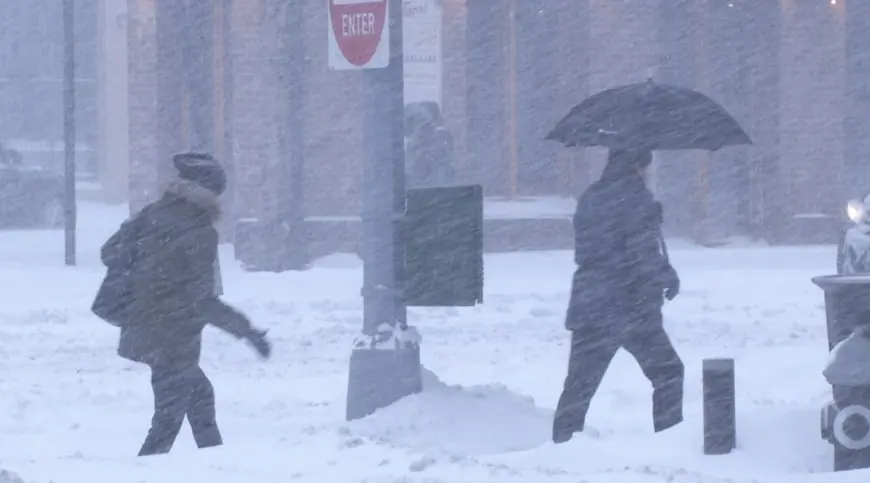
New York City travel ban is in full effect this Monday morning as a catastrophic nor'easter — already being called one of the worst winter storms in the city's modern history — buries all five boroughs under more than 30 inches of snow. Mayor Zohran Mamdani ordered the city-wide travel ban during a press conference Sunday afternoon while declaring a State of Emergency for all five boroughs. All city streets, highways, bridges, and tunnels closed to all vehicular traffic — including commercial trucks, electric bicycles, scooters, and mopeds — effective 9:00 p.m. ET Sunday, February 22, 2026. The New York travel ban is scheduled to lift at 12:00 p.m. ET today, though Mayor Mamdani has warned conditions may remain treacherous well beyond noon.
NYC Travel Ban: What Is Closed, What Is Exempt
The NYC travel ban began at 9 p.m. Sunday and ends at noon Monday ET. All city streets, highways, bridges, and tunnels are closed to non-emergency vehicular traffic. Violating the New York travel ban carries serious legal consequences — any person who knowingly violates the provisions of this Emergency Executive Order shall be guilty of a class B misdemeanor.
The following vehicles are exempt from the NYC travel ban:
| Exempt Vehicle Category | Details |
|---|---|
| MTA buses and Access-A-Ride | Essential transit only |
| Emergency services | Police, fire, ambulance |
| Healthcare workers | Traveling to hospitals, pharmacies |
| Essential retail workers | Grocery stores, gas stations, laundromats |
| Media personnel | Traveling to newsrooms and broadcast facilities |
| Hotel workers | Traveling to workplace only |
| Government agency contractors | Emergency response operations |
Historic Blizzard Behind the New York Travel Ban: By the Numbers
The storm's scope is vast, spanning from Virginia to New England. It's an exceptionally rare setup with all 29 counties in the viewing area covered under a Blizzard Warning — something not seen since the Blizzard of 1996, with an upper-air setup resembling the Blizzard of 1978. The National Weather Service said blizzard conditions would quickly materialize from Maryland up to southeastern New England, making travel extremely treacherous, with snow falling at a rate of two to three inches per hour at the storm's peak, with nearly 54 million people in its path.
The updated forecast calls for blizzard conditions with total snow accumulations between 17 and 24 inches and winds gusting as high as 60 mph. Some areas east of the city are tracking even higher totals, with up to two feet or more depending on where the heaviest snow bands set up.
New Jersey and Westchester Travel Bans: Tri-State Shutdown
The New York City travel ban is not an isolated measure — the entire Tri-State region is locked down. Multiple interstate highways in New Jersey issued a travel ban, along with New York City, Westchester, and Suffolk counties. Westchester County enforced a full road ban from 9 p.m. Sunday until 10 a.m. Monday for all non-essential travel, with exceptions only for emergency vehicles such as police, fire, and ambulance. The New Jersey Department of Transportation enforced travel restrictions for commercial vehicles starting at 3:00 p.m. Sunday on several Interstate highways, including I-76, I-78, I-80, I-195, I-280, I-287, I-295, I-676, and NJ Route 440. This storm could likely be the worst since 1996 for the state.
MTA Service During the NYC Travel Ban: What's Running
Public transit remains operational but severely limited, with subway service reduced to essential lines and buses operating on skeleton schedules. The Metropolitan Transportation Authority reported that several subway lines were suspended due to flooding in tunnels and downed power affecting signals. Longer accordion-style buses have been replaced with 40-foot standard buses equipped with chained wheels. Subway and railroad teams are monitoring switches and tracks while clearing snow from platforms, stairs, and entrances. MTA advises all customers to check MTA.info or the MTA app before attempting any travel today.
Schools, Broadway, and City Services Shut Down
All public schools are closed Monday — including remote learning — as the major storm continues to grip the city. Broadway theatre owners and producers reached a consensus that all evening performances with curtain times at 6:00 p.m. or later on Sunday, February 22 were canceled. New York's state of emergency also suspends Alternate Side Parking for Monday, February 23, and directs city agencies to monitor and enforce against price gouging. All branches of the Brooklyn Public Library, New York Public Library, and Queens Public Library are closed. NYC Ferry is also reporting possible service impacts with a late start to Monday operations.
What New Yorkers Need to Know Right Now
Mayor Mamdani cautioned that conditions could remain dangerous even after the storm passes Monday afternoon. Daytime temperatures slipping above freezing followed by overnight lows dropping to the low 20s will cause snowfall to melt then refreeze, resulting in dangerously icy sidewalks and streets citywide. Older adults should stay indoors, avoid shoveling, and take steps to prevent slips and falls. A Code Blue is in effect, meaning no one will be turned away from city shelters. The city has deployed 22 warming buses across all five boroughs. New Yorkers are urged to stay home, monitor NYC.gov and MTA.info for updates, and treat even the post-noon period with extreme caution as conditions remain hazardous.