














El Mencho killed in military operation as cartel violence sweeps multiple states

The leader of the Jalisco New Generation cartel, identified in reports as Nemesio Oseguera Cervantes and as Nemesio Ruben Oseguera Cervantes and widely known as el mencho, was killed during a special-forces operation that triggered deadly clashes, arrests and a wave of retaliatory violence across at least eight states.
Operation details and official account
The defence ministry described the action as "planned and executed" by the country's special forces and said aircraft from the Mexican Air Force and the National Guard were deployed. The operation took place in the town of Tapalpa in Jalisco state. several armoured vehicles and weapons, including rocket launchers, were seized during the operation.
El Mencho: who he was and cartel reach
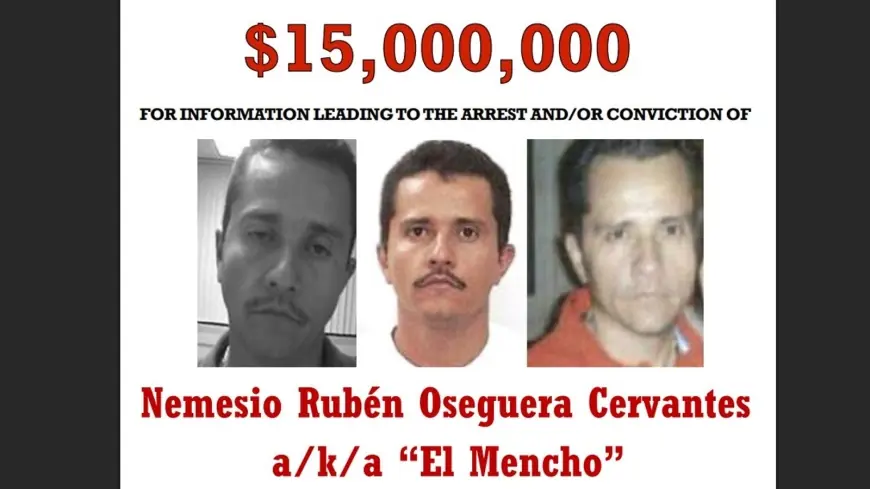
The man known as El Mencho was named in the aftermath as Nemesio Oseguera Cervantes; another version of his name appears as Nemesio Ruben Oseguera Cervantes. He was described as a 59-year-old former police officer who ran the Jalisco New Generation (CJNG), a criminal organisation responsible for trafficking large quantities of cocaine, methamphetamine and fentanyl into the United States. The US State Department had offered a $15m reward for information leading to his capture.
Casualties, arrests and seizures
Clashes in Tapalpa left four CJNG members dead. Troops came under fire and killed four people, and three others, including Oseguera Cervantes, were wounded and later died while being transported to the capital. Separate statements noted three members of the armed forces were wounded in the operation. Two additional people were arrested and a range of weapons and armoured vehicles were taken during the action.
Retaliation and unrest across multiple states
Following the operation, CJNG forces retaliated by setting cars alight, building roadblocks and attacking security forces in eight states. Reports described burning buses used as roadblocks, plumes of smoke over several cities including Guadalajara, and gunmen on the streets in Jalisco and other areas. In some regions cartel operatives blockaded highways with burning cars and torched businesses, paralysing parts of the country.
Impact on civilians, tourism and travel
The unrest trapped potentially thousands of tourists in the Jalisco resort of Puerto Vallarta. Flight operations were suspended by multiple airlines, creating disruption to travel. The US State Department issued a shelter-in-place warning for US citizens in the states of Jalisco and Tamaulipas, and for some areas in Michoacan, Guerrero and Nuevo Leon. Mexico's president, Claudia Sheinbaum Pardo, urged people to remain calm and wrote on X that in most parts of the country activities are proceeding normally.
International cooperation and reactions
the United States provided intelligence that assisted the operation, and a US diplomatic post described the action as carried out within the framework of bilateral cooperation with complementary intelligence. A US official, the deputy secretary of state Christopher Landau, previously ambassador to Mexico, characterised the killing as a great development for both countries and for the region.
One reporting line noted the Jalisco New Generation cartel had recently been designated as a foreign terrorist organisation by the previous national administration. The security operation and its immediate fallout have created intense instability in several states, with forces seizing heavy weapons and armoured vehicles while residents and visitors faced severe disruption.
Details remain fluid: some accounts describe the sequence of wounds and transport differently, and other elements of the aftermath are unclear in the provided context. Recent updates indicate unrest continues to affect travel and public safety in multiple areas.