




















French Alps 2030 handover in Milan reshapes planning, venue trade-offs and early signals for the 2030 Winter Olympics

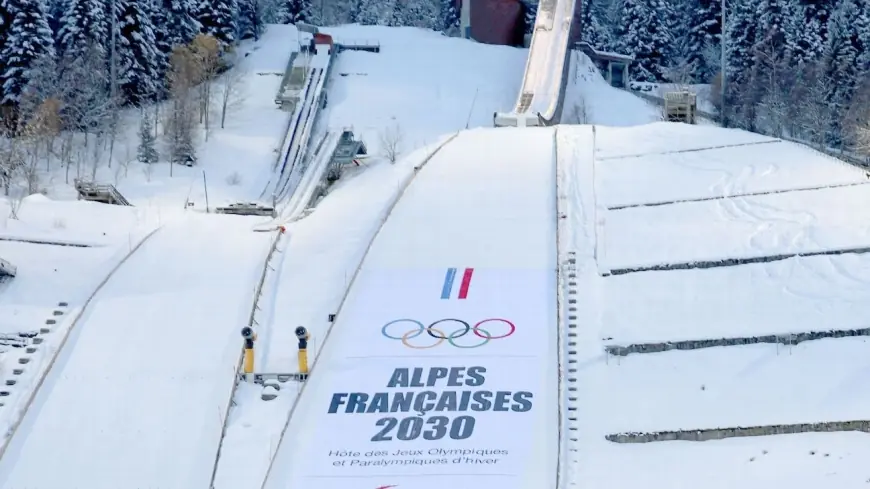
The handover in Milan matters because it forces immediate constraints and promises that will shape the 2030 winter olympics long before the first athlete skis or skates: organizers have already agreed that some events will sit outside France, the program will be finalized by June, and about 15% of sports and venues remain undecided. That combination of early limits and open questions will determine which towns host marquee events and which new disciplines might make the cut.
Contextual rewind: why the Milan handover changes the frame for French Alps 2030
For a little over two weeks in northern Italy, Olympic stars from Mikaela Shiffrin to Alysa Liu to Elana Meyers Taylor to Jordan Stolz wowed crowds, while viewers became experts on curling ethics and ice dance twizzles. On Sunday a handover ceremony will take place and a flag will be passed to representatives of French Alps 2030, handing responsibility to a team that has already agreed to keep legacy and venue reuse central to planning.
That early stance—refusing new, one-off builds that lack a clear regional legacy—explains why speed skating will be held in pre-existing arenas outside France and why roughly 15% of sports and venues remain unsettled. The decision to favor existing venues is an explicit constraint shaping bids for individual disciplines and the wider program.
How the 2030 Winter Olympics will be spread across France — and where speed skating might land
The Games, branded French Alps 2030, are planned to be mostly spread across south‑east France with venue clusters in Nice, Briançon, Savoie and Haut‑Savoie. Figure skating currently does not have a confirmed location but has been earmarked to take place in Nice; curling and ice hockey are also planned for Nice.
- Speed skating will take place in pre‑existing venues in either Turin (northern Italy) or Heerenveen (the Netherlands).
- Organizers say they do not want to build new venues that would lack a definite legacy in the host region.
- For the first time, a Games discipline will be staged in another independent European country rather than an overseas territory.
- Full schedule including times of medal events is part of the planning documents being assembled, with final details to be confirmed by June.
Grospiron, president of the French Alps 2030 organising committee, said holding speed skating outside France was a condition agreed on when accepting the bid. He spoke at a media conference in Milan on Saturday, the day before the 2026 hosts hand over responsibility for the Games, noting the decision has already been taken so the organising committee has to proceed on that basis.
Athletes, rivalries and the early competitive picture
Here’s the part that matters: the recent Olympics exposed early talent edges and roster trends that will ripple into planning and expectations for 2030 winter olympics. The U. S. beat Canada 2‑1 in overtime in the women's gold medal game, and the tournament produced breakout stars and veteran tally lines that shape national outlooks.
- Caroline Harvey was named tournament MVP; Abbey Murphy and Laila Edwards are also highlighted as rising players—Harvey, Murphy and Edwards are all 23 or younger and would have been the youngest players on Team Canada.
- Aerin Frankel allowed just two goals on 99 shots, set the Olympic record for most shutouts (three), and will return as a 31‑year‑old in France.
- Taylor Heise, Hannah Bilka and Tessa Janecke are listed as part of a young U. S. core.
On the men's side, a wider field of contenders is expected: Sweden and Finland remain world powers despite coaching issues in 2026; the Czech Republic found form late against Canada; Germany underperformed but retains talent; Switzerland is rising; Latvia played hard; and Slovakia is noted as a breakout with three recent top‑10 draft picks—Juraj Slafkovsky, Dalibor Dvorsky and Simon Nemec—suggesting long‑term upside.
What's easy to miss is that those athlete trends will influence national preparations, selection philosophies and where federations pressure organizers for practice access and venue timelines.
New sports, program questions and the freeride push
The IOC plans to announce the program for the 2030 winter olympics in June, and freeride—defined as skiing and snowboarding on natural, ungroomed, steep terrain—is likely to debut. Nicolas Hale‑Woods, CEO of the Freeride World Tour, described the discipline as the original ski discipline and said the proposed program would feature 16 men and 16 women in both ski and snowboard, with qualifying modeled similarly to surfing.
Additional events under consideration include cross‑country running, cyclocross and ice climbing. Mia Jones, 20 and the daughter of big‑mountain snowboard pioneer Jeremy Jones, won the inaugural FIS Freeride World Championship in women's snowboarding earlier this month. Ski mountaineering, which made its Olympic debut at Milan‑Cortina 2026, has not yet been confirmed as a medal event in the French Alps, and the future of Nordic combined—the only 2026 event without a women's competition—remains undecided. Organizers will also decide whether to add or remove any events as they finalize the program.
Mini timeline and what comes next
- Milan‑Cortina 2026 ran for a little over two weeks in northern Italy and set recent context for handovers and cross‑border venue use.
- Saturday: French Alps 2030 organizers spoke in Milan the day before the formal handover; on Sunday the handover ceremony will pass the flag to French Alps 2030 representatives.
- June: the IOC plans to announce the program for French Alps 2030; about 15% of sports and venues remain undecided until then.
- Earlier this month: Mia Jones won the inaugural FIS Freeride World Championship in women's snowboarding.
The real question now is how host towns in Nice, Briançon, Savoie and Haut‑Savoie will absorb these constraints and leverage pre‑existing arenas in Turin or Heerenveen for speed skating; details may evolve and the schedule is subject to change.
One final, incomplete note carried over from early coverage: a passage ends with the line "I'll take this as motivation, and I"—unclear in the provided context.