



















Wayne Gretzky Addresses Strained Ties with Canada While Enjoying Family Time in Milan Ahead of Gold Medal Game


Wayne Gretzky has publicly addressed the fallout from a year-old rupture with Canada while spending time in Milan with his family ahead of the Olympic gold medal final, a pair of recent on-the-ground moments that matter because they shape how fans and critics are responding as the headline Canada–U. S. matchup approaches.
Wayne Gretzky: Milan, family and the Olympic final
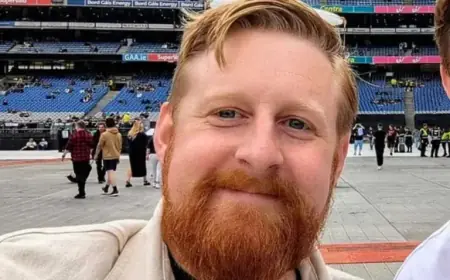
Gretzky is in Milan as a fan and will be cheering on Team Canada in the gold medal final. He is in the city with his three sons and described the trip as a great time. He is not traveling on behalf of a network or company; he simply took his kids to cheer on Canada. Those details position him as a visibly present supporter even as questions about his relationship with the country swirl.
Panel appearance and the loyalty question
More than a year after he blew up his relationship with Canada, Gretzky chose to address the issue on a broadcast panel ahead of the Canada–Finland semi-final. Host James Duthie pressed him about an unsettling year for Canadians and rising tensions with the United States, framing the moment as one in which Gretzky had been drawn into the conversation. When the line of questioning landed, he gripped the microphone with both hands and laughed in a manner that suggested discomfort rather than ease.
What he said about priorities and the game
When asked what message he had for Canadians, Gretzky replied that the immediate priority should be the game itself and emphasized his continued desire for Canada to win a gold medal, saying his support for that outcome has not wavered. He closed by likening Canada and the U. S. to siblings who will fight and then come back together, framing the dispute in familial terms.
A fan’s nervous moments in the arena
At the arena in Milan someone recognized Gretzky signing a photograph from his 1998 Nagano Olympic appearance on the wall and he left a message there. Observers could see nerves on both Gretzky and Mark Messier during recent matches: Canada pulled through in overtime in the quarterfinal and then beat Finland in the semifinal with a last-minute goal on Friday. A friend noted Gretzky was so nervous he could not sit and had to walk around. The hockey world is anticipating what is expected to be the most watched game ever on Sunday morning, and Gretzky’s visible anxiety underlines how high the stakes feel to fans and former players alike.
Career context and what he’s cheering for
Gretzky’s Olympic history was part of the discussion. He fell short as a player at the 1998 Olympic Games and later managed the 2002 team to gold in Salt Lake City. Those milestones inform why he remains emotionally invested in Olympic hockey and why, like millions of Canadian fans, he intends to cheer for the red and white in what many expect to be a classic Canada–U. S. final.
Critics’ perspective and the politics of loyalty
Commentary around Gretzky’s remarks has not been uniformly forgiving. Observers suggested his focus on hockey functions as a deflection from deeper questions about his choices and their political resonance. Some critics argued that framing international tensions as familial squabbles is of little comfort to Canadians facing economic hardships, pointing specifically to workers losing jobs in the manufacturing sector. Others noted that while he did not ask to be a national representative, he also had the option of stepping back entirely—moving elsewhere and minimizing attention on visits home—if he wished to avoid controversy. Those tensions remain a live part of the conversation even as Gretzky spends time with family and prepares to cheer in Milan.
Recent updates indicate these dynamics are still unfolding on the Olympic stage; details may evolve as the gold medal game approaches.