





















Miracle On Ice Anniversary Frames Feb. 22 Showdown as Past Lessons Resonate

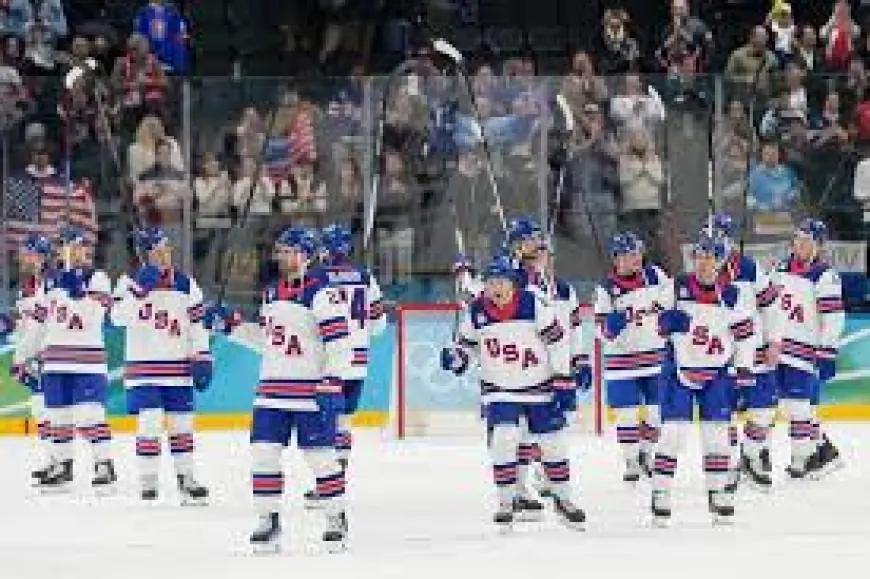
The U. S. -Canada Olympic gold-medal game landed on February 22, the same date the 1980 miracle on ice unfolded, and that coincidence has drawn voices from across American hockey to mark the moment. Team USA women’s gold medalist Taylor Heise said she believed the men can replicate the same kind of success and that she “almost fell out of her chair” when she learned the matchup would fall on that date.
Taylor Heise and the February 22 coincidence
Taylor Heise, identified as a Team USA women’s hockey gold medalist, expressed optimism that a contemporary U. S. men’s team could add to the lore established on February 22, 1980. She emphasized the personal reaction to the calendar alignment, noting the coincidence made the day feel especially charged. Separately, a writer reflecting on the scheduling said they never subscribed to astrology or numerology and usually regarded such patterns as attempts to make sense of a chaotic array of information.
Miracle On Ice: Mike Eruzione’s three lessons
Mike Eruzione, captain of the 1980 United States Olympic hockey team, distilled his experience into three lessons he believes others can use. First, he described a casual mindset—he said he wasn’t very “deep” and framed his landmark experiences lightly, which helped him thrive under pressure. Second, Eruzione credited the team’s living situation in Lake Placid as crucial: the players stayed in a small village with three TV stations and no social media, “a little cocoon” that kept them insulated. Third, he stressed the importance of maintaining selfhood: he said his sense of self didn’t come from Olympic success and added, “I was very happy with who I was before the Olympics and very happy with who I am today. ”
Lake Placid village and how insulation shaped the team
Eruzione recalled that the team’s village life kept players from going downtown to bars or restaurants; they instead spent time together with teammates. That isolation meant they were not aware of much of what was being written or said about them, a condition Eruzione called beneficial. Because they were free of constant external commentary, they fed off one another’s positive energy without expending effort blocking out negative commentary—an effect that, in his view, helped their on-ice performance.
Jim Craig, personal hardship and the 1980 roster
The 1980 U. S. team was a Herb Brooks–led roster drawn from the collegiate ranks; those players were characterized as actual amateurs in an Olympic setting that was nominally for amateurs. Netminder Jim Craig, who celebrated the February 22 victory over the Soviet Union, had been dealing with the loss of his mother during that period. The Americans set aside grievances from NCAA days and overcame off-ice hardships to cohere into a single, talented unit.
Soviet dominance, exhibition play and the Cold War backdrop
The Soviet Union had dominated international hockey for nearly two decades, and while the Olympics were formally for amateurs, that classification only loosely applied to the Soviets. Names such as Boris Mikhailov, Sergei Makarov and Vladislav Tretiak were cast in the coverage as players who would have been NHL superstars in another era. The Americans faced the Soviets at the height of Cold War tensions in the medal round at the 1980 Winter Olympics in Lake Placid, New York; the Americans and Soviets met on February 22. Earlier that month, on February 9, 1980, Mike Eruzione—wearing No. 21—was photographed shaking hands with the Soviet team during an exhibition game at Madison Square Garden in New York.
From a semifinal goal to gold and a White House moment
Eruzione scored the winning goal against the Soviet Union in the semifinals and then helped lead the United States to a gold medal with a victory over Finland. He later said it was not until the team visited the White House that he fully recognized the scale of what they had achieved, describing that realization with the expletive-fragment: “holy s— this thing is huge. ”
What makes this notable is how plainly the mechanics of focus and environment shaped an underdog victory: a collegiate roster guided by Herb Brooks, insulated living conditions in Lake Placid, and an emphasis on internal cohesion produced an outcome that still frames February 22 in American hockey memory. Eruzione’s admonition to ignore critics—“There’s always going to be somebody that doesn’t like something that you do or are doing… So ignore it. People can be cruel. And jealous. But we can’t control any of that anyway. Laugh it off or smile and just move on with your life. ”—ties directly to the team behaviors he credits for success.
The coincidence of a high-stakes U. S. -Canada gold-medal game on the anniversary of that 1980 victory has revived these touchstones: the date, the players immortalized by that win—Eruzione, Craig, Johnson and Schneider—and the lessons their captain still offers to current competitors and fans.