





















Poppy Playtime Chapter 5 Arrives in 2026, Igniting Player Surge and Pushing the Story Toward a High-Stakes Showdown

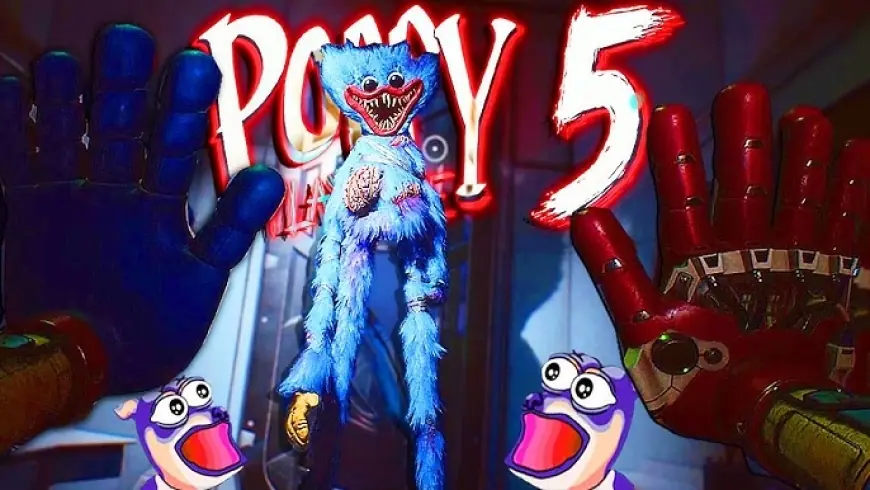
Poppy Playtime Chapter 5 is officially out, landing on Wednesday, February 18, 2026, and immediately triggering a sharp spike in player activity and online chatter. The new installment continues the series’ first-person horror puzzle format inside the abandoned toy factory, but it also marks a tone shift: Chapter 5 leans harder into endgame tension, with the narrative pointing straight at the unseen force that has been manipulating events from the shadows.
For fans searching for a Poppy Playtime Chapter 5 update, the headline is twofold: the chapter’s release is real and recent, and the community response has been unusually intense for a paid add-on, with peak player counts reportedly more than doubling the previous chapter’s launch-day high.
What Happened in Poppy Playtime Chapter 5
Chapter 5 launched on PC as premium downloadable content and quickly climbed to the top of the sales charts in its category, helped by discounts on earlier chapters and the series’ low-friction entry point through its original opening chapter.
Early playthrough reports and community discussion emphasize three things:
-
A deeper descent into the facility’s most secretive areas, with heavier “lab” imagery and more direct ties to the project that created the factory’s horrors
-
A heightened focus on the puppetmaster figure behind the facility’s escalation, raising the stakes beyond simple survival
-
New enemy design that mixes grotesque body-horror with toy-like charm, the franchise’s signature contrast
The short version: Chapter 5 doesn’t feel like a side quest. It plays like a bridge into whatever the creators consider the core reveal phase of the story.
Behind the Headline: Why Chapter 5 Hit So Hard, So Fast
Context
Horror games live and die on momentum. Poppy Playtime has been running a long-form mystery that rewards players who stick around, but long gaps or unclear direction can drain attention. Chapter 5 arrives at a moment when the franchise’s lore is dense enough to hook dedicated fans, yet still accessible enough for new players to binge earlier chapters and catch up quickly.
Incentives
-
For the studio, Chapter 5 is a proof point that the episodic model still works: a paid chapter can drive both revenue and renewed cultural relevance if the release lands with a strong hook.
-
For players, the incentive is participation. These launches create a short window where discoveries, theories, and “first sightings” are communal. Being early matters in a spoiler-heavy fandom.
-
For creators and streamers, the incentive is obvious: horror chapters reliably generate watchable reactions, puzzles, and cliffhangers.
Stakeholders
This release involves more than fans and developers. Communities that track lore, creators who depend on early access traffic, and platform storefront algorithms that reward fast sales velocity all shape what “success” looks like in the first 48 hours.
Second-order effects
A huge Chapter 5 spike reinforces the “event release” approach. That can push the team to prioritize cliffhangers, cinematic beats, and mystery-box pacing—sometimes at the cost of slower, character-driven horror. The risk is that the story becomes a sprint from reveal to reveal. The upside is a franchise that keeps feeling alive between chapters.
What We Still Don’t Know
Even with the chapter out, there are major open questions that will define whether Chapter 5 is remembered as a turning point or just a loud moment.
-
How quickly the new content reaches other devices beyond PC, since ports typically arrive later
-
Whether the story’s new reveals are truly clarifying, or whether they add another layer of ambiguity that delays payoff
-
How the “big bad” thread resolves: is the series moving toward a definitive identity reveal, or setting up a longer arc
-
Whether future content is planned as a direct Chapter 6 continuation, a finale chapter, or a spin-off structure
There’s also the practical question of durability: will Chapter 5 keep players engaged for weeks, or does interest drop after the initial wave of endings and theory videos?
Why the Player Surge Matters
Reported peak concurrent numbers for Chapter 5 jumped dramatically compared with Chapter 4’s launch window, a sign that the franchise is not merely retaining its base—it’s expanding it. That matters because it changes creative and business expectations at the same time. A bigger audience demands clearer storytelling, stronger onboarding, and more technical stability. It also raises scrutiny: mysteries that felt fun in a smaller fandom can become frustrating when millions are waiting for answers.
What Happens Next: 5 Realistic Scenarios to Watch
-
Rapid patch cycle and balance tweaks
Trigger: early reports of puzzle blockers, performance issues, or difficulty spikes. -
A fast-follow roadmap tease
Trigger: sustained sales momentum that encourages the team to anchor the next chapter sooner. -
Console release timeline becomes the next headline
Trigger: an official date window for platforms beyond PC. -
The lore community splits into two camps
Trigger: Chapter 5 answers some questions while creating new contradictions, fueling theory wars. -
A “finale” signal emerges
Trigger: marketing language and in-game foreshadowing converge toward an end-of-story framing, raising expectations for the next release.
Poppy Playtime Chapter 5 isn’t just another chapter drop—it’s a stress test of whether episodic horror can still produce a mainstream event without losing narrative coherence. The coming weeks will reveal whether the chapter’s biggest achievement is sales velocity, story progression, or something harder to manufacture: a fandom that feels, once again, like it’s discovering the factory’s secrets together in real time.