





















Ryan Garcia vs Mario Barrios: Fight Time, Start Times in ET, and What’s Really at Stake on a Three-Title Night in Las Vegas

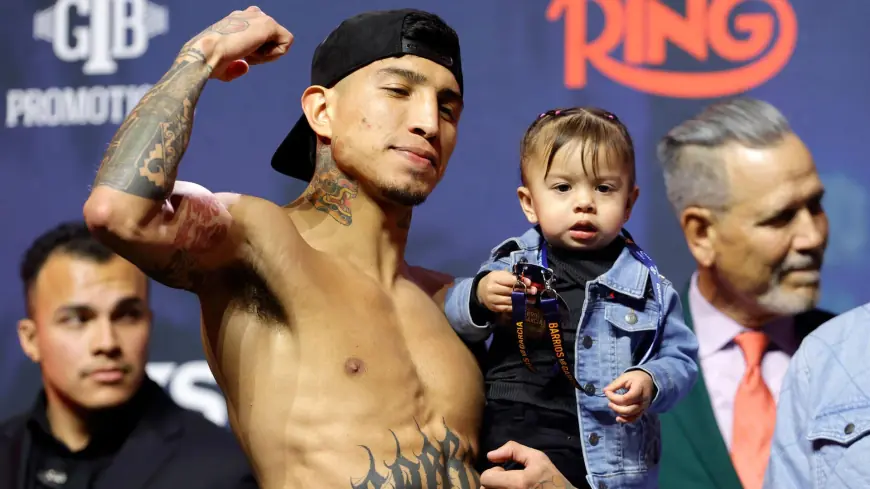
Ryan Garcia returns to the spotlight Saturday, February 21, 2026, when he challenges Mario Barrios for the WBC welterweight championship in Las Vegas, a matchup that blends star power with career urgency. The bout headlines a card stacked with multiple title fights, making it one of the most consequential boxing nights of the winter season.
The key question fans keep asking is simple: when will Garcia vs Barrios actually start? The answer depends on where you draw the line between the broadcast start, the main card, and the main-event ring walks.
Ryan Garcia fight time: when does Garcia vs Barrios start in ET?
Here’s the most practical timing guide in U.S. Eastern Time:
-
Event broadcast begins: around 5:45 p.m. ET
-
Main card begins: around 8:00 p.m. ET
-
Garcia vs Barrios ring walks: expected late, roughly 11:15 p.m. to 11:55 p.m. ET
-
First bell for the main event: typically 10–20 minutes after ring walks begin, depending on pacing and production
Why the window is wide: if undercard fights end early by knockout, the main event can move up. If fights go the distance, or if there are delays between bouts, ring walks slide later.
What happened to set this up: two fighters arriving from very different pressures
Mario Barrios enters as the champion with a reputation for toughness, size at the weight, and a style that can look simple but becomes miserable to solve over twelve rounds. He’s also carrying the specific kind of pressure that comes with recent close fights: when a champion has had tight results, every round becomes a referendum on whether they’re still clearly the top man in the division.
Ryan Garcia arrives with a different kind of urgency. He is one of boxing’s biggest draws, but he has spent years wrestling with the gap between stardom and championship validation. This fight offers a direct bridge to the kind of résumé line that changes a career narrative overnight.
Behind the headline: incentives, stakeholders, and why this matchup was made now
This bout is less about mystery and more about timing.
Incentives are straightforward:
-
Barrios gets a payday and a platform fight while defending a belt against a name that guarantees attention.
-
Garcia gets a world-title opportunity in a weight class where one win instantly reshapes his future options.
-
Promoters and sanctioning bodies get a high-visibility title defense that can set up bigger unification or mandatory fights next.
Stakeholders extend beyond the two fighters. Welterweight contenders benefit from clarity at the top, while broadcasters and sponsors benefit from an event that can pull casual fans. Trainers and camps have reputational exposure too, because a title fight is as much a coaching showcase as it is a fighter showcase.
Second-order effects are real. If Garcia wins, the division’s matchmaking changes immediately: everyone wants access to the new commercial center. If Barrios wins convincingly, he upgrades from belt-holder to proven champion and gains leverage in negotiations across the division.
The tactical story: what each man must do to win
Barrios’s path usually involves imposing physicality, controlling distance with a stiff jab, and making exchanges uncomfortable. At welterweight, size and composure matter, and Barrios tends to aim for steady round accumulation rather than reckless fireworks.
Garcia’s best route is speed, timing, and clean scoring in bursts. The strategic challenge is that speed-based fighters can win moments yet lose rounds if they don’t sustain output. Garcia will need to prove he can bank rounds consistently, manage pace across championship distance, and stay disciplined when the fight gets gritty.
One subtle key is tempo control. If Barrios slows the fight and forces longer exchanges, he increases his chances. If Garcia keeps it sharp and reset-heavy, he can turn Barrios’s steadiness into a liability.
What we still don’t know
There are a few unknowns that will determine the night:
-
How Garcia looks at full welterweight championship intensity over twelve rounds
-
Whether Barrios can consistently track Garcia’s speed without eating clean counters
-
How each fighter responds if they lose early rounds, because the late-fight adjustments often decide close title bouts
-
Whether the undercard pacing pushes the main event earlier or later than expected
What happens next: realistic scenarios and triggers
-
Garcia wins a decision if he controls range, keeps combinations clean, and avoids extended inside exchanges.
-
Garcia scores a stoppage if Barrios walks into repeated counters and the damage accumulates fast in the middle rounds.
-
Barrios wins a decision if he turns it into a physical fight, limits Garcia’s sustained output, and edges close rounds with ring control.
-
Barrios scores a late stoppage if Garcia fades and gets trapped in long, punishing exchanges down the stretch.
-
A close, debated verdict sets up immediate rematch pressure if the scoring hinges on swing rounds and momentum shifts.
For fans planning their night, the best move is to treat 11:15 p.m. ET as the early edge of main-event ring walks and midnight ET as the safer “don’t miss it” window. The exact moment depends on how long the earlier fights last, but the stakes are already locked in: title legitimacy for Barrios, and career-definition opportunity for Garcia.