











America’s Next Top Model Documentary Puts Tyra Banks, Nigel Barker, and Janice Dickinson Back in the Spotlight as Viewers Revisit ANTM’s Most Controversial Moments

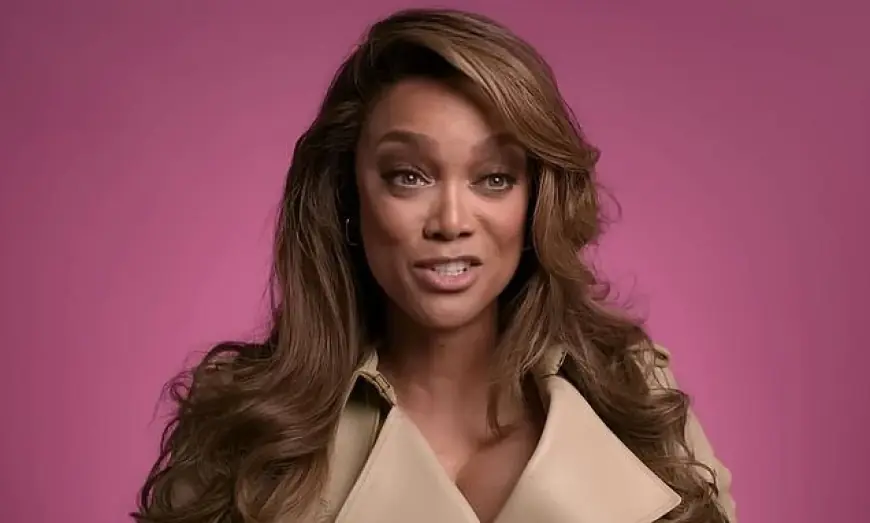
A new America’s Next Top Model documentary is reigniting debate about how ANTM shaped reality television, fashion culture, and a generation of viewers who grew up on its mix of aspiration and humiliation. Released on February 16, 2026, the multi-part series revisits long-criticized segments involving body image, race-themed concepts, and the pressure-cooker environment contestants say they endured, while also reopening questions about who had power, who set the tone, and who benefited most from the show’s success.
The renewed attention is quickly pulling major ANTM figures back into public conversation, including Tyra Banks, longtime judge and photographer Nigel Barker, former judge Janice Dickinson, and past winner Eva Marcille.
What happened in the ANTM documentary, and why it’s trending now
The documentary’s central claim is straightforward: ANTM helped mainstream the reality-competition blueprint, but it did so with practices that many participants now view as harmful. The series revisits photo shoots and judging moments that have circulated online for years, adding behind-the-scenes accounts from former staff and contestants who describe a workplace that rewarded emotional volatility and “good television” over aftercare.
One of the biggest immediate talking points is the documentary’s portrayal of internal fractures among the original on-camera team. Barker describes how early development for the project moved forward without Banks at the center, even though she ultimately appears. The series also revisits the later-era reshuffling that pushed key creative figures out, a shift that many fans remember as the point where the show’s chemistry changed.
Tyra Banks and the accountability dilemma
Banks’ appearance is landing in a complicated place: audiences want clarity about what she knew, what she approved, and what she now regrets. The documentary frames her as both creator and on-screen authority, which makes her central to any conversation about responsibility.
Behind the headline is a familiar reality-TV incentive structure. The host-creator role isn’t just a face on camera; it’s a decision-making position that can benefit from ratings while also serving as a buffer when criticism hits. If the documentary is seen as a full reckoning, it pressures Banks to address legacy questions directly. If it’s seen as selective, it risks amplifying backlash without delivering closure.
The timing matters, too. Banks’ comments in the documentary leave the door open to a future revival, which creates an unavoidable tension: a reboot pitch collides with a retrospective that spotlights the show’s most damaging dynamics.
Nigel Barker, production power, and who shaped the show’s tone
Barker’s perspective is resonating because it sits at the intersection of “judge” and “maker.” He has described the documentary’s origins as evolving over time and emphasized that Banks was not part of the earliest stages, a detail that reframes how viewers interpret her presence in the final cut.
What’s at stake is more than personal relationships. It’s a structural question about reality TV: when a show is a machine with producers, editors, contracts, and sponsor expectations, where does agency truly live? On ANTM, contestants often experienced the judges as the ultimate authority, even if many choices were made elsewhere. The documentary pushes viewers to separate the face of the franchise from the apparatus behind it, without fully resolving how those roles overlapped.
Janice Dickinson’s absence becomes part of the story
Janice Dickinson is not featured in the documentary, and that omission has become its own headline. The explanation offered by the production is logistical: she was unavailable to film because of commitments to another project. Still, for a series attempting to revisit ANTM’s culture, leaving out one of its most provocative judges guarantees debate.
This is where reputational incentives kick in. Dickinson’s brand has long been built on bluntness and confrontation, which can be both combustible and captivating. Her absence reduces the documentary’s ability to interrogate certain judging eras directly, while also creating space for her to define her own narrative elsewhere. In reality-TV terms, it’s a power vacuum: if you’re not in the recap, you can later claim you were never given a fair chance to respond.
Eva Marcille and the winner’s perspective: gratitude vs. critique
Eva Marcille, one of the show’s most recognizable winners, represents another tension at the heart of the ANTM debate. Winners often credit the platform for launching careers while also acknowledging that the process could be brutal. That duality is hard for audiences to hold at once, but it’s likely the most honest read of what ANTM did: it opened doors for some while normalizing conditions many now see as unacceptable.
Her stake is different from judges or producers. A winner’s legacy is intertwined with the franchise’s reputation. If the show is remembered primarily as exploitative, it can flatten what winners achieved afterward. If the conversation evolves into nuanced reform, it can preserve the reality that opportunity and harm sometimes coexisted in the same production.
What we still don’t know
Several missing pieces will determine whether this documentary becomes a cultural turning point or just another short-lived wave of outrage:
-
Whether more former contestants will speak publicly in the coming days, especially those tied to the most controversial episodes
-
Whether key decision-makers behind the camera will be identified and confronted as clearly as the on-camera talent
-
Whether a revival plan becomes concrete, including updated safeguards and contestant support
-
Whether Dickinson’s separate project emerges quickly enough to reshape the narrative while interest is high
What happens next: 5 realistic scenarios with triggers
-
More participants go on the record
Trigger: Social pressure and renewed attention make silence feel costly. -
A formal “standards” conversation takes hold
Trigger: Brands, advertisers, and networks reassess what they will fund in unscripted TV. -
A reboot pitch accelerates
Trigger: High viewership proves there is market demand, regardless of controversy. -
Legal and contractual debates resurface
Trigger: Viewers and former cast question past practices around consent, edits, and aftercare. -
The story fragments into competing documentaries and tell-alls
Trigger: Different stakeholders prefer to control their version of events rather than share one definitive record.
The documentary’s real impact will be measured less by trending clips and more by what changes next, both for any future version of ANTM and for how reality TV treats the people it turns into content.