
























Antoinette Rijpma-de Jong Stuns to Olympic 1,500m Gold in Milan

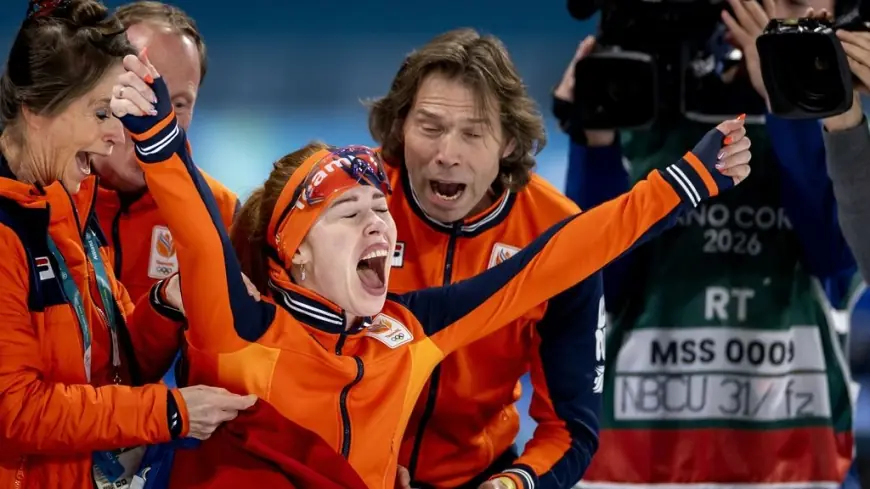
Antoinette Rijpma-de Jong clinched her first Olympic gold in the 1, 500-meter on Friday, delivering a 1: 54. 09 that held up in the final pair. The victory — secured by a margin of 0. 06 seconds — is the 30-year-old’s sixth Olympic medal and came after a week in which she also won silver in the team pursuit.
Development details — Antoinette Rijpma-de Jong's gold and the margin
Rijpma-de Jong raced in the penultimate pair and posted a time of 1: 54. 09; Ragne Wiklund of Norway had set the benchmark in the preceding pair with 1: 54. 15, and Valérie Maltais of Canada took bronze. The gap at the finish was narrow: Rijpma-de Jong finished just 0. 06 seconds ahead of Wiklund. Her race featured a blistering opening lap of 25. 26 seconds, followed by laps measured at roughly 28. 0 and 29. 8 seconds, leaving only 0. 01 seconds of advantage entering the final circuit before she extended her lead on the last lap.
The result on Friday 20 February marked Rijpma-de Jong’s first individual Olympic title after three previous Games and brings her personal Olympic haul to six medals. Earlier in these Winter Games she contributed to the Netherlands’ silver in the team pursuit; her season form included two second-place finishes in World Cup races and a silver at last year’s world championships, positioning her among the contenders even if she was not the top favorite.
Context and escalation
With reigning world champion Joy Beune absent from the start because she did not qualify at the Olympic trials, Japan’s Miho Takagi entered the event as the favorite; she skated in the final pair but was unable to surpass Rijpma-de Jong’s time. The Dutch skater’s victory continues a streak: she is the fifth consecutive Dutch woman to win Olympic gold in the 1, 500 meters, following a line of champions that includes Ireen Wüst.
Off the ice, Rijpma-de Jong created a different kind of support system that she and her partner credit with helping her stay grounded during the Games. Her husband maintained a nearby apartment for her to retreat to, offering everyday support that included preparing meals and handling laundry, and she used those moments to step out of the Olympic bubble and rest. That arrangement, they say, was deliberate: repeated small breaks from the high-pressure environment allowed her to recover between sessions and focus on the races.
What makes this notable is how marginal gains translated directly into a gold-medal performance: a fast opening lap and tactical endurance across three measured laps, combined with deliberate personal support off the ice, produced the decisive 0. 06-second advantage.
Immediate impact
The podium reshuffled immediate expectations for the Dutch team: Femke Kok, making her international debut in the 1, 500 meters, finished fifth after posting 1: 54. 79 in an early pair, while teammate Marijke Groenewoud placed tenth with 1: 55. 16 after earlier disappointments in longer distances. Rijpma-de Jong’s gold adds to the Netherlands’ depth in middle-distance women’s skating and cements her status as a consistent multi-medalist across four Olympic appearances.
There are human consequences as well: the victory fulfilled a long-standing personal objective for Rijpma-de Jong, who had previously stood on Olympic podiums with bronzes and silvers but lacked the individual gold. Her husband’s choice to sacrifice his own sporting ambitions and create a calm base close to the competition has been publicly framed as a key element of those final preparations, translating domestic support into measurable athletic success.
Forward outlook
The Olympic speed skating program moves toward its conclusion with the mass start events scheduled for Saturday, which will close the tournament for both men and women. Marijke Groenewoud is entered in the mass start, giving her one final opportunity to add to the Dutch medal count at this Games. Rijpma-de Jong, having secured gold in the 1, 500 meters and silver in the team pursuit earlier in the week, leaves the event with six Olympic medals and the new distinction of Olympic champion in her signature distance.