























Usa Hockey: Team USA Demolishes Slovakia, Sets Up Gold-Medal Showdown with Canada

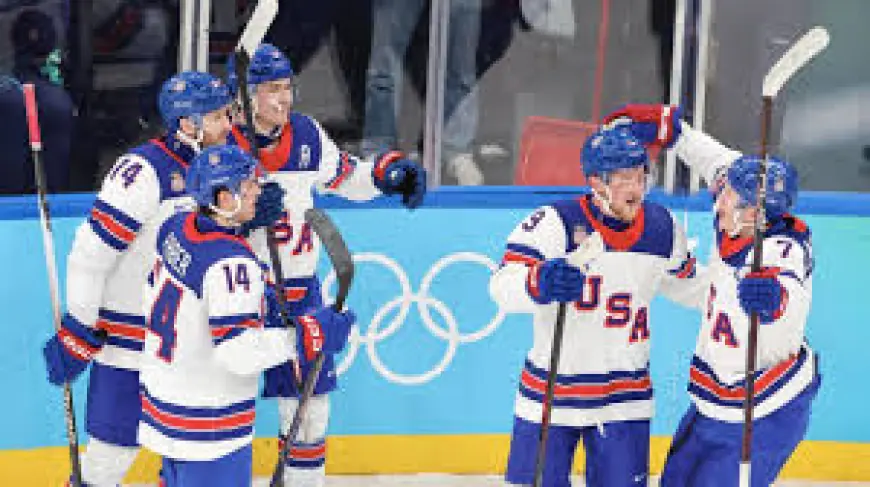
Usa Hockey advanced to the Olympic gold-medal game after a dominant semifinal in Milan, where the Americans overwhelmed Slovakia 6-2 and set up an epic showdown with Canada on Sunday. The result matters because it resolves the tournament's central North American rivalry and gives Team USA a clear path to pursue its first Olympic men’s hockey gold since 1980.
Usa Hockey semifinal: U. S. overwhelms Slovakia 6-2
In Friday night’s second semifinal, Jack Hughes scored twice and goaltender Connor Hellebuyck allowed only two goals as the United States finished with a 6-2 victory over Slovakia. The Americans controlled the game from the start, producing a decisive margin that contrasts sharply with Canada’s much tighter semifinal earlier in the evening, when Canada rallied from a two-goal deficit against Finland to reach Sunday’s final.
The result advances the U. S. to a straight-up gold-medal matchup with Canada, turning the longstanding continental rivalry into the tournament’s ultimate test. For the U. S., the win is the culmination of consistent play through the knockout rounds and a reminder that roster depth and goaltending remain decisive factors at this level.
How Team USA won and what Slovakia brought to the table
The American victory combined high-end talent and stout goaltending. Jack Hughes’ two goals were a focal point of the offense, while Hellebuyck’s performance—stopping all but two shots he faced—kept Slovakia at bay. Slovakia entered the semifinal as the tournament’s surprise package, with a roster that includes seven NHL players. They earned a bye from prelim group play after winning a group that featured Sweden and Finland, then advanced to the semifinals by outplaying Germany in the quarterfinals.
Despite Slovakia’s cohesion and momentum, the Americans were focused and decisive. The U. S. also had the luxury of managing personnel choices; the roster that skated in Milan did not dress at least one forward who had been named to two of the last three NHL All-Star Games and left out a defenseman who is the highest-paid player in Anaheim’s history. Those selection options underscored the depth available to the American coaching staff.
What the Canada matchup will hinge on
The gold-medal game now pits the two traditional North American powers against each other. Historically, Canada has had the upper hand in Olympic rivalry play and recently required a comeback to punch its ticket to the final. The Americans arrived in Milan with what has been described as their strongest Olympic roster yet—featuring a three-time Vezina Trophy winner in goal and several top defensemen—while Canadian attacking firepower presents a contrasting strength.
U. S. players framed the upcoming game as one that will come down to performance on the day. The tournament’s earlier meeting between these neighbors at a recent four-nation event saw physical play and a narrow overtime result, signaling that neither side will yield an inch. On Sunday, the gold-medal outcome will hinge on which team executes its strengths most effectively: goaltending and defense for the Americans or elite finishing and offensive pressure for Canada.
Context and immediate implications
- Semifinal score: United States 6, Slovakia 2.
- Key performers: Jack Hughes (two goals); Connor Hellebuyck (allowed two goals, stopped the rest).
- Slovakia’s run: won a prelim group that included Sweden and Finland, then beat Germany to reach the semifinal; roster includes seven NHL players.
- Canada’s path: rallied from a two-goal deficit against Finland to reach the gold-medal game.
- Historical note: the U. S. seeks its first Olympic men’s hockey gold since 1980 and has lost two previous Olympic gold-medal matches to Canada.
Sunday’s final will resolve whether the Americans’ roster construction and goaltending can overcome Canada’s offensive pedigree. Both teams have signaled they will bring intensity and physicality; spectators should expect a high-stakes, tightly contested matchup where a single outstanding performance could decide Olympic glory.