






















Alysa Liu Ends U.S. Olympic Singles Gold Drought and Rewrites the Scoreboard in Milan-Cortina

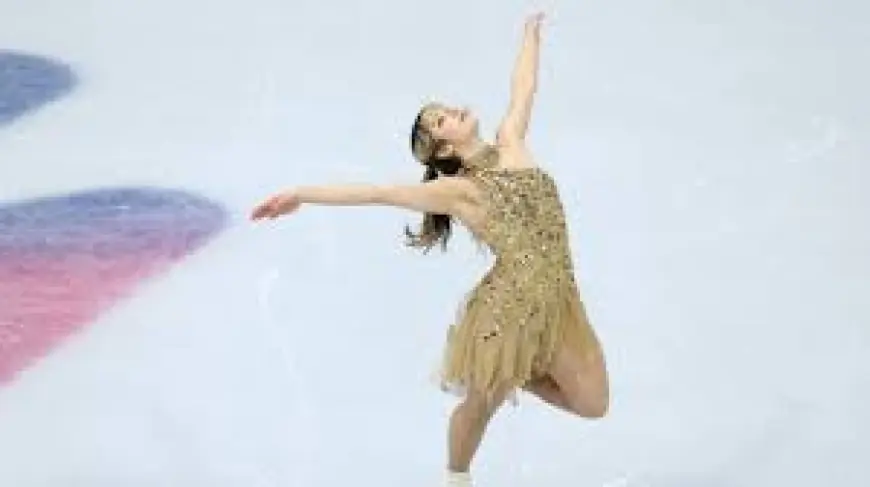
Here’s the part that matters: alyssa liu’s victory is not just a medal for one skater — it’s the first American singles gold in more than two decades and a dramatic career rebound that changes the narrative around her trajectory. At 20 and having stepped away after the 2022 Games, she returned to win the women’s Olympic title with a personal-best 226. 79, and will leave these Olympics with two gold medals including the earlier team title.
Impact — Alysa Liu’s gold reshapes the American record books and the immediate Olympic story
By taking gold, Alysa Liu became the first American woman to win the Olympic singles title since 2002 and the first American to reach the podium in the event since 2006. That historical break is a hard fact; its resonance is immediate for record-keeping and for how this Olympic competition will be remembered. The podium also closed a chapter in which the U. S. had not placed in the top three for women’s singles at the Games.
- She posted a winning score of 226. 79, the highest of her career at an Olympic-level competition.
- Her Olympic program featured seven landed triple jumps and career-high marks for artistic components like choreography and musicality.
- She will leave the Games with two gold medals after earlier success in the team event.
- Japan filled the rest of the podium: silver at 224. 90 and bronze at 219. 16, with the silver-medalist skating her final competitive program before retiring.
The bigger signal here is that a clean, artistically strong free skate — even without the highest-difficulty elements attempted by others — can deliver an Olympic gold when paired with personal-best total scoring. The real question now is how this result will be framed alongside technical risk choices made by other top competitors.
Event details: how the free skate sealed the title
After placing third in the short program, Alysa Liu rose to first with a free skate that judges rewarded for its completeness and musicality. She avoided attempting a triple axel and did not include a quadruple toe loop; other skaters pursued those higher-difficulty elements. Instead, Liu executed a program built around seven triple jumps and strong artistic marks while performing to “MacArthur Park” as sung by Donna Summer.
Her winning total — 226. 79 — was the personal-best score for this competition. The silver medalist finished on 224. 90, and the bronze placed at 219. 16. Among notable technical attempts in the field: one competitor attempted a quadruple toe loop, and two others included triple axels in their programs. The silver-medalist, age 25 and a multi-time world champion, concluded her final competition with the silver; the bronze-medalist was the youngest female skater in the event at 17 and was making her first Olympic appearance.
Visual details captured during her program underline the athleticism behind the performance: she approached part of a combination at 8. 7 miles per hour, executed rotations that included three revolutions mid-air, and covered more than seven feet across the ice in a single element before landing and continuing the sequence.
It’s easy to overlook, but her highest marks came in areas judged for artistic quality — choreography, musicality and skating skills — which pushed her total above rivals who included more technically risky jumps.
Timeline (quick rewind):
- 2002: Last American woman won Olympic singles gold.
- 2006: Last American woman previously won an Olympic medal in singles.
- 2022: She left the sport after competing at the Beijing Olympics.
- 2026: She returned and won Olympic singles gold in Milan-Cortina, plus a team-event gold earlier at these Games.
Here’s one practical takeaway for observers: the podium combined veteran presence and fresh talent — a retiring champion earned silver, a 17-year-old earned bronze, and Alysa Liu delivered a comeback gold built on artistry and consistency. If you’re wondering why this keeps coming up, it’s because the result contrasts strategic choices on technical risk with rewards for a polished, complete program.
Micro takeaways: the win was a personal-best scoring performance; she landed seven triple jumps; she did not attempt the event’s most difficult elements; Japan took silver and bronze; the silver-medalist completed her final competition before retirement; the bronze-medalist was the youngest competitor and in her first Olympics.
The real test will be how this competition influences program construction and judging conversations going forward, especially when skaters weigh higher-risk jumps against program component strength.
What’s easy to miss is how rare it is for a skater to leave an Olympic cycle, return and immediately post a career-best total at the Games themselves — that combination made this gold feel both improbable and definitive.