




















Ian Mckellen Criticizes 'Hamnet' as 'Improbable' — Oscars Buzz, Adaptation Debate, and the Case for Emotional Truth

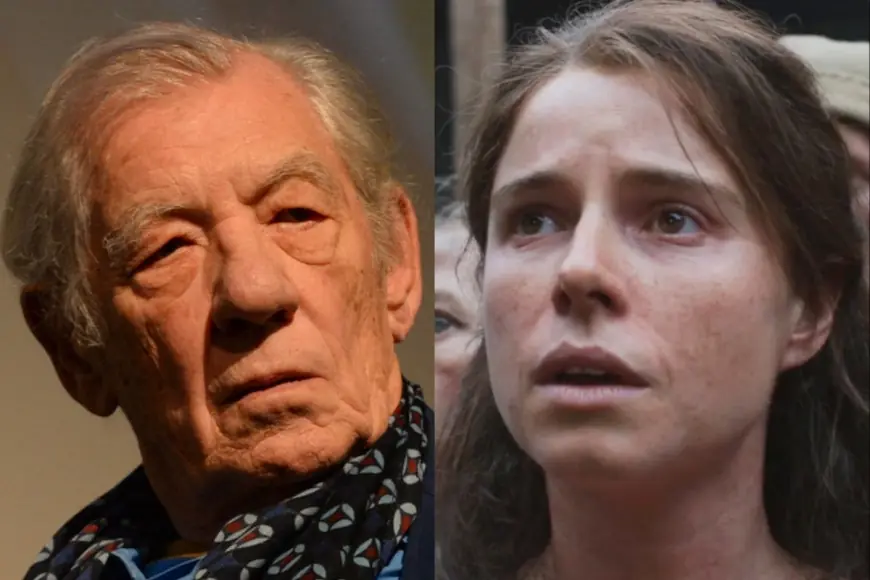
Sir Ian Mckellen has publicly dismissed the film Hamnet as "improbable, " saying he does not "get" the movie’s premise and that Shakespeare’s imagination "certainly didn’t just come from family life. " His comments arrive as the film racks up major awards attention and reignites debate about how far historical fiction can — or should — stretch documented truth. This matters because the discussion frames how voters and audiences approach adaptations that mix speculation with homage.
Ian Mckellen: What he said and why it matters
The veteran thespian, 86, who became a member of the Academy in 1999 following a nomination for a past film, signaled he will not be voting for Hamnet to win Best Picture. He described plot details he finds unlikely and questioned elements of the film’s portrait of Shakespeare’s household, including a depiction of Shakespeare’s wife as unfamiliar with plays. While predicting Hamnet may still win several Oscars, he framed parts of the story as stretching probability.
McKellen’s stature as a long-time Shakespeare performer — having played roles ranging from Hamlet and King Lear to Macbeth and Falstaff — gives weight to his viewpoint for some observers, and his remarks have become a focal point for the larger argument about fidelity and invention in historical drama.
Hamnet, the Oscars, and the debate over adaptation
Hamnet is a leading contender in awards season with eight nominations, including Best Picture, Best Director, and Best Adapted Screenplay. Its lead actor is widely seen as a favorite in the Best Actress race, and the film has seen box office success, grossing $74 million from a $35 million budget. It faces notable competition in the Best Picture field from other major films.
The dispute underscored by McKellen’s comments focuses on what viewers expect from adaptations of historical material. One critique treats Hamnet as an implausible attempt to explain the origin of a famous playwright’s work; another view treats it as an imaginative meditation on grief and artistic creation. The Adapted Screenplay category has drawn particular attention because the film takes a novel’s speculative approach and translates it into a cinematic argument about art and loss.
In defense of Hamnet: emotional truth versus historical permission
Supporters of the film argue it is not a claim about literal causation but a work that explores emotional possibility. They frame the film as a celebration of how art processes grief, suggesting the story’s value resides in emotional truth rather than documentary proof. This perspective treats fictionalization as a permissible route to human resonance, rather than a breach of historical fidelity.
Those defending the film emphasize that the source novel and its cinematic adaptation are exercises in imagination: they do not assert that the play at the heart of the drama is literally explained by domestic tragedy. Instead, the film is read as an exploration of how loss can shape inner life and, by extension, creative work — a stance that reframes criticism of improbability as a mismatch of expectations rather than a flaw in storytelling.
What’s next and what to watch for
With the Academy Awards scheduled for 15 March, the conversation around Hamnet will likely intensify. Voters will have to weigh McKellen’s skepticism alongside the film’s awards momentum and the competing interpretive frameworks laid out by proponents and critics. The debate crystallizes a broader question for awards season: should adaptations be judged primarily on historical plausibility, or on their capacity to deliver emotional and artistic truth?
Recent developments indicate the discussion remains active and that opinions are polarized. Details may evolve as the awards ceremony approaches, but the current moment makes clear that Hamnet has become a flashpoint for how modern audiences and adjudicators think about the liberties of historical fiction.