























Usa Hockey Score: U.S. Women Sweep Milan Olympics, Keller’s Overtime Goal Caps 7-0 Gold

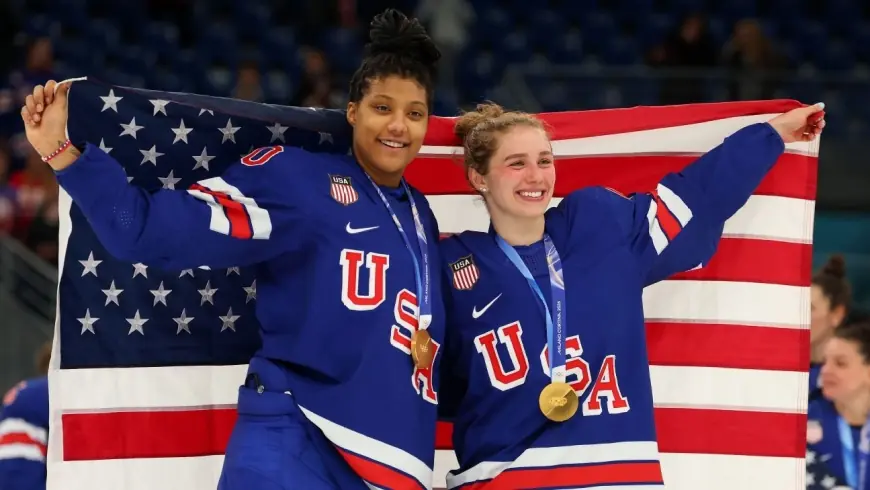
The usa hockey score from the Milan Olympic tournament tells a clear story: a dominant U. S. run that ended with a 7-0 record, a 2-1 overtime final versus Canada and a cumulative 33-2 scoring edge. The victory was sealed by an overtime goal and highlighted by a tournament MVP performance, reinforcing questions about the program’s future trajectory.
Usa Hockey Score: What happened and what’s new
In Milan the U. S. women's team completed the Olympic tournament undefeated, winning seven games and allowing only two goals across those victories while scoring 33. The gold-medal final was a 2-1 overtime win against Canada, with a decisive overtime goal by defenseman Megan Keller. Keller’s play was pivotal; she left the tournament with a second Olympic gold in what is identified as her third Olympic appearance.
Caroline Harvey was named the tournament MVP after standout performances. Goaltender Aerin Frankel set a tournament mark for most shutouts with three. Younger players provided major contributions: Hannah Bilka led the team with four goals, and several core prospects aged 23 and under — including Laila Edwards, Caroline Harvey, Tessa Janecke and Abbey Murphy — are slated to enter the professional draft this spring, forming a highly anticipated class. Taylor Heise, noted as a first-time Olympian and the reigning league playoff MVP, was among the younger contributors, while veteran Hilary Knight announced Milan would be her fifth and final Olympics.
On the human-interest side, connections from youth hockey communities were on display. A forward and a head coach who watched the final had personal ties to Keller from early local hockey leagues, and observers highlighted Keller’s long-term presence as a leading figure in the sport.
Behind the headline
The dominant performance in Milan combined veteran leadership with an emerging core of young players who appear to be on accelerated professional trajectories. Observers described the roster as unusually deep, with veterans providing stability while a crop of players born in the last decade of one era now prepare to enter the professional draft. That mix creates incentives for professional teams and league organizers to pursue these players aggressively this spring, and it raises the profile of the upcoming draft class as potentially transformative for the sport’s pro ranks.
Stakeholders include the veteran players who solidified legacies, the young prospects moving to the professional level, coaches and development programs that produced the talent, and the broader women’s professional league landscape that will absorb the incoming class. Those with leverage now include the young core entering the draft and established stars whose playoff and Olympic credentials will influence contract negotiations and market interest.
What we still don’t know
- Whether the U. S. team’s dominance in Milan will translate into sustained international superiority going forward (unconfirmed).
- How the incoming draft class will be allocated among professional teams and what immediate impact those players will have at the next pro season (pending draft outcomes).
- How rival national programs will respond strategically and in development investments to close the competitive gap (unconfirmed).
- The long-term career plans of key veterans following Olympic retirement announcements (partially confirmed for one captain; others unconfirmed).
- Specific roster changes or retirements beyond the confirmed final Olympic appearance referenced for the captain (unconfirmed).
What happens next
- High-impact professional draft class: The young core enters the draft this spring; trigger — draft selections and contract signings that place multiple top prospects on the same or rival teams.
- Dynastic possibility: The U. S. program sustains top-level results if veterans and young stars remain available and committed; trigger — continued win records in subsequent international tournaments.
- Rival acceleration: Other national programs invest in development and narrow the gap; trigger — notable upticks in rival results at world championships.
- Market and visibility growth: Star performances and landmark moments increase commercial and youth interest in the women’s game; trigger — expanded media coverage and professional league engagement with incoming prospects.
- Veteran transitions: High-profile retirements or shifts into coaching/ambassador roles alter leadership dynamics; trigger — official retirement announcements or role changes.
Why it matters
The Milan outcome has near-term implications for the professional women’s landscape, player valuations and youth development pathways. A dominant Olympic showing enhances the bargaining position of players entering the professional draft and raises the sport’s public profile. For the longstanding U. S. –Canada rivalry, the narrow final score underlines continued competitiveness at the top, even as the U. S. showcased broader depth across lines and positions. In practical terms, the result accelerates attention on the upcoming draft class and places pressure on rival programs and professional teams to respond strategically in order to keep pace.
Overall, the usa hockey score from Milan is not just a final result; it is a snapshot of a program at a potential inflection point — with veteran leaders, emerging stars and professional stakes converging ahead of a consequential draft and the next international calendar.