
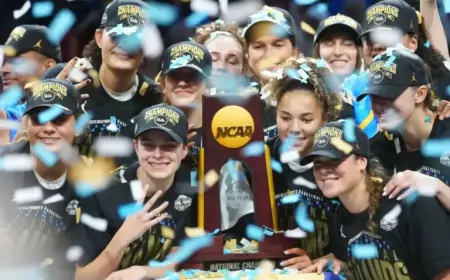
























How Alysa Liu Won Women’s Figure Skating Gold for U.S. at 2026 Olympics

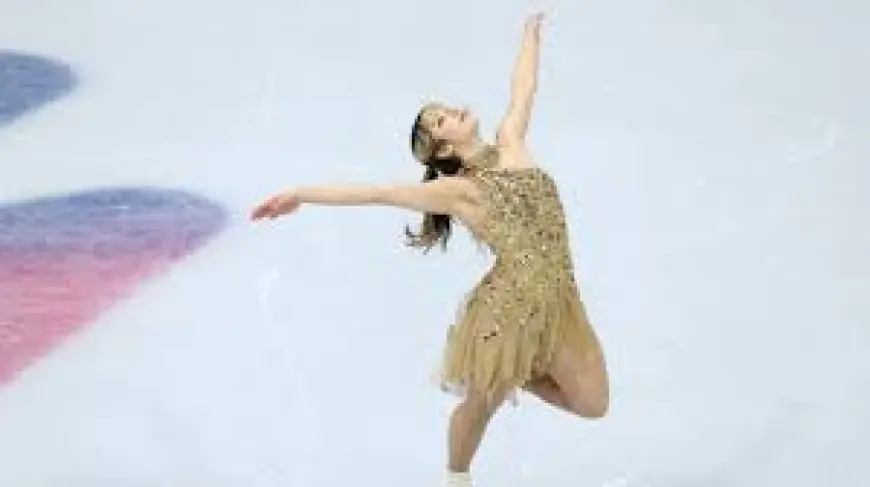
aly sa liu reclaimed her competitive career and captured the Olympic women's singles gold at the Milan-Cortina Games, posting a personal-best total that pushed her from third after the short program to the top of the podium. The victory ended a long medal drought for the United States in Olympic women's singles and completed a Games in which she also took team gold.
What happened and what’s new
The decisive long program came after a third-place short program finish. In the free skate, she delivered a relaxed, technically precise performance, earning a winning combined score of 226. 79, a personal best for the most important competition of her career. She landed seven triple jumps and received career-high artistic marks for choreography, musicality and skating skills while performing to "MacArthur Park" as sung by Donna Summer.
At 20 years old and from Oakland, Calif., she became the first American woman to win an Olympic singles gold medal since 2002 and the first American woman to win any Olympic singles medal since 2006. She will leave the Games with two Olympic golds, the first earned in the team event and the second in the individual competition.
Japan took the silver and bronze medals in the event. One Japanese skater earned silver with 224. 90 points in what was her final competition before retirement. A 17-year-old Japanese competitor, making her Olympic debut, took bronze with 219. 16 points after slipping from first in the short program.
The winning program did not include a triple axel or a quadruple toe loop, elements that some competitors attempted, yet the performance combined technical jump execution and elevated artistic scores to secure the title.
Behind the headline: Alysa Liu's comeback
Alysa Liu had stepped away from the sport after the 2022 Beijing Olympics and returned to reclaim her career on her own terms, producing an ebullient, liberated free skate at the Milan-Cortina Games. The long program showcased both athletic elements—snap rotations, multi-jump combinations and sustained speed on approach—and marked artistic growth recognized in the scoring.
- Context: She left the sport after the 2022 Olympics and returned to competition before these Games.
- Competitive constraints: Some rivals attempted higher-difficulty elements such as a triple axel and a quadruple toe loop; she chose a program that emphasized consistency across triple jumps plus stronger artistic components.
- Key stakeholders: the athlete herself; teammates who contributed to the team gold; the Japanese skaters who took silver and bronze, including one retiring after this event; national skating programs that measure Olympic outcomes against long-term performance.
What we still don’t know
- Whether she will maintain the same competitive program elements in future events.
- Her long-term competitive plans or decisions about continuing beyond these Games.
- Detailed scoring breakdowns beyond the combined totals already released for medalists.
- How this victory will affect athlete selection or program strategies within national teams going forward.
What happens next
- Build on Olympic momentum: She departs the Games with both team and individual golds, leaving open the possibility that her competitive profile will grow as a result of this performance.
- Rival transitions: One top rival concluded her career after this competition, creating a clearer field in upcoming championships for other leading skaters.
- Program strategy adjustments: Competitors who attempted higher-difficulty elements may reassess technical risk versus artistic consistency after the results here.
Why it matters
This victory ends an extended gap in Olympic singles gold for U. S. women and marks a notable comeback arc for an athlete who had left the sport after the previous Winter Games. The combination of a personal-best total score, elevated artistry, and a team gold underscores a dual achievement: technical and artistic validation in a single Olympic cycle. For the wider sport, the result highlights that top placements can be achieved through a balance of jump consistency and artistic scoring, not solely by attempting the highest-difficulty elements.
Fans and national programs will watch how this result influences future strategic choices about element selection, athlete development and international competition lineups. The athlete's personal decisions about her future will be among the most consequential items to follow from these Games.