




















2026 Winter Olympics Ice Hockey: Semifinals Set as Canada Faces Finland and USA Meets Slovakia

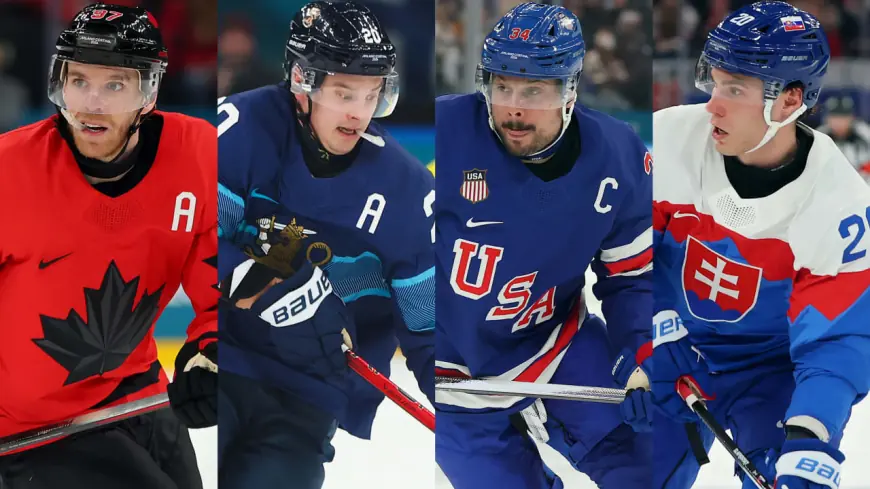
The 2026 winter olympics ice hockey tournament reaches its penultimate day as semifinal pairings have been finalized: Canada will meet Finland in the first semifinal, followed by Slovakia against the United States later the same day. The results will determine which teams play for gold and which contest the bronze medal in the scheduled medal games.
2026 Winter Olympics Ice Hockey — What happened and what’s new
Confirmed matchups and schedule (all times ET):
- First semifinal: Team Finland vs Team Canada at 10: 40 a. m. ET.
- Second semifinal: Team Slovakia vs Team USA at 3: 10 p. m. ET.
- Gold-medal game: winners of the two semifinals will play on Sunday at 8: 10 a. m. ET.
- Bronze-medal game: the semifinal losers will meet on Saturday at 2: 40 p. m. ET.
Coverage staff providing semifinal analysis highlighted recent quarterfinal results and team form. It was noted that each of the four semifinal teams advanced after overtime wins in the quarterfinal round. Contributors offered game-by-game reasoning for why one side might prevail in each matchup, pointing to goaltending, depth, leadership and recent scoring trends as decisive factors.
Behind the headline
Context and incentives: The immediate stakes are straightforward — a win moves a squad to the gold-medal final, a loss relegates it to the bronze game. Analysts emphasized several competitive drivers evident from recent matches:
- Goaltending: Juuse Saros was cited as a potential backbone for Finland’s chances, while Samuel Hlavaj was identified as a key figure for Slovakia’s surprising run.
- Top-end talent and leadership: veteran influence and star power were framed as pivotal, with mentions of a veteran captain’s off-ice leadership and a leading offensive star ready to deliver on the ice.
- Depth and defensive structure: Canada’s lineup depth and team defense earned attention as elements that could stifle Finland’s offense, while the United States’ ability to roll multiple forward lines and a strong blue line was presented as a clear advantage over Slovakia.
- Rising contributors: a young goal-per-game scorer for Canada and breakout performers for Slovakia were flagged as potential game-changers.
Stakeholders: the national teams and their players carry the most immediate gain or loss in competitive terms. Coaches and national programs face short-term pressure to convert semifinal opportunity into medal finishes. Fans and tournament organizers have schedule and broadcast interest tied to which teams advance.
What we still don’t know
- Final outcomes of both semifinal games — winners and losers remain unconfirmed.
- Decisive game-day factors such as exact line combinations, in-game adjustments and possible late injuries are not confirmed.
- The precise impact of individual stars and whether recent scoring trends will continue through the semifinals is uncertain.
- How goaltending performances will influence each game’s result remains an open question.
What happens next
- Canada advances to the gold-medal game if its team defense limits Finland’s scoring chances and its top scorers continue producing. Trigger: a low-goal concession total for Canada backed by timely scoring.
- Finland reaches the final if elite goaltending and a clutch finishing play overcome Canada’s depth. Trigger: a standout performance from Finland’s starting goaltender coupled with a late-game deciding goal.
- United States moves on to the gold-medal game if sustained pressure from multiple forward lines and strong play on the blue line neutralize Slovakia’s top threats. Trigger: sustained line roll effectiveness and defensive control in all three periods.
- Slovakia pulls off an upset if its goaltender and standout forwards convert high-leverage opportunities against the U. S. Trigger: an early lead aided by goaltending that keeps the game within reach.
Why it matters
The semifinal pairings mark a pivotal moment in the 2026 winter olympics ice hockey competition. Beyond medal outcomes, these games will shape longer narratives about team depth, the influence of veteran leadership, and the emergence of young scorers. Near-term implications include which teams prepare for a gold-medal spotlight and which pivot to salvage a bronze. For players, a strong semifinal showing can cement reputations formed during the tournament; for national programs, results will inform short-term evaluations and public interest in the sport at home.
As the schedule advances, attention will focus on how each team deploys its goaltending, depth and star power under semifinal pressure — factors identified by analysts as most likely to determine who reaches the final and who competes for bronze.