























Boeing Starliner classified a Type A mishap — risks, leadership gaps and what remains uncertain

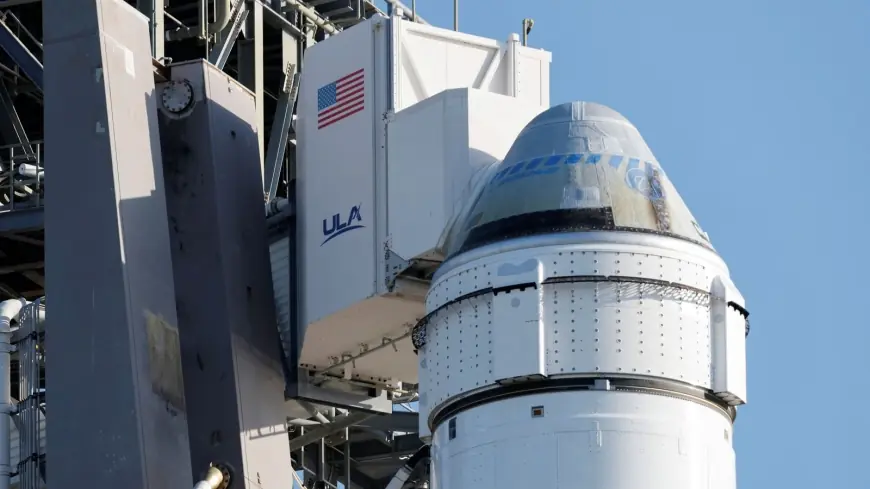
The agency's formal designation of the Boeing Starliner flight as a "Type A" mishap puts safety and program oversight squarely in jeopardy for near-term crewed missions. NASA's report ties the incident to hardware failures, leadership missteps and cultural breakdowns; the immediate impact lands on program managers, safety engineers and astronauts whose flight schedules and career plans are already being reshaped.
Why the Boeing Starliner classification raises urgent questions about risk and readiness
Labeling the mission a Type A mishap — the agency's most severe category — signals that the event met thresholds for major damage, loss of vehicle control or potential fatalities. This framing elevates uncertainty for forthcoming crewed flights and forces a reassessment of how programmatic objectives influenced technical judgment. Here’s the part that matters: the declaration links both engineering failures and leadership choices to a single, avoidable cascade of risk.
Investigators flagged an interplay of hardware failures, qualification gaps, leadership missteps and cultural problems that created conditions inconsistent with the agency's human spaceflight safety standards. The report also notes poor engineering and a lack of oversight at the manufacturer that contributed to a test mission turning into a months-long ordeal for the two astronauts aboard the station.
What’s easy to miss is that the classification does more than name an error; it assigns accountability and forces corrective actions that could change project timelines and supplier relationships across the program.
Boeing Starliner: the confirmed facts about the mission and the probe
The crewed test flight launched on June 5, 2024, and encountered propulsion anomalies while approaching the International Space Station. The spacecraft lost maneuverability at points during the approach; the crew were later brought home separately. The investigation found thruster and propulsion system problems and also identified systemic organizational and cultural contributors to the failures.
- Known crew: two astronauts involved in the mission later returned to Earth aboard another crewed spacecraft in March 2025 and have since retired from the agency.
- Classification: the agency formally declared the test flight a Type A mishap, equating its severity with past highest-level incidents.
- Investigation timeline: an independent Program Investigation Team was chartered; the report was completed and accepted as final in late 2025.
Timeline notes: the report records a launch date in June 2024, an extended in-orbit period that the report quantified as 93 days before the spacecraft returned in September 2024, and a later crew return in March 2025. Some accounts characterize the crew’s stay as lasting roughly nine months; that discrepancy remains unresolved and is noted by the agency as an item under review.
The real question now is how the agency and the manufacturer will translate the report’s corrective actions into demonstrable safety improvements before approving another crewed flight.
Micro Q&A
Q: How severe was the incident? A: It was classified as a Type A mishap, the agency's most serious designation.
Q: What were the core contributors? A: Investigators cite combined hardware failures, qualification gaps, leadership missteps and cultural breakdowns.
Q: Have actions been promised? A: The agency has accepted the final report and said it will take corrective actions while working with the manufacturer.
Editorial aside: The bigger signal here is that the problem set spans both technical and organizational layers — fixing hardware alone won't restore confidence unless governance and culture change too.
Immediate implications include tightened oversight, likely schedule impacts for upcoming missions, and heightened scrutiny of supplier practices. Stakeholders first affected will be program and safety managers, test engineers, and flight crews whose readiness depends on clear, demonstrable fixes. Signals that could confirm progress include completed root-cause testing, documented corrective actions accepted by the agency, and independent verification of system reliability before any new crewed launch is approved.