






















Amber Glenn finds redemption in near-perfect Olympic free skate but falls short of a medal in Milan

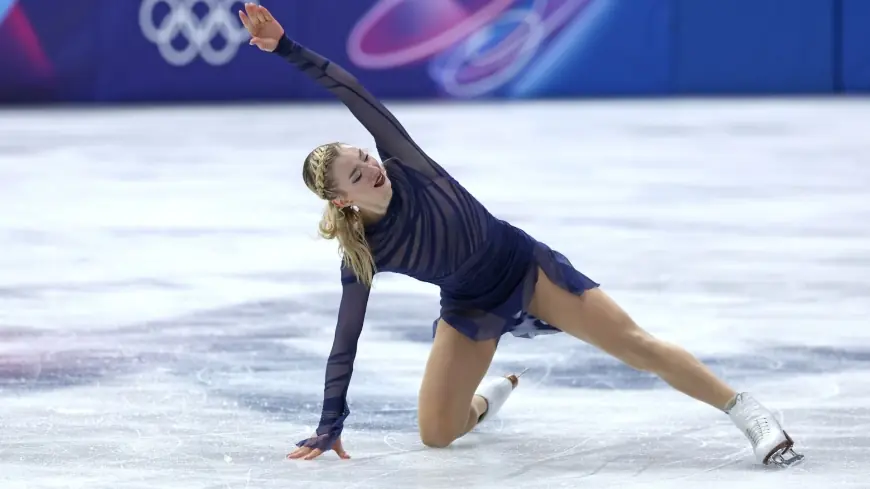
In Milan, amber glenn produced a redemptive performance in the Olympic women’s free skate, landing a triple axel and posting a free-skate score of 147. 52 for a total of 214. 91, but she ultimately finished fifth overall and missed the podium. The outing mattered because it followed a difficult short program and came amid high hopes for a strong U. S. showing.
What happened and what’s new
Glenn entered the free skate in 13th position after what was described as a disastrous short program. Skating in Team USA warmups before a crowd that included many American fans, she began with a triple axel — a jump attempted by very few female skaters — and drew a loud reaction from the arena. Her free-skate score of 147. 52 produced a combined total of 214. 91, temporarily placing her atop the leaderboard with 12 skaters left to skate.
She waited on the leader’s couch as others finished. A flawless routine from teammate Alysa Liu resulted in a winning total of 226. 79. Japan’s Kaori Sakamoto and Ami Nakai claimed silver and bronze with totals of 224. 90 and 219. 16, respectively, leaving Glenn in fifth place. Earlier in the Games, Glenn had a tentative showing in the team event, where she handled the free skate element and finished third in that segment even as the United States won the team gold for a second consecutive Olympics.
Details from the performance: Glenn looped the ice in warmups, handed her coach Damon Allen his jacket before stepping to center ice, and skated to a medley of "I Will Find You" by Audiomachine and "The Return" by CLANN. Late in the program she experienced a slight bobble that she described to herself as "this close. " Afterward she reflected on mixed emotions and uncertainty, saying, "A lot of what-ifs, " and noting internal conflict about wanting others not to make mistakes while also not wanting to have to leave the leader’s couch.
Behind the headline: Amber Glenn’s route to a redemptive skate
The performance came after a difficult stretch that began in the team event, when Glenn described feeling physically off — "my legs were feeling heavy, I was tired" — and said she had "been practicing here incredibly. " That tentative showing left visible strain on her, but the free skate offered a clearer picture of her competitive capabilities when she executed technically demanding elements under pressure.
Glenn arrived in Milan as part of a trio of U. S. national champions whose chemistry and public popularity had drawn attention. The three skaters were viewed collectively as a strong American contingent with potential to end a long medal drought in women’s figure skating; that drought did end in these Games when a teammate produced a flawless routine and took gold. For Glenn, the free skate served as a corrective performance that highlighted both her resilience and how narrow the margins are at the top level.
What we still don’t know
- Whether the "heavy legs" Glenn mentioned reflected an injury, illness, fatigue from travel and practice, or another cause.
- How much the team event performance directly influenced her short program struggles and subsequent placement going into the free skate.
- Detailed scoring breakdowns for each element of her programs beyond the total free-skate and combined scores presented.
- Glenn’s immediate plans for competitions or training after the Olympics.
What happens next
- Rebuild and recalibration: Glenn uses the redemptive free skate as momentum to refocus training and address physical issues noted during the Games; trigger — training reports or competition entries announced.
- Short-term recovery and assessment: she prioritizes rest and a medical or performance evaluation to determine the cause of fatigue; trigger — statements about health or training adjustments.
- Public and team role evolution: Glenn maintains a high-profile role among her national teammates while the group’s dynamic adjusts after one teammate won gold; trigger — public appearances or team selections.
- Competitive reassessment: she and her coaching staff analyze what was left on the table technically and artistically to close narrow gaps with podium finishers; trigger — detailed coaching comments or technical reviews.
Why it matters
Glenn’s free skate underscored how quickly fortunes can shift in Olympic figure skating: a difficult short program left her needing a near-flawless free skate to contend for a medal, and while she delivered a performance many described as redemptive, it was not enough in a field where margins were small. Her near-perfect elements, including the triple axel, reminded viewers and competitors of her technical ceiling, even as the final placement left questions about consistency and recovery.
For the U. S. team, the Games produced both a team gold and an end to a long individual medal drought through a different skater’s flawless showing; for Glenn, the result combined personal vindication in the free skate with the disappointment of missing the podium. Close observers will be watching how she and her coaching team interpret this combination of promise and missed opportunity as they plan next steps.