






















Chicago Bears’ Hammond Push Puts Immediate Pressure on Fans, Local Budgets and Arlington Heights Plans

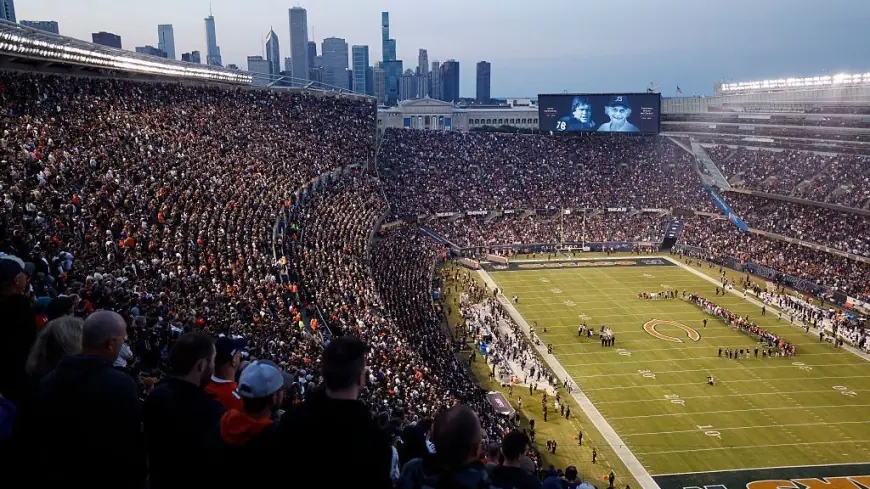
The people who will feel the change first are not team owners or distant investors but fans, local taxpayers and two state governments. The chicago bears’ signal toward Hammond, Indiana — backed by a unanimous committee amendment to a state bill that would create a stadium authority — immediately reframes game-day access, local tax proposals and the future of the team’s Arlington Heights site.
Who faces the earliest impacts for the Chicago Bears move talk
Here’s the part that matters: match-day routines, municipal budgets and stalled Illinois legislation are the front-line consequences. The Indiana amendment calls for creating a Northwest Indiana Stadium Authority with the power to issue bonds, acquire land and finance construction — tools that, if used, would directly affect how a new venue is paid for and which local taxes could change. Community leaders in Hammond signaled willingness to partner, while Illinois lawmakers canceled a scheduled committee hearing that had been geared to an alternate stadium financing plan.
What the legislative move did and what it leaves open
State-level action in Indiana advanced an amendment to SB 27 by a unanimous committee vote, clearing a statutory path for a stadium authority that could support a domed venue near the Wolf Lake area that straddles the Illinois–Indiana line. The proposed structure would enable bond issuance and land acquisition and would set the groundwork for public-private financing efforts tied to stadium construction and adjacent infrastructure.
At the same time, the chicago bears organization has indicated it sees passage of that framework as a meaningful step and intends to complete site-specific due diligence for the Hammond location. The team earlier purchased a large site in Arlington Heights and outlined a multibillion-dollar construction plan while requesting substantial local public infrastructure support tied to that property. Illinois officials had been preparing a separate legislative path to allow negotiations over local tax arrangements before a committee meeting was paused.
- Committee vote: unanimous approval for an amendment enabling a Northwest Indiana Stadium Authority to issue bonds and finance construction.
- Site focus: a location identified near Wolf Lake, a cross-border area shared by Chicago’s southeast side and Hammond.
- Financing mix signaled: the team previously outlined a $2 billion investment and an estimated $850 million in public funding requests tied to infrastructure around its Arlington Heights parcel.
- Local levies considered: the Indiana proposal includes new food, beverage and innkeepers taxes in northwest counties to help cover costs.
- Illinois process: an Illinois committee hearing that could have moved alternative legislation was canceled after recent meetings between state officials and team representatives.
It’s easy to overlook, but the legislative machinery now running in two states creates competing timelines: Indiana’s statutory authority would fast-track project tools, while Illinois’ pause leaves the Arlington Heights approach in an uncertain holding pattern.
The real question now is how investors, municipal leaders and fan groups react—whether momentum in Indiana triggers accelerated negotiations or whether the chicago bears complete due diligence and return to a coordinated Illinois plan. Changes to local taxes and transportation infrastructure proposals will shape whether a stadium is financially viable for the communities involved.
Key early signals that would confirm the next phase include finalized due diligence on the Wolf Lake site, formal bond proposals from the new stadium authority, and any reactivation of Illinois legislative hearings related to the Arlington Heights financing approach. Community responses—public meetings, municipal vote moves, and tax ordinance drafts—will also show how quickly plans might move from authorization to construction readiness.
What’s easy to miss is that this is not only a sports venue decision: it’s a test of intergovernmental coordination across a metro area that spans state lines, with direct implications for commuting patterns, regional tax bases and how fans access games.
For now, recent updates indicate both states and the team are actively engaged; details may evolve as due diligence, municipal agreements and legislative steps proceed.