

















Tony Blair and the uncertainty over Trump’s Board of Peace: $7bn pledged, big gaps remain

The pledge of more than $7bn for Gaza relief shifts money into the center of a politically fraught plan — and that matters now because the offer comes with conditions and unanswered questions that will shape who benefits first on the ground. Tony Blair appears in search chatter around the diplomatic shuffle, but the core facts from the board’s first meeting point to a fragile mix: large regional donations, an insistence on Gaza demilitarisation before reconstruction, and acute doubts about legitimacy and implementation.
Tony Blair: why the $7bn pledge changes little about the core risks
Here’s the part that matters: the pledged funds — contributed by a group of countries that includes Kazakhstan, Azerbaijan, the UAE, Morocco, Bahrain, Qatar, Saudi Arabia, Uzbekistan and Kuwait — create a financial pool, but do not resolve the political conditions that will govern how money is spent. The board’s plan links large-scale reconstruction to disarmament of Hamas; Israeli leadership reiterated there will be no reconstruction before demilitarisation. That linkage places the cash under political constraints from the outset.
The United Nations’ estimate of $70bn for damage in Gaza provides a sense of scale: the newly announced contributions and a separate $2bn humanitarian pledge from the UN and a $75m soccer-related fund from the international football body cover only a fraction of that total. Several Western governments have declined to join the board, a point that complicates claims of broad international backing.
What happened at the inaugural meeting — and which facts actually matter
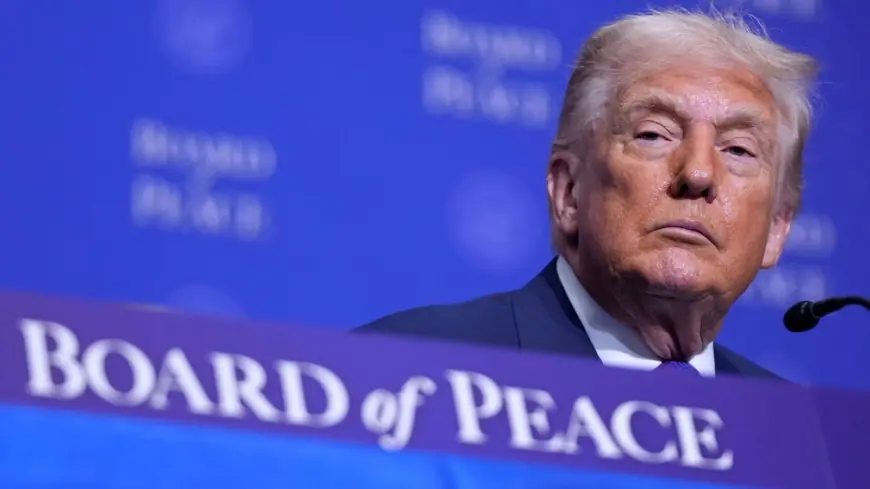
The board convened its first meeting in Washington, where its backers framed a second-phase plan that pairs disarmament with reconstruction. The US president said the board had secured more than $7bn toward a relief package and noted cooperation with the United Nations on humanitarian aid. Israeli leadership insisted reconstruction cannot precede demilitarisation. The Palestinian enclave’s governance and security remain contested: observers on the ground say Hamas appears to be extending its control over the Strip, and claims that Hamas would disarm have so far found little corroborating evidence.
Practical pieces are being built in parallel. A designated high representative for Gaza has opened recruitment for a new transitional Palestinian police force, with 2, 000 applications recorded in the first hours of outreach. But both Israeli and US officials have stressed the new force must not be drawn from existing Hamas-controlled police ranks and should not be a simple transfer of West Bank security personnel — meaning the effort must start from scratch and faces a daunting implementation challenge.
- Key cash numbers: more than $7bn pledged by listed regional states; the UN’s damage estimate is $70bn; the UN will contribute $2bn for humanitarian assistance; an athletic body will raise $75m for sports projects.
- Political red lines: reconstruction conditioned on demilitarisation; several Western governments declined membership in the board.
- Security construction: plan includes a new Palestinian police force; initial recruitment interest was high but vetting and formation are described as difficult.
- Composition concerns: representatives of repressive or authoritarian regimes are attending the inaugural meeting, raising questions about legitimacy and global buy-in.
The real question now is how money, security reform and contested membership will interact. If the board’s reconstruction funds are tethered to a disarmament timeline that lacks broad verification, large-scale rebuilding could stall even with cash pledged.
What’s easy to miss is the operational gap between announcing funds and standing up vetted security institutions that will be accepted locally and regionally. Recruiting candidates is only the first step; forming a policing body that both the occupying party and local residents accept is substantially harder.
Micro timeline (compact):
- 7 October 2023: A Hamas-led attack triggered a wider conflict.
- Board formation: the Board of Peace came into existence last month and held its inaugural Washington meeting on Thursday.
- Immediate aftermath: pledges topping $7bn were announced, alongside commitments for UN humanitarian funding and a proposed security-rebuilding track.
Final signals to watch for that will indicate whether pledges translate into reconstruction: verification of any disarmament steps, acceptance of a new Palestinian police force by the relevant authorities, and clearer agreement on how the UN will be integrated into reconstruction oversight. The bigger signal here is whether political conditions are treated as negotiable entry points for funding or as non-negotiable gates that could delay rebuilding despite the cash on hand.
If you’re wondering why this keeps coming up in international debate, it’s because the structure and membership of the new body — and its relationship to established multilateral institutions — will determine whether pledged funds accelerate recovery or entrench new political divides.