






















NASA and Boeing Held Accountable for Starliner Failures

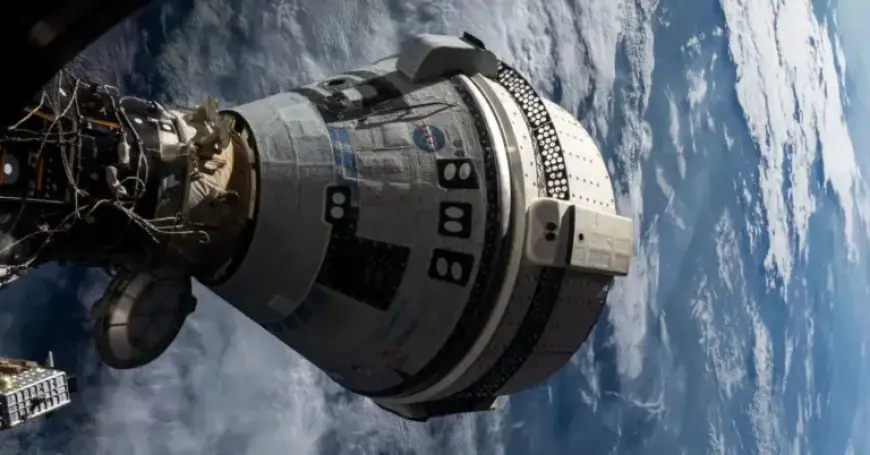
An investigation has revealed significant issues with Boeing’s Starliner spacecraft and NASA’s management of its 2024 flight to the International Space Station (ISS). These failures have raised critical safety concerns regarding future human spaceflight missions.
Nasa and Boeing Accountable for Starliner Failures
Jared Isaacman, the NASA administrator, addressed the findings in a recent briefing. He emphasized the importance of understanding the failures to prevent future risks to astronauts. NASA has labeled this incident as a “Type A mishap,” which signifies the most severe level of failure for a mission.
Critical Findings of the Investigation
The report highlighted several key shortcomings, including:
- Inadequate testing protocols.
- Decisions made without fully understanding earlier thruster malfunctions.
- Poor oversight of Boeing by NASA.
- Leadership issues that may create a dangerous culture in space exploration.
Isaacman pointed out that the primary risks were not due to hardware issues but stemmed from inadequate decision-making processes. He warned that unchecked managerial flaws could jeopardize astronaut safety.
Impact on Astronauts
During the mission, astronauts Suni Williams and Butch Wilmore were stranded at the ISS for nine months, far longer than the anticipated eight days. Initially expected to conduct a brief test flight, their presence on the station was extended due to Starliner’s issues.
NASA ultimately decided that Starliner would return without crew, leading to the astronauts’ return onboard a SpaceX Crew Dragon spacecraft. This marked the first time astronauts from this mission did not return via Boeing’s vehicle.
Corporate Reactions and Future Implications
In response to the investigation, Boeing affirmed its dedication to rectifying the issues surrounding Starliner. The company stated it has made considerable progress in addressing the technical challenges mentioned in the report. They are also committed to integrating the report’s findings to enhance their organizational culture.
However, Boeing’s challenges extend beyond Starliner. The company faced significant reputational damage from the 737 Max disasters in 2018 and 2019. A recent incident involving a 737 Max in January 2024 further raised concerns about Boeing’s safety standards.
The Broader Landscape of Space Exploration
The ISS is scheduled for retirement in 2030. In anticipation of future missions, NASA and Boeing revised their contract, decreasing the guaranteed flights for Starliner from six to four. Nevertheless, NASA remains invested in utilizing the spacecraft, aiming to maintain a variety of options for transporting cargo and crew to low Earth orbit.
Isaacman reassured that having multiple spaceflight providers is essential for continued progress in space exploration. He stated, “There will be other space stations, I guarantee it,” underlining the need for reliable access to space in the evolving landscape of human spaceflight.