













Lucinda Williams channels protest-era fire on new album World’s Gone Wrong

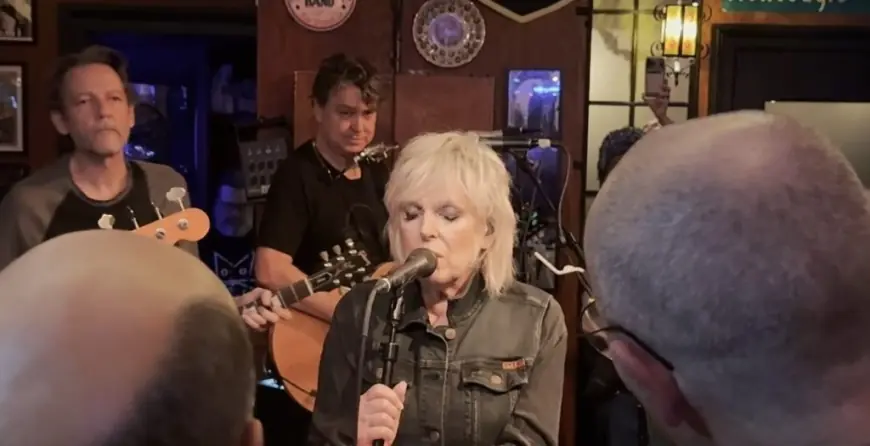
Lucinda Williams has positioned her 16th studio record, World’s Gone Wrong, as a battle cry for a fraught present, channeling an earlier era of protest music while leaning on collaborative songwriting and a stripped-back studio approach.
Lucinda Williams leans on collaboration and classic studio gear
On February 17, 2026 (ET), in Nashville, the new album was described as a musical essay on the State of the Union that blends grit and grace. For this record, Williams teamed with engineer Ray Kennedy and recorded her band live in a big room, while she tracked vocals from an isolation booth. Kennedy used a 1962 Telefunken tube console at his studio and captured her voice with a Neumann U 67, a microphone noted for preserving the phlegm, grit and unique tonal characteristics of her delivery. The live-band setup included Brady Blade on drums, Dave Sutton on bass, and guitar work from Marc Ford and Doug Pettibone, with noticeable drum bleed and ribbon mics on guitar amps to retain an organic sonic footprint.
The technical choices underscore a purposeful return to immediacy: a vocal mic associated with earlier landmark recordings, a vintage tube console, and a roomy live capture that foregrounds attack and presence. Those decisions are presented as a way to keep the performance raw and emotionally direct, even as Williams navigates changes in how she works in the studio.
Songwriting, recovery and a new creative partnership
World’s Gone Wrong is notable for the way songwriting itself became a collective effort. For the first time in their 20-year relationship, Williams’ husband and manager, Tom Overby, collaborated heavily on the songwriting, contributing lyrics that Williams rearranged and set to melody. That partnership yielded several tracks across the album, with titles that read like a running commentary on unrest—examples include "How Much Did You Get for Your Soul" and the raw outpouring "Something’s Gotta Give. " The closing track, "We’ve Come Too Far to Turn Around, " offers a small measure of hope amid the record’s confrontational material.
The collaborative approach was shaped in part by practical change: following a stroke in 2020, Williams has been unable to play guitar as she once did. Where her guitar had traditionally set tempo and feel in rehearsals and recording, she now relies on bandmates to interpret and reproduce her intended grooves. That shift forced her to explain song feel differently and to trust other musicians to supply the rhythmic foundation she previously demonstrated with her instrument.
Protest-era resonance and a clear-eyed urgency
Thematically, World’s Gone Wrong reaches back to the language and strategies of earlier protest songs while remaining rooted in Williams’ own songwriting voice. The album’s sequence and titles build toward a throughline about political and social strain, presenting blunt critiques and character-centered narratives that resist feel-good uplift. The tone is urgent rather than consoling, with Williams framing the set as both resistance and a tool for listeners to reckon with the moment.
Across the record the most immediate weapon remains the song itself: direct lyrics, emotionally weathered vocals, and arrangements that stress presence over polish. The combination of collaborative songwriting, live tracking, vintage equipment, and Williams’ singular vocal presence gives World’s Gone Wrong a deliberately raw, protest-tinged tenor—one that aims to mobilize sentiment rather than soothe it.
Taken together, the album’s sonic choices and lyrical focus mark a clear artistic decision: to harness communal performance and reclaimed studio textures in order to deliver music intended to register like a battle cry for today.