

























Plasma p-tau217 Clocks Accurately Predict Alzheimer’s Symptom Onset

Recent findings have shown that plasma p-tau217 levels can predict the onset of Alzheimer’s disease symptoms accurately. This research examines how the measurement of phosphorylated tau protein in plasma can reveal important insights regarding Alzheimer’s progression.
Study Cohorts and Design
The study included participants enrolled in memory and aging studies at the Knight Alzheimer’s Disease Research Center (ADRC) and the Alzheimer’s Disease Neuroimaging Initiative (ADNI). Both cohorts were comprised of community-dwelling older adults, some with cognitive impairments and others without.
Cohorts were followed longitudinally, with assessments involving both clinical evaluations and biomarker analyses. The Knight ADRC focuses on characterizing preclinical Alzheimer’s, while ADNI, founded in 2003 under the leadership of Michael W. Weiner, aims to combine imaging and clinical assessments to track early Alzheimer’s progression.
Plasma Biomarkers and Measurement Techniques
Plasma samples were analyzed to measure p-tau217 levels using various assays, including the C2N Diagnostics and Fujirebio Lumipulse techniques. The %p-tau217 was computed by determining the concentration of phosphorylated tau relative to non-phosphorylated tau.
Clinical Assessments
Participants underwent detailed neurological examinations and clinical interviews. Those showing cognitive decline following established Alzheimer’s criteria were categorized accordingly. This classification helps in differentiating individuals with Alzheimer’s from those with other syndromes.
Predicting Alzheimer’s Onset with Plasma p-tau217
The onset of Alzheimer’s symptoms was defined as the first clinical assessment where cognitively unimpaired individuals began to exhibit signs of cognitive decline alongside positive p-tau217 biomarkers.
Participants were grouped based on their cognitive status during assessments and associated clinical diagnoses, particularly focusing on the follow-up assessments relative to plasma %p-tau217 levels.
Modeling Disease Progression
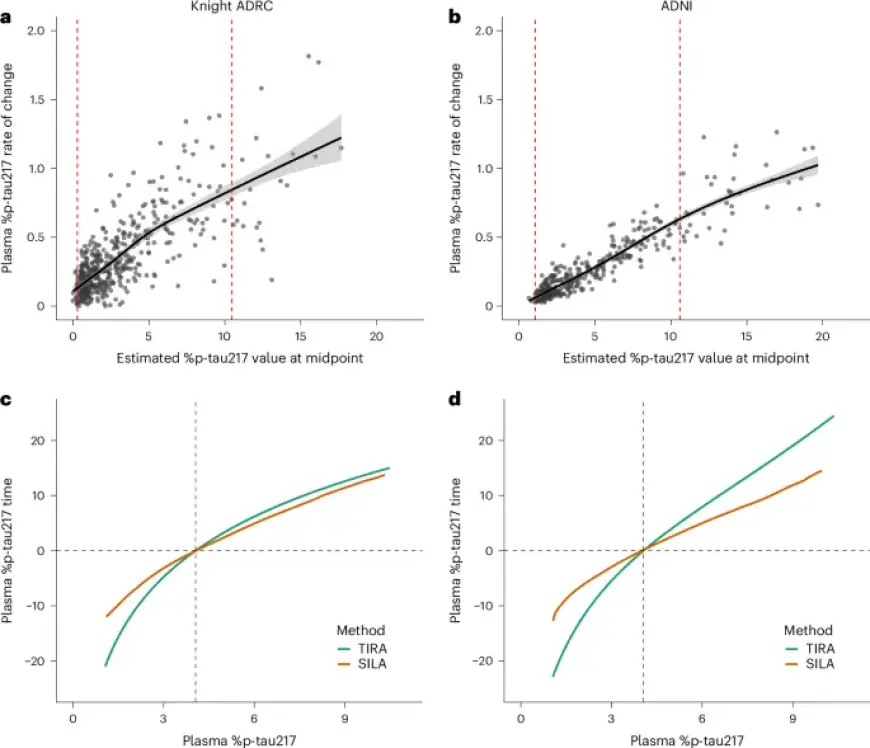
Advanced statistical models were developed to estimate the timeline progression of Alzheimer’s disease. Two clock models, TIRA and SILA, harnessed changes in plasma %p-tau217 to assess individual disease stages. These models offer a new lens through which researchers can understand Alzheimer’s pathology over time.
Statistical Analysis of Alzheimer’s Symptom Onset
Cox proportional hazards regression models evaluated the probability of symptom onset based on the estimated age of plasma %p-tau217 positivity. This statistical approach allows researchers to account for various factors impacting the timing of cognitive decline.
Key Findings and Implications
- Plasma p-tau217 levels provide a predictive framework for identifying when cognitive impairments may arise in older adults.
- Statistical models linked increased levels of p-tau217 with increased risks of developing Alzheimer’s symptoms.
- Understanding the temporal dynamics of p-tau217 could influence clinical strategies and interventions for Alzheimer’s patients.
This research underscores the potential of plasma p-tau217 as a reliable biomarker for assessing Alzheimer’s disease progression, promising advancements in early diagnosis and treatment strategies.