
























nasa asteroid warning: Planetary defence admits blind spot on city‑killer rocks

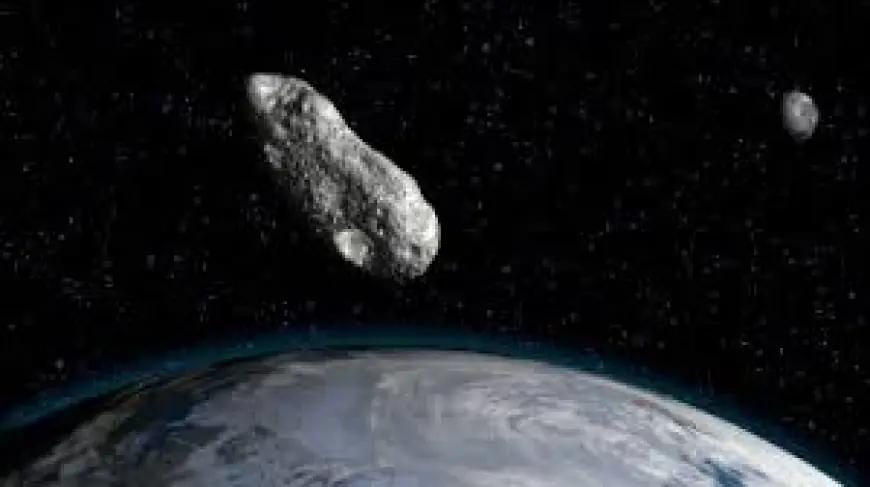
NASA's planetary defence office has sounded a stark warning about a class of asteroids that could devastate regions yet remain largely undetected. The agency's top planetary defence official said the biggest concern is not tiny meteorites nor Hollywood‑scale extinction events, but the medium‑sized objects that could strike without much advance notice.
Why medium asteroids keep experts awake
At a recent science conference in Arizona, the agency's planetary defence head emphasized that the main risk comes from objects roughly 140 metres (about 459 feet) or larger. These bodies are large enough to cause regional destruction — think whole cities or wide swaths of countryside — but small enough to escape current detection efforts until they are close to Earth.
Small meteoroids enter the atmosphere frequently and typically burn up or cause only localized damage. Conversely, the very largest asteroids have been mapped and tracked for decades, reducing immediate concern. The middle category remains the troubling gap: estimates suggest there are roughly 25, 000 of these medium‑sized near‑Earth objects, and survey programs have located only about 40 percent so far.
Finding the remainder is challenging. Even with powerful telescopes, survey work is time‑consuming and depends on sky coverage, observing time, and the relative brightness and orbital paths of targets. Many of these objects can approach from sunward directions or have orbits that make them hard to spot until they are much closer than ideal for deflection planning.
What the records show and what it means for preparedness
Past data highlight both the success and limits of current monitoring. One object designated 2024 YR4 briefly registered a non‑negligible impact probability for 2032 before follow‑up observations and orbital refinements reduced that risk to negligible. That episode underscores how initial detections can produce alarming probabilities that are later resolved with additional tracking.
Experts point out that most near‑Earth objects have orbits that do not bring them dangerously close to our planet, and only a small fraction are classed as potentially hazardous. The “potentially hazardous” label reflects the long‑term possibility that orbital evolution over centuries or millennia could bring an asteroid into an Earth‑crossing path; it does not mean an imminent strike is expected.
Nonetheless, the persistent shortfall in catalogue completeness for medium‑sized asteroids means there could still be an untracked threat capable of causing severe regional damage. That uncertainty is what the planetary defence community highlights as its principal worry: unknown objects are inherently the hardest to mitigate because there is little or no lead time to mount any response.
Paths forward and the limits of current defences
Efforts to reduce the blind spot focus on expanding survey coverage, improving detection sensitivity, and accelerating follow‑up observations to refine orbits quickly. Space‑based observatories and upgraded ground telescopes are key elements in those plans, but building and deploying new facilities takes time and funding.
Even with improved detection, active deflection or disruption of an incoming medium‑sized asteroid would pose technical and logistical challenges. Early detection remains the single most effective tool: the more lead time provided by discovery, the more options are available to deflect or fragment a threatening object before it reaches Earth.
For now, the message from planetary defence leadership is clear and sober: the greatest risk comes from the asteroids we do not yet know about. Closing that knowledge gap is a matter of prioritizing surveys, speeding follow‑up, and continuing to refine readiness for any confirmed threats — because in planetary defence, awareness is the first line of protection.