

























Why a nasa asteroid could still strike a city — planetary defence officer says 'it keeps me up at night'

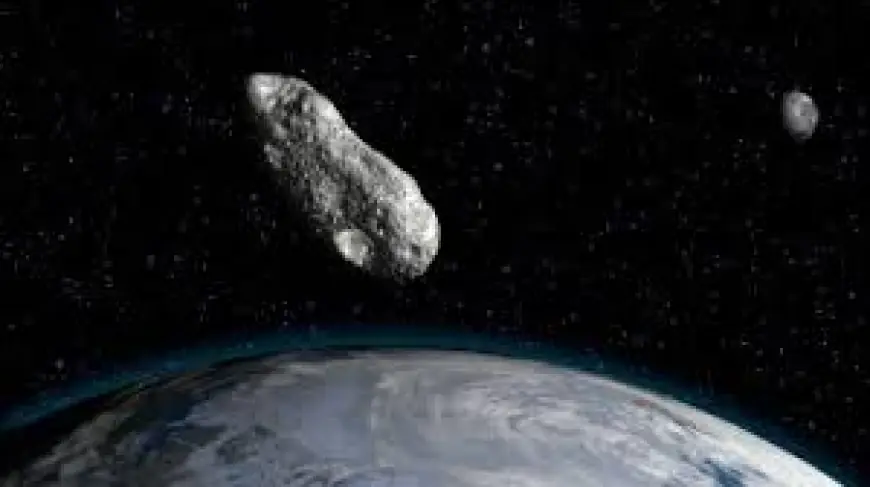
NASA's top planetary defence official warned that Earth remains vulnerable to medium-sized asteroids that can destroy cities or regions. The concern centers on objects large enough to cause catastrophic local damage but small enough that many remain hidden from current surveys.
Blind spots in current detection efforts
At a recent scientific conference in Arizona, Kelly Fast, the agency's planetary defence officer, told attendees that the greatest worry is not tiny meteors or the massive movie-style threats, but the objects in between. "What keeps me up at night is the asteroids we don't know about, " she said, pointing to a class of bodies roughly 140 metres (about 459 feet) and larger.
Those mid-size asteroids are estimated to number about 25, 000. Current search programs have located roughly 40 percent of them, leaving an estimated 15, 000 still uncharted. Detection is difficult because these objects are often faint, move quickly against background stars, and can approach from directions that current telescopes are less sensitive to. Even with powerful instruments, full cataloguing takes time.
Small asteroids strike Earth frequently but typically burn up or cause localized effects. Very large asteroids are rarer and most of the known ones have been tracked for decades. It is the intermediate population — capable of regional devastation — that poses the most practical near-term risk, experts say.
Risk assessment and close calls
Monitoring programs continuously update the orbits of near-Earth objects and flag those that might come close. In one notable case, data from the Center for Near Earth Object Studies (CNEOS) indicated in February 2024 (ET) that a recently discovered object had an elevated impact probability for 2032. That initial estimate, which was among the highest ever logged for an object of that size, was revised after follow-up observations showed the object did not pose a significant impact risk in 2032 or thereafter.
Most near-Earth objects have orbits that do not bring them perilously close to our planet. A subset, labelled potentially hazardous asteroids, are defined by both their size and their orbital proximity: bodies larger than roughly 460 feet that come within a few million miles of Earth's orbit. The designation does not mean an impact is imminent; rather, it flags objects whose orbits could evolve over centuries in ways that require continued attention.
Officials emphasize that cataloguing and follow-up observations are the first lines of defence. The longer an object is tracked, the more precisely its orbit is known and the better futures risks can be ruled out. Nevertheless, detection remains incomplete for that critical intermediate size range.
What comes next: discovery, tracking and mitigation planning
Scientists and mission planners are pushing for faster and more comprehensive sky surveys to close the discovery gap. Improvements include longer observing campaigns, wider-field telescopes, and enhanced data processing to spot faint, fast-moving targets. International cooperation on data sharing and follow-up observations is also considered essential for building a more complete catalogue.
On the mitigation side, work continues on strategies to deflect or disrupt an incoming object if one is found on a collision course with Earth. Those plans rely on early detection: the more lead time available, the more options and lower the cost and risk of any response. For mid-sized threats that might strike a city or region, timely discovery would be the critical factor determining whether a defensive mission is feasible.
Fast's warning underscores a simple reality: the technical tools exist to find and, in principle, mitigate many threats, but the system is only as strong as its ability to find objects early. Until the remaining tens of thousands of hazardous-sized objects are catalogued, gaps will remain, and preparedness will depend on continued investment in detection and follow-up capabilities.