























Judge orders dte to pay $100M for Zug Island air pollution

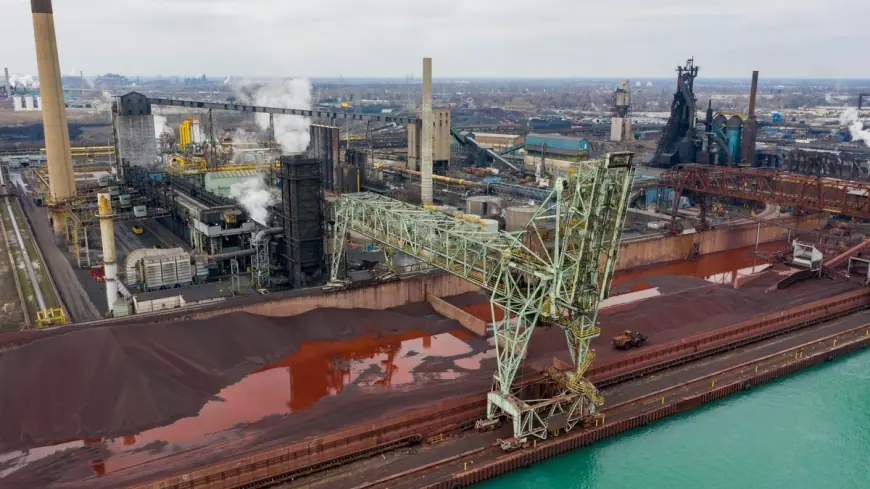
U. S. District Court Judge Gershwin Drain on Feb. 17, 2026 (ET) found DTE Energy Co. and three of its subsidiaries liable for Clean Air Act violations at the EES Coke Battery facility on Zug Island and imposed a $100 million civil penalty. The ruling also requires the companies to bring the plant into compliance and to fund local air-quality improvements.
What the court ordered
The court held that the facility’s changes to its operations and permitting led to substantial increases in sulfur dioxide emissions, a pollutant tied to respiratory and cardiovascular harm. Judge Drain concluded defendants benefited economically by delaying compliance and used those savings elsewhere; testimony at trial put the avoided costs at roughly $70 million, a figure the judge used in calculating the civil penalty.
In addition to the $100 million fine, the judgment mandates the formation of a seven-member Community Quality Action Committee backed by $20 million in funding. That committee will be charged with designing and overseeing local relief projects such as distributing HEPA air purifiers to homes, installing filtration systems in schools, and weatherizing residences in nearby neighborhoods including parts of Detroit, River Rouge and Ecorse.
The court ordered the companies to come into compliance with federal New Source Review permitting requirements and left detailed technical remedies to later proceedings and state regulators, while setting a timetable for the parties to submit a proposed joint judgment by Feb. 20, 2026 (ET).
Community reaction and health impacts
Residents and environmental advocates described the decision as a long-awaited victory for neighborhoods that have endured years of elevated sulfur dioxide levels. Local activists cited worsening asthma, chest pain and other symptoms they attribute to emissions from the coking process, which produces coke oven gas and can release sulfur dioxide when burned.
Testimony during the case and court findings linked the plant’s emissions to a range of health risks, including increased asthma attacks, heart attacks, strokes, higher blood pressure, elevated cancer risks, neurological disease and premature deaths. Community members who testified said the odor and physical effects of proximity to the plant have altered daily life and limited outdoor activities like gardening.
The new Community Quality Action Committee is intended to direct funding to tangible mitigation projects in the most affected ZIP codes and to ensure resident voices help guide priorities and oversight.
DTE response and next steps
Company representatives expressed deep disappointment with the ruling and signaled plans to appeal to the U. S. Court of Appeals for the Sixth Circuit. The utility maintained it has been operating within the bounds of a valid state permit and contested its designation as an operator responsible for the facility’s Clean Air Act obligations.
Federal enforcement began with an administrative notice and expanded into litigation after environmental officials found the facility had not met New Source Review requirements tied to significant modifications. The government’s case, joined by environmental groups and a nearby city, argued the changes led to measurable increases in sulfur dioxide emissions in years such as 2018 and 2021, when annual emissions measured in the thousands of tons.
With the civil penalty in place and funds earmarked for community relief, the ruling shifts immediate attention to implementation: establishing the Community Quality Action Committee, identifying projects, and defining technical compliance measures for the plant. An appeal will determine whether the judgment stands or is modified, but for residents the decision brings both financial relief and a formal acknowledgment of harms they say have persisted for years.