
























Heavy snow scrambles schedule as zoi sadowski-synnott emerges as slopestyle favorite

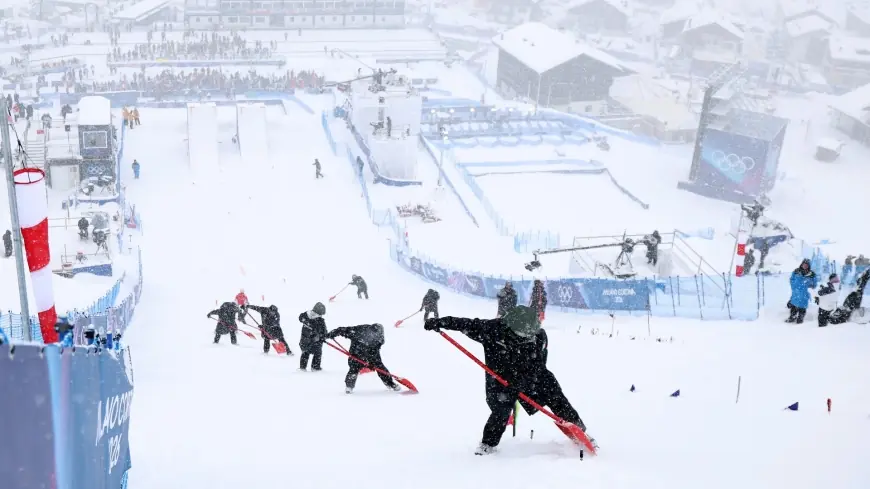
Heavy snowfall in the Italian resort town of Livigno forced organizers to postpone multiple Winter Olympic events on Tuesday ET, upending plans for snowboard slopestyle and freestyle aerials and leaving athletes and officials scrambling for a new timetable.
Organizers halt slopestyle final and aerials qualifying amid dangerous conditions
Steady snow accumulation and limited visibility led officials to call off the women's snowboard slopestyle final that had been scheduled for Tuesday afternoon ET at the Livigno Snow Park. The decision followed the postponement of the qualifying rounds for women's aerials at the Livigno Aerials and Moguls Park, where the steep jump and high speeds make consistent visibility and a clear takeoff essential.
Workers used shovels to try to keep the course clear, but temperatures hovered at around 21 degrees below zero, making maintenance difficult and raising safety concerns. Competitors in the women's aerials had completed practice rounds shortly before the start was halted; after hours of monitoring the weather with some hope for a late start, officials ultimately called the events off for the day.
Organizers have not yet set new dates or times for the postponed women's aerials qualifiers or the men's event that had been planned for later Tuesday ET. The ripple effects of the cancellations could compress an already tight schedule, forcing organizers to weigh athlete safety against televised windows and athlete recovery needs.
Favorites shift as zoi sadowski-synnott leads slopestyle field
New Zealand's zoi sadowski-synnott, the defending Olympic slopestyle gold medalist and current world champion, topped the qualifying leaderboard and enters the rescheduled final as the clear favorite. The postponement gives her and other top contenders more time to prepare, but it also creates uncertainty around momentum and course conditions when the competition resumes.
One of the main rivals expected to challenge her is Kokomo Murase of Japan, who posted strong runs in qualifying. In aerials, the field includes the defending champion Xu Mengtao and reigning silver medalist Hanna Huskova, who is competing under a neutral designation. Those athletes and their teams now face the task of re-timing peak performance and managing warmup schedules while training in cold, snowy conditions.
For athletes, schedule disruptions present both logistical and mental challenges. Riders and jumpers tailor their warmups and run plans to a precise competition timetable; a postponement can alter snow texture, jump speed and the rail setups used in slopestyle, potentially changing the competitive dynamics when events resume.
Outlook and operational challenges ahead
The immediate focus for organizers is identifying a weather window that offers safer visibility and reduced snowfall intensity, while ensuring the courses can be prepped without risking athlete safety. The cold temperatures complicate maintenance work and increase the time needed to groom and clear courses between snowfalls.
Beyond logistics, the postponements carry strategic implications: judges will see performances under potentially different conditions, athletes must guard against both overtraining and loss of competitive edge, and teams must remain flexible with recovery and equipment plans. If multiple events are rescheduled into a short span, athlete fatigue and scheduling conflicts could influence medal outcomes.
Officials will announce revised start times once forecasts and course crews indicate a safe window. Until then, athletes will continue to monitor conditions, fine-tune training where possible and prepare to adapt when the schedule resumes.