

















Rupert Lowe launches new party restore britain as councillors defect to form local groups

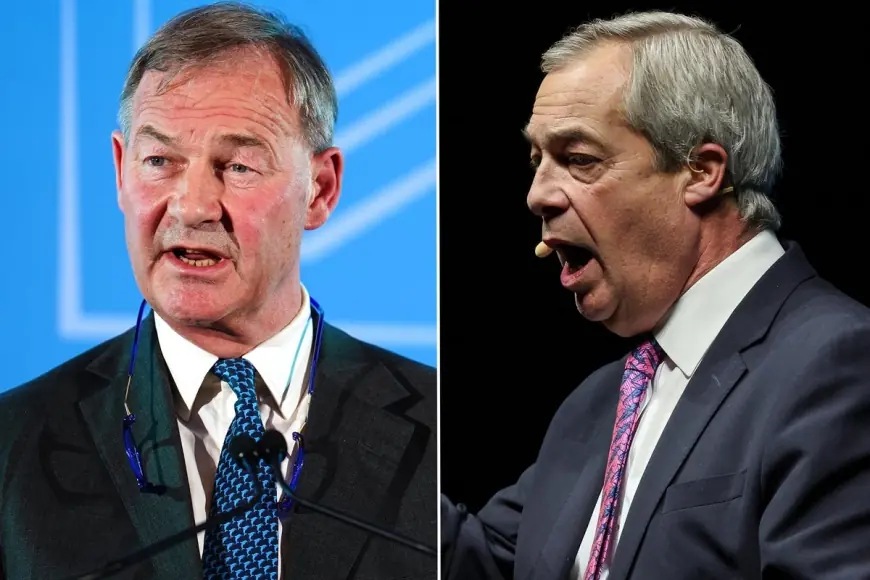
Rupert Lowe, the Great Yarmouth MP who now sits as an independent, formally launched restore britain as a national political party on Friday night (ET). The move transforms a previously declared political movement into an umbrella organisation that aims to link local parties and councillors while Mr Lowe prepares to contest his seat again under a local partner banner.
From movement to party: structure and ambitions
Lowe first created the initiative as a movement after his suspension from his former party last year. He announced the change of status in a launch event, saying the vehicle will act as an umbrella for locally based groups rather than trying to operate as a conventional nationwide machine from day one. Great Yarmouth First, a local outfit tied to Lowe’s constituency work, is slated to be a partner and is expected to back him if he stands again for the seat.
Background details on Lowe’s profile remain central to the pitch: he is a businessman and farmer and previously chaired a professional football club. His supporters point to a perceived disconnect between mainstream politicians and voters in coastal towns, arguing that a decentralised party model can tap into local dissatisfaction while presenting a more coherent national identity on the right of the political spectrum.
Immediate fallout and local gains
Within days of the launch, a group of councillors in Kent shifted their allegiance and announced they would sit together under the new party banner on their county council. The seven named councillors said they would form a Restore Britain group locally, signalling an early organisational foothold outside Lowe’s Norfolk base.
Not all reactions have been positive. Some of the councillors who joined had previously been expelled from their former group, and critics have emphasised that the new party’s initial recruits are far from a unified new force. At the same time, the loss of local members will be watched closely as a test of whether the umbrella approach can rapidly build coherent blocs on councils and in towns where voters have shown volatility in recent elections.
Advisory shake-up and political calculation
The launch has prompted changes among those who had been advising the movement. A number of high-profile figures who were involved in the early advisory arrangements are understood to be stepping back from the project now that it has become a formal party. The departures highlight the tension between a movement-style approach with loose ties and the greater scrutiny that comes with formal party status.
Observers who have followed Lowe’s recent trajectory describe him as a maverick MP who is comfortable breaking with party disciplines. Private polling circulated by different interested parties suggests he retains a reservoir of local support in Great Yarmouth, and Lowe’s team believes there is room for another party on the right that advertises independence of thought and a strong local focus. He had hoped his local group would contest local elections this year, but those contests were cancelled, strengthening the case for a national umbrella that can pick up where local opportunities have been limited.
The next weeks will test whether restore britain can convert defections and advisory attention into a sustained political presence. Key questions include whether the party can recruit disciplined candidates, build local infrastructure beyond headline defections, and broaden appeal in constituencies where incumbents and established parties still command organisational advantages.