

























Reform UK names Robert Jenrick as its pick for chancellor

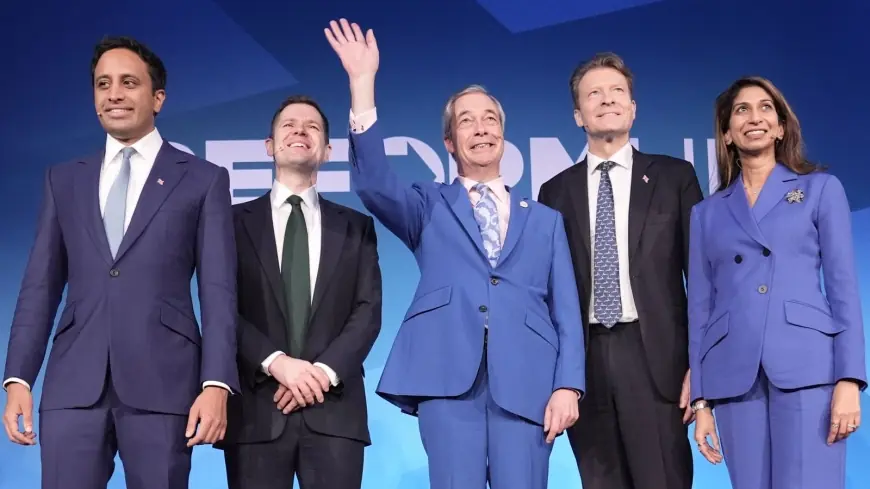
Nigel Farage has unveiled a new top team for his party, naming robert jenrick as Reform UK's pick to serve as chancellor if the party wins the next general election. The move formalises a high-profile defection and underscores the party's push to present itself as a government-ready alternative focused on economic stability, welfare cuts and lower taxes.
What robert jenrick brings to Reform's economic pitch
Jenrick, a former senior minister with experience at the housing, Home Office and Treasury levels, was chosen to lead on the economy barely a month after switching allegiance. He framed Reform's priorities as restoring fiscal stability, cutting waste, reducing the benefits bill and delivering tax relief for households and businesses.
His ministerial background includes a junior Treasury role earlier in his career, giving him credentials on fiscal matters that party leaders are emphasising as they try to shift the narrative away from being a single-figure MP grouping to a party with credible policy leads. Jenrick has pledged to draw up what he called the most comprehensive economic plan of any party, positioning Reform as a pragmatic alternative that will tackle public spending and boost growth.
Broader reshuffle and policy signals from the frontbench
The chancellor announcement came alongside other portfolio allocations designed to project a full government team. A recent Conservative defector was handed the education and skills brief with a pledge to move half of young people into trades rather than university, while the deputy leader was given a combined business, trade and energy role and promised an energy-first industrial strategy.
The deputy has made clear that expanding domestic oil and gas production and abandoning net-zero targets are central to the party’s growth plan, arguing that cheap energy is essential for higher GDP and living standards. The party’s home affairs lead will focus on cutting both legal and illegal immigration, a policy area the leadership describes as a top priority for restoring public confidence.
On equalities, the education and skills lead has signalled plans to repeal existing equalities legislation and abolish the equalities minister post, characterising current diversity and inclusion efforts as socially divisive. That stance is likely to intensify debate about the party’s broader social agenda should it gain parliamentary strength.
Political implications and the road ahead
Farage has framed this lineup as a “shadow cabinet” meant to counter claims that the party is a one-man operation, stressing that Reform aims to be the principal opposition voice to the governing party. The party has been polling strongly in national surveys since last year, and its leadership hopes a full set of spokespeople will convince voters that it has both the depth and policy detail to govern.
But the path from a small group of MPs to forming a government remains steep. The appointments are as much about optics and narrative as about immediate parliamentary power: they allow Reform to present concrete plans and designated voices on key portfolios in national debates. The choice of Jenrick, with prior Treasury experience, signals a priority to make the party’s economic case central to its appeal.
Expect the new frontbench to be tested on detail in the coming weeks as it outlines spending plans, energy strategy and proposals on immigration and education. How voters respond to the mix of fiscal conservatism, energy pragmatism and contentious social policy will shape the party’s trajectory ahead of the next general election.